The Ultimate Pillow Fort Guide
Create the perfect escape for adults and kids.
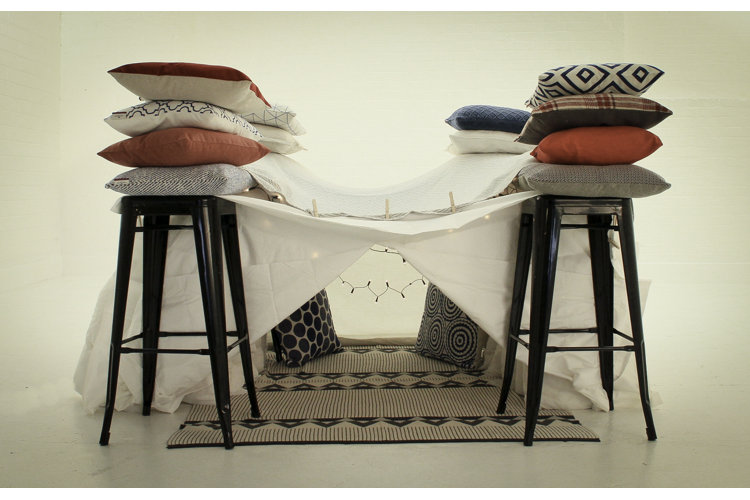
With lockdown in full swing, keeping the kids entertained is a top priority and what better way to do it than helping your kids create the perfect den? No matter your age, pillow forts are perfect for those days when toys and games just won’t do. Allowing you to create the perfect hideaway in order to escape the endless emails and work from home calls.
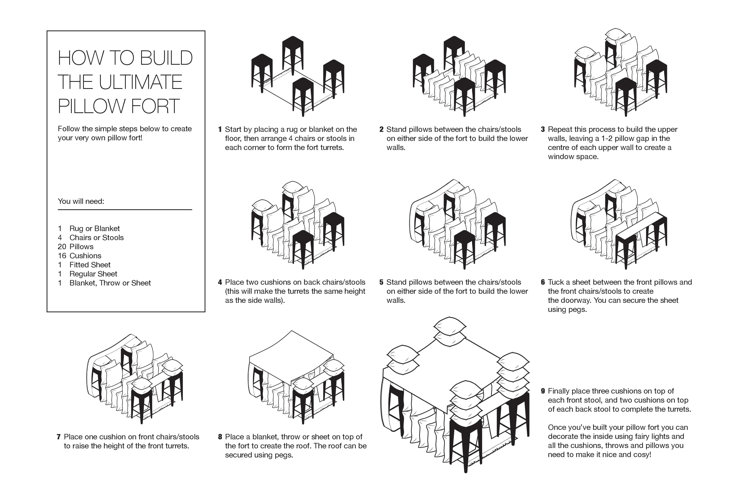
Together with ARTFORM ARCHITECTS, we've created an easy step-by-step guide to building a proper and functional pillow fort all for yourself.
Pillow Fort - How-To
Pillow Forts - A History
"The design of the pillow fort has been based around historical fort architecture..."
Jason from ARTFORM ARCHITECTS
The design of the pillow fort has been set around historical fort architecture and is largely based on a traditional keep, which acted as the main part of a motte-and-bailey castle layout. These were fairly simple, robust structures constructed from timber or stone and were introduced into the UK by the Normans in the 11th Century. Their main purpose was to act as a fortified tower or residence that would become a refuge of last resort should the rest of the motte-and-bailey castle be overtaken.
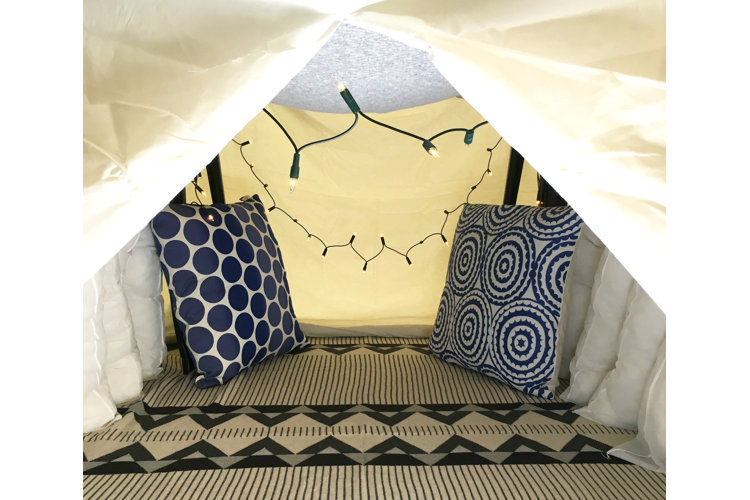
As such the designs had few openings in the external walls and provided high level ramparts for defending the keep from invaders. The keeps traditionally sat atop an earth mound (the motte) surrounded by an enclosed courtyard (the bailey). This meant that the keep was at the highest point of the castle layout and gave the best vantage point for resisting any attack. The pillow fort incorporates a typical square plan form with 4 'tower' sections at each corner. A single doorway leads through to a central 'courtyard' which then provides stepped access up to the ramparts which run around the external walls as a parapet wall.
Shop all pillow styles
