Types of Pans & Pots for Every Purpose
Decide which type is best for your home.
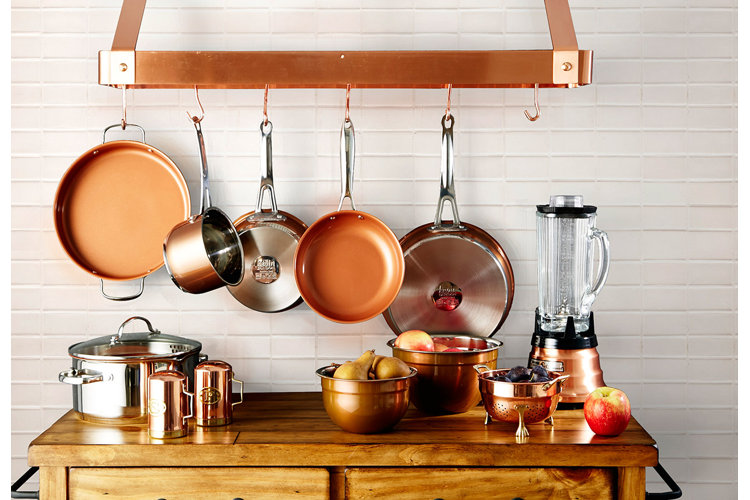
The right cookware can make easy work of any recipe, so if you're thinking of investing in some new pots and pans, it’s important to understand the different kinds available. Read on to learn more about the different types of pans and pots you need in your kitchen.
Types of Pans
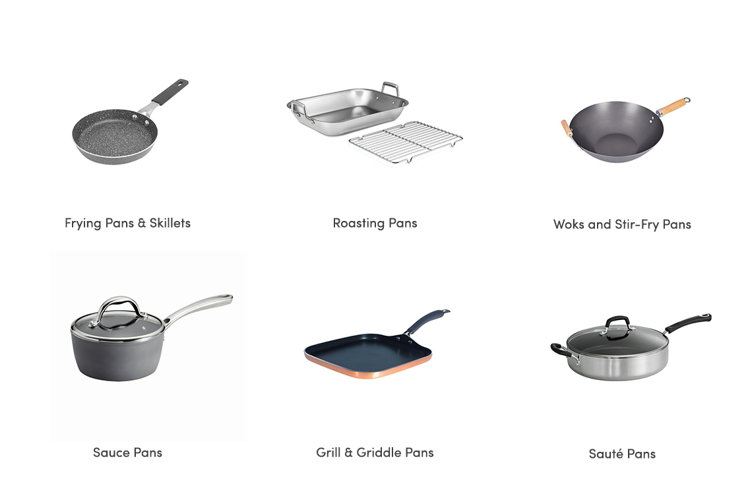
Frying Pans & Skillets
Frying pans and skillets are versatile, shallow pans with flared sides and long handles. Skillets tend to come with lids and are slightly deeper than frying pans. Skillets and frying pans are ideal for frying, searing and deglazing, while skillets with lids are also good for keeping heat and moisture in a dish. You can cook just about anything in a frying pan or skillet through panfrying, sautéing, high-heat searing and other kinds of stove-top cooking methods.
Roasting Tins
A roasting pan is a durable, sturdy pan designed to roast turkey, beef, ham or chicken. It is often sold with a flat or V-shaped rack that raises the meat, allowing the fat to drip down into the bottom of the pan for easy basting. A V-shaped rack is helpful when you’re roasting a piece of meat, as it makes it easier to keep the meat steady as you turn it to roast. Flat racks tend to be easier to clean than V-shaped racks, because food is difficult to clean from the bottom corner of a V-shaped rack. If you're roasting chicken breasts or small vegetables like brussel sprouts, a flat rack is preferable.
Tip: Take out the rack and this pan can be used to roast vegetables, cook a lasagna, or bake a casserole.
Woks & Stir-Fry Pans
Woks and stir-fry pans are best for making stir-fry. They heat food more quickly than most pans and require less oil, and it’s very easy to move food around in their rounded basins. Woks and stir-fry pans both have high, sloping sides and are deeper than a frying pan – but a wok has a very small and rounded bottom surface area to spread heat evenly up the sides, while a stir-fry pan is flat at the bottom with a wider surface area.
Which pan you use is a matter of personal preference but keep in mind that because of its flat bottom, a stir-fry pan is better suited for cooking on an induction stove top than a wok. A wok may be harder to keep steady on an induction stove top because its base is rounded.
Tip: Woks come in many shapes, styles and sizes so to get an understanding of which model might be best for you, read our Ask the Experts: Best Wok to Buyguide.
Saucepans
Saucepans work well for stewing, simmering, cooking grains, boiling water and reducing sauces. The saucepan is round in shape with relatively high, straight sides, a long handle and a tightly fitting lid. A sauce pan's tall sides allow you to fit more food inside and heat the food evenly.
Grill Pans & Griddles
Grill pans and griddles are usually square or rectangular in shape. Griddles have flat bottoms, and grill pans have raised ridges. Grill pans raise the meat away from the cooking juices and create black grill lines on the food much like the lines from an outdoor grill. However, the griddle’s flat surface is much easier to clean and is less likely to break delicate ingredients that might fall apart on the ridges of a grill pan. These pans are great for making tender meat, fish and vegetables.
Sauté Pans
A sauté pan is similar to a skillet but it has straight, medium to high sides and a wide bottom surface area. This pan is ideal for sautéing and browning foods. Its tall sides are perfect for big batches of tomato sauce or for browning sausage and ground beef.
Stock Pot
A stock pot is a tall, straight-sided pot with a lid. Because of its large size, a stock pot is ideal for making stock or broth. Look for a pot that has good handles secured with rivets or thick screws for long-lasting quality. These pots have thin bottoms that heat quickly and are good for cooking broths and lighter soups. This pot is also frequently used to boil potatoes or make light sauces.
Soup Pot
Soup pots are similar to stock pots however they tend to be shorter and have thicker bottoms. Soup pots and stock pots can be used interchangeably for the most part but a soup pot is helpful when making thick soups. The bottom of a soup pot is thicker and heavier than a stock pot’s bottom to help heat thick soup evenly without burning it. Other soup pots have rounded sides and are shorter but maintain a thick base to avoid burning soup.
Steamer Pot
A steamer pot is a large stock pot with high sides that often includes a built-in strainer and vegetable steamer inside. You can steam vegetables, seafood and rice in one of these pots. This is a great item for any cook who is looking to get in and out of the kitchen quickly because you can cook an entire meal using this one pot. After steaming one part of your meal, simply remove the steamer and cook the rest of your meal in the main part of the pot."
Make It Easy: Cookware Sets
There are two ways you can start stocking your kitchen: purchasing a cookware set or buying individual pots and pans. Buying a cookware set can sometimes be less expensive and ensures all of your pots and pans will match. On the other hand, if you are a gourmet at heart, buying individual items allows you to build a collection that better suits your cooking style. You can also buy a smaller pot and pan set for your kitchen.
Tip: Cookware is available in many different metals and materials. To find the material that is best for your lifestyle, take a look at our guide: Understanding all the Different Cookware Materials.
Enjoyed this article? Then why not also read our guides:
