How to Perfetcly Hang a Bathroom Cabinet
Build your dream bathroom.
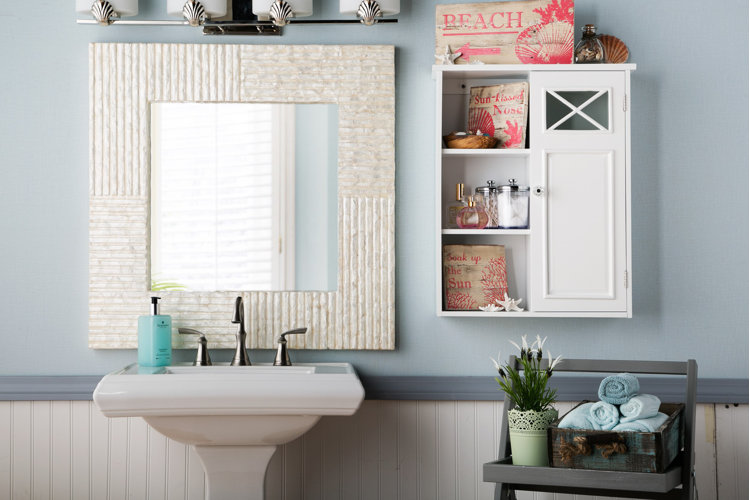
A bathroom cabinet is a must-have for bathrooms. Not only do they provide extra concealed storage in a stylish way, they're also super easy to install yourself. We'll walk you through the steps so that you can confidently master how to install a bathroom cabinet.
Jump To:
How to Properly Measure for a Bathroom Cabinet
Which Mount Type Works for Your Bathroom Cabinet
How to Install a Bathroom Cabinet on Your Wall
How to Properly Measure for a Bathroom Cabinet
This step is critical to avoiding installation problems. Measure the following:
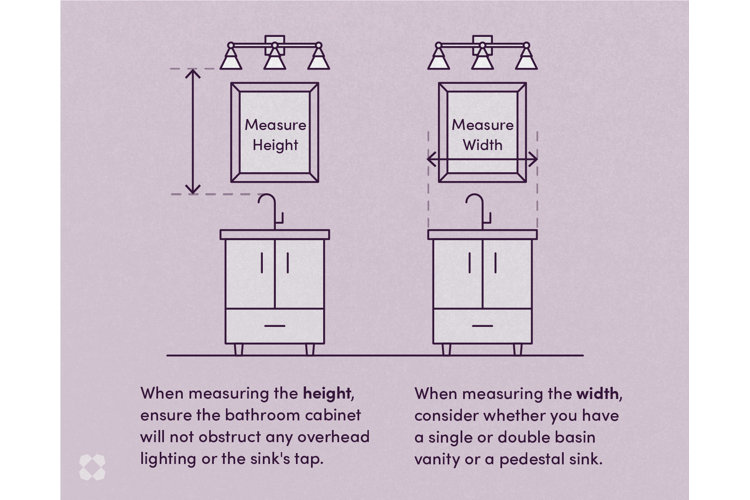
Height: Measure the distance between the top of your bathroom sink's tap and the lowest point of your lighting fixture. Subtract a few centimetres from this height so that your cabinet does not bump the lighting fixture. If you don't have a lighting fixture above your bathroom vanity, your bathroom cabinet's height will only be limited by the ceiling. You also don't want the cabinet to sit so high up the wall that you can't reach the top shelves.
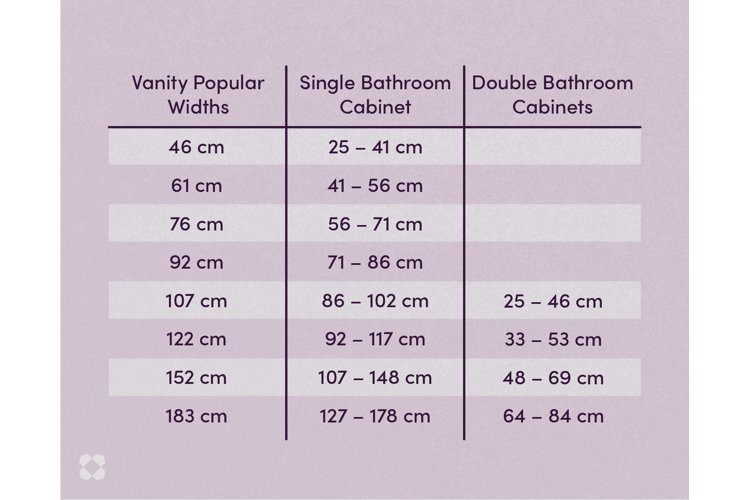
Width: Measure the width of your vanity. Then use the chart below to determine the width of your bathroom cabinet(s).
Make sure that nothing will be in the way of your bathroom cabinet’s door. Use your new width dimension to simulate the opening and closing of the cabinet door. If space is tight, try a bathroom cabinet with sliding or dual-swinging doors.
Tip: If you have a pedestal sink instead of a vanity, a single bathroom cabinet can be anywhere between 25cm – 65cm wide.
Which Mount Type Works for Your Bathroom Cabinet
Do you want the sleek and flush look of a recessed bathroom cabinet, or will you keep it classic with a traditional surface mount? While style is important, also keep in mind the difficulty of installation. Surface-mount bathroom cabinets are easier to install yourself, because they can be placed directly on your wall. Recessed bathroom cabinets are more complicated, as they require a wall inset to hold up the body of the cabinet. If one does not already exist, you'll have to create it yourself before installation.
How to Install a Bathroom Cabinet on a Wall
Surface-Mount Bathroom Cabinets
What You'll Need
Stud finder
Pencil
Level
Drill
Screws
Wall anchors
A second person for assistance
Step 1:
Locate the studs on your wall using the stud finder. Mark these with a pencil. If you have difficulty locating the studs, consult a professional so you don't damage the pipes or wiring inside the wall.
Step 2:
Grab your friend for assistance with this step. Have them hold the cabinet up against the wall in the desired spot. Check to make sure the cabinet is properly leveled, then use a pencil to draw an outline around the cabinet.
Step 3:
Open the cabinet’s door while it is held in place against the wall. Make sure there are no obstructions in the way, especially when opening and closing the cabinet door. While the door is open, you should also see the installation holes on the back of the cabinet. Use a pencil to mark these holes on the wall.
Step 4:
Take the cabinet down and make sure the hole marks are lined up with the wall studs (see pencil marks from step 1). If you have difficulty lining up the holes with the wall studs, use anchors for support. Drill pilot holes into the marked locations.
Step 5:
Place the cabinet on the wall and, using a drill, drive the screws into the holes to secure it.
Tip: If you have a corner-mount bathroom cabinet, installation is the same as a surface mount, except it is placed on the wall's corner.
Recessed Bathroom Cabinets
Generally, recessed cabinets are more complicated to install than surface-mount ones.
What You'll Need
Stud finder
Pencil
Level
Utility knife
Drill
Keyhole saw
2" x 4" wood blocking
Screws
A second person for assistance
Step 1:
Complete Steps 1 and 2 from the surface-mount instructions. If your cabinet is wider than the distance between the studs, consult a professional.
Step 2:
We highly recommend using a professional for this step, as significant damage can be caused if not done properly. Use the utility knife to score the outline of the medicine cabinet on the wall. Use a keyhole saw to cut this marked section and remove the drywall. Clear away any loose debris.
Step 3:
Your medicine cabinet will need to sit securely on a frame inside the wall you've just cut. If the cabinet sits perfectly between the vertical wall studs, you will only need to add horizontal wood blocking to complete the top and bottom of the frame. Secure the 2" x 4" blocking to the wall studs with screws.
Step 4:
Place the cabinet in the wall. Now follow Steps 4 and 5 from the surface-mount instructions.
Tip: For more bathroom ideas and inspiration, check out:
- How to Upgrade Your Bathroom on a Budget
- Your Guide to the Best Bathroom Towels Available
- Quick Tips and Tricks for a Calming Spa-Like Bathroom
