Your Guide to the Best Bathroom Towels Available
From super soft, quick dry and totally luxurious.
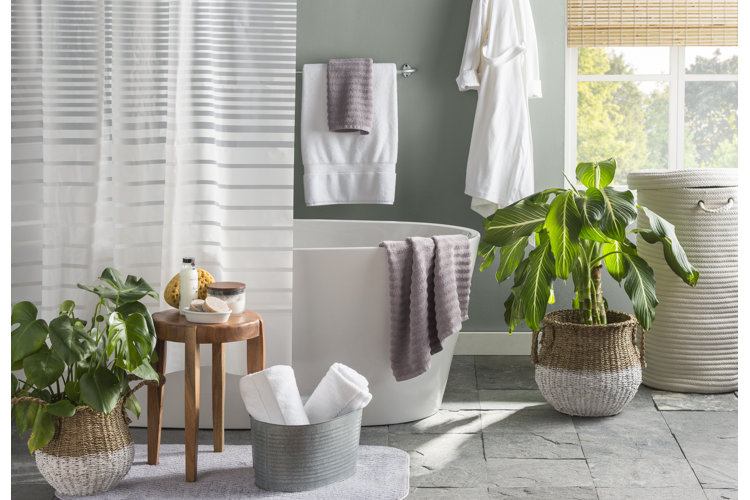
With cotton styles from Egypt and Turkey, microfibre and terrycloth to contend with, shopping for new bathroom towels can quickly become more complicated than it should be. Before you go throwing in towel (pun intended) we've broken down the bath time dilemma in our full bathroom towel buying guide, including advice on size, fabric and care.
Things to Consider
Bathroom Towel Size Guide
Bathroom towels come in a wide variety of sizes, so determine which size of towel you need before purchase. A standard bath towel, perfect for drying off after a shower or bath, is 140 x 70cm while a typical bath sheet comes in slightly larger at around 160 x 90cm. And while a bath sheet offers full coverage, if you’re searching for smaller options, hand towels are 100 x 50cm.
Towel Types & Their Approximate Sizes
Face Cloth:
30 x 30cm - A small square-sized towel used to wash both body and face.
Guest Towel:
40 x 65cm - A smaller version of a hand towel, these towels are often placed in a guest bathroom.
Hand Towel:
100 x 50cm - An everyday towel used to dry your hands. The size also works well for drying hair.
Bath Towel:
140 x 70cm - A standard towel for drying off after a bath or shower.
Bath Sheet:
150 x 90cm - 165 x 90cm - A large towel that gives substantially more coverage than a bath towel.
Beach Towel:
175 x 90cm - Often made of thinner material than most standard towels to promote fast drying. Beach towels have the dual purpose not only to dry but to provide a surface to lie on at the beach, as well as on a sun lounger.
Standard or pure cotton is by far the most common fabric used to make everyday bathroom towels. Egyptian Cotton, on the other hand, tends to consist of long, thin fibres that are soft to the touch and extremely absorbent.
One of the most popular towel types in the UK, Egyptian cotton is followed closely in comparison by its Turkish counterpart. Turkish cotton towels also come with long fibres but these are denser and looped in order to trap warmth and moisture. Popular in spas and hotels, Turkish cotton towels are much heavier and therefore take longer to dry, but they do become softer and more luxurious after every wash.
You might have heard of zero twist cotton towels. These bathroom towels dry a lot faster thanks to their ability to allow air to circulate through their threading, and all without skipping on fluffiness. Then there are the bathroom towel alternatives such as terrycloth and waffle. While both offer quick drying, these types of towel are suited more for bathrobes.
Towel Fabric & Thread Types
Pure Cotton:
100% cotton towels are perfect for everyday use; they have good strength, softness and absorbency.
Egyptian Cotton:
Strong, light and fluffy, Egyptian cotton has extra-long fibres that make towels extremely absorbent.
Turkish Cotton:
Durable, extra-long Turkish cotton fibres are often made into long looped towels which are durable, absorbent and soft.
Bamboo:
Bamboo is often blended with cotton to make luxury towels that are soft, absorbent and hold their colour well. Bamboo plants also have natural anti-bacterial properties.
Microfibre:
Microfibre is a synethetic fibre made from polyester and polyamide fibres. Towels made of microfibre are very absorbent and generally dry faster than cotton towels.
Combed Cotton:
Extra soft, combed cotton is made from refined raw cotton which has had short fibres and impurities brushed out. This makes combed cotton softer and stronger than normal cotton, great for those with sensitive skin.
Zero Twist Cotton:
Zero twist cotton towels are made using a modern technique that doesn't require individual threads to be twisted together. As well as increased softness and absorbency, this means that air can circulate inside the towel well so it dries quickly.
Terrycloth:
Terrycloth is a general term for fabric with looped threads to allow it to absorb lots of water. Usually it is made of 100% cotton but it can also contain polyester.
Waffle:
This is a fabric weave that is used to make fabric both extra absorbent and fast drying. The result is a durable, lightweight and textured material that is great for towels and bath robes.
GSM is short for grams per square metre and is an indication towards a towel's weight and density. The higher the GSM, the thicker and therefore more absorbent the bathroom towel will be. Those luxury hotel-style towels we all love come with a higher GSM, while lightweight towels that essentially dry quicker come with a lower GSM. Most everyday towels come with a GSM of between 400 - 700, so before you decide on which GSM you'd prefer, think about when and how often you'll use your towel.
How to Care For Your Bathroom Towels
✓ Always check the label for the best washing instructions. All towels are machine washable but some may require lower temperatures to stay in good condition for longer. For white towels, check our best way to wash white towels guide.
✓ Avoid detergents containing bleach or whiteners. These will cause your towel to fade and can ultimately make fibres coarser.
✓ If possible, avoid using a fabric conditioner. Conditioners can coat the bathroom towel's fibres which in turn reduces their absorbency.
✓ Give your towels a good shake before and after washing as this helps to opens up the fibres, allowing the detergent to sink in and promote drying.
✓ Don't worry about loose threads, especially in brand new towels. If you catch a loop, just snip it off or leave it as this won't do damage to your towel.
✓ Tumble drying can hep make towels soft and fluffy after washing. If you prefer to line dry your towels, popping them in the drier for a few minutes when they're almost fully dry will help soften them.
✓ Ironing can damage the towel's fibres and reduce absorbency so it's better to avoid this all together.
✓ Wash your towels separately to clothing with zips to avoid any unwanted snagging.
✓ Always wash your towels before using them for the first time. This will improve absorbency and helps set the colour to extend the lifetime of your towels.
