A Step-by-Step Guide to Measuring For Your New Blinds
Perfectly placed window treatments.
When sizing blinds for your home’s windows, it’s important to be precise so your blinds don’t end up too wide or too narrow. Read on for information about the different mounting styles of blinds and drapes and a step-by-step guide on how to measure for blinds.
Mounting Types
There are two ways to hang your blinds and shades: inside mount and outside mount, illustrated below. Choosing one of the two mounting styles is the first step in understanding how to measure windows for blinds. Read on to learn about how to size blinds for each.
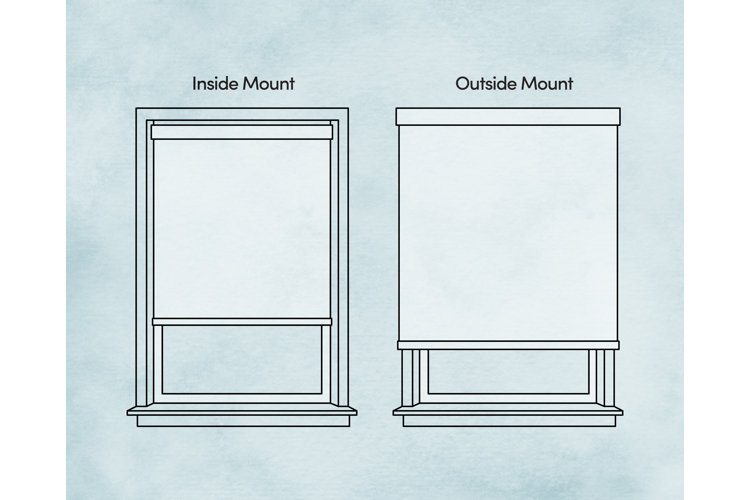
Inside mounted blinds and shades are mounted within the window frame or casing, which means that the blinds are narrower than the window frame. This mounting style is clean looking and doesn’t protrude into the room at all.
Outside mounted blinds and shades overlap the window frame and hang from an upper headrail. This style of mounting protrudes a bit and often makes the window appear larger.
Tip: For both inside and outside mounting, the window needs to be set at least 2.5cm deep in the sill. If the window isn't deep enough, the blind or shade will either protrude too far or rub up against the glass.
How to Measure Windows for Inside Mounted Blinds
Step 1: Measure the width of the window frame
Measure from inside edge to inside edge at the bottom, middle, and top of the window. Record the narrowest measurement.
Step 2: Measure the height of the window frame
Measure from the inner edge of the upper frame to the top of the sill (or however far down you’d like your blinds to go) along the left, middle, and right side of the window. Record the smallest measurement.
Step 3: Deduct 6mm to 1.2cm from the width measurement
This will prevent your blinds from scratching the sides of the window frame.
Step 4: Deduct 6mm from the height measurement
Especially if you don’t want your blinds to rest on the sill.
How to Measure Windows for Outside Mounted Blinds
Step 1: Measure the width of the window
Including the molding or frame.
Step 2: Measure the height of the window
Including the molding or frame. Round your measurements up, because you can easily adjust the length of longer shades or blinds.
Step 3: Add at least 7.5cm to the width measurement
This will ensure an overlap of 3.8cm on either side of the window frame.
Step 4: Add at least 7.5cm to the height measurement
Headrails typically add about 5cm to the height of your window frame and you always want to round up for height, as blind height is easy to adjust.
Step 5: For vertical blinds, add 10cm to the width and 7.5cm to the height
Overestimating the width measurement will help compensate for when the vanes or slats are fully opened.
Tip: Not sure if blinds are right for you? Then take a look at:
- Choosing Your Next Set of Curtains Just Got Easier
- Update Your Current Window Situation With These 14 Curtain Ideas
- Curtains or Drapes? Which is Right for You?
