Choosing Your Next Set of Curtains Just Got Easier
Find your perfect pair.
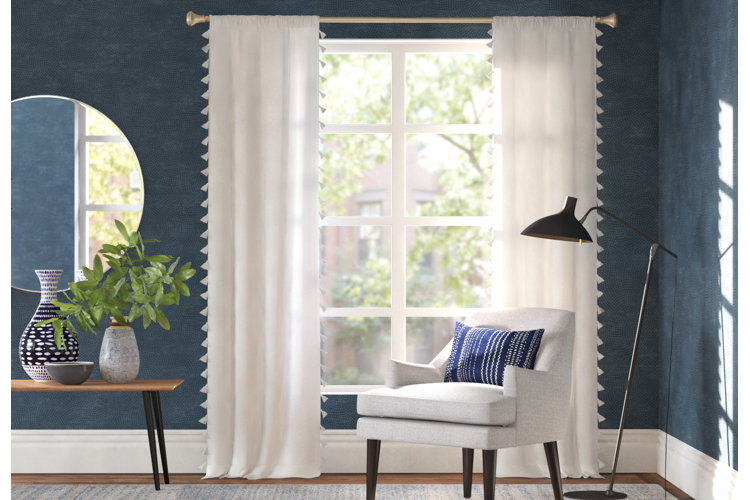
An essential part of any home, curtains are often un-thought about until the very last minute. When it comes to buying new curtains, there are a lot of key factors to consider, including what is the difference between poles and tracks, what different types of curtain headings are out there, and whether lined or unlined is the better option. Confused? Allow our guide to point you in the right direction.
Curtain Poles vs. Tracks

One of the first decisions to make when choosing curtains is whether you'd prefer to hang them from a track or a pole. If neither option is already in place in your home, consider the following before deciding what's best for you:
Curtain Poles
Curtain poles are long rod devices that sit above window frames to suspend curtains. Available in many different materials including wood, metal and plastic, poles are well suited to all curtain types. Most often, poles come with curtain rings attached that are suitable for pencil pleat curtains, as well as finials on each end for a decorative effect. Before installing a curtain pole, bear in mind the weight of the curtains to ensure that the pole is strong enough.
Curtain Tracks
Curtain tracks consist of roller glides, hooks and a track which together suspend pencil pleat curtains (be aware that pencil pleats are the only curtain heading type suitable for tracks) and allow for easy-drawing. Easy to install, curtain tracks can be corded, where a cord runs along through the track, allowing curtains to be opened and closed with a pull-cord at the side; or uncorded, where the curtains require handling to be drawn open and closed.
Tip: Curtain poles and tracks should sit around 8 - 12cm above the window and should be approximately 20cm wider than the window frame on both sides. This also prevents light from creeping in through the sides when the curtains are drawn.
Tip: Unsure if curtains are right for your home? Then why not take a look at our expert advice on curtains vs. drapes before you decide.
Curtain Heading Types
Pencil Pleats: The most common and traditional of curtain headings, pencil pleats consist of closely-gathered folds that resemble a row of pencils. Attached to the fold of the curtain is a wide strip of tape that runs across the top and attaches to curtain hooks, which then attaches to your window pole or track.
Pencil pleats are a great option if you ever need to adjust the height of your curtains as the level of tape can be adjusted to suit your preference. Be aware, this would require unpicking and re-sewing the thread. The look of the top bunching can also be customised depending on the quantity of hooks used (use more hooks for a tighter look and less to create shallow folds).
Eyelets: Eyelets are simply rings (usually metal) that thread through the curtain pole. Easy to install and achieve a clean, minimal look, eyelets are suitable for all curtain fabrics, but aren't compatible with curtain tracks, valances or bay windows.
Tab Tops: Tab tops are when loops of fabric are stitched to the tops of the curtain to create a clean, casual and contemporary look. Easy to hang, the curtain pole simply slides through the fabric loops in a similar fashion to eyelets. The downside of tab top curtains is that they allow light in through the top and so if you prefer the option of blacking out rooms, fix your curtain pole high enough above the window frame to avoid light leaking through.
Slot Top: Perhaps the most formal in style, slot top curtain headers completely cover the rod they're attached too. This header style works best with curtains that aren't opened often or are left open with tiebacks.
Curtain Linings: Lined vs. Unlined
Lined Curtains
Pros:
- Better overall quality - lined curtains have better protection against strong sunlight, which in turn prevents the fabric from fading and makes the quality last longer. Linings also enhance fabric colours by acting as a backdrop.
- Improved insulation - lined curtains are thicker and therefore keep the house warmer, making them essential during the British winter. Some linings can even be removed to cater to different seasons.
- Good sound insulation - due to their added thickness, lined curtains are much better at blocking out noise from the street.
- More privacy - linings provide a better blackout at night time and thus avoids the risk of a passer-by being able to see through the fabric as they walk past.
Unlined Curtains
Pros:
- Summer season appropriate - due to their lighter material, which allows for cool air to pass through more easily, unlined curtains have an airier feel and more laidback look.
- Brighter rooms - due to their lower resistance to sunlight, unlined curtains allow a much brighter room.
- Lower price - curtains without linings are a lot cheaper than lined curtains due to the significantly lower fabric used.
Standard Curtain Measurements
Measuring for curtains can be a pretty daunting task, but you need to make sure that you get your dimensions exactly right. By following these tips below, you won't have a problem:
Curtain Width
- Always make sure to measure the pole or the track and not the window (unless it's wall to wall)
- We recommend having your curtains double the width of your curtain pole for the traditional look. For a looser look, increase the width or decrease for tighter curtains
- Finally, add an additional 2 - 3cm to the curtain width to allow for curtains to overlap in the middle when drawn
Curtain Drop
Before measuring the drop length, first decide where you wish the curtains to drop bearing in mind the following:
- Sill-length curtains should finish 1.25cm above the sill
- Below-the-sill curtains should drop 15cm below the sill
- Floor-length curtains should finish approximately 1.5cm from the floor (unless you prefer to have them trailing)
- If you're using a curtain track, measure from the top of the track
- When measuring the curtain drop for eyelet and tab top curtains, measure from the top of the pole to where the curtain bottom should finish, making sure to add 4cm for eyelet curtains
- For pencil pleat curtains hanging from a curtain pole, measure the drop from the bottom of a curtain ring
How to Care for Curtains
- If your window receives a lot of direct sunlight, opt for a lighter-coloured lined curtain to avoid any rapid fading on the fabric
- Be careful with your placing of flowers and plants on windowsills to avoid the risk of pollen staining any delicate fabrics
- Don't hang curtains too close to radiators or windows to avoid black mould occurring as a result of condensation
- Prior to washing your curtains, take off the curtains from the pole or track and remove any solid items, such as hoops or hooks
- Always wash curtains in cold water with a suitable detergent that you've previously tested on part of the fabric
- If you're cleaning your curtains in a washing machine, make sure that the fabric is machine washable and spin them dry on a low setting and for the shortest amount of time possible - Iron curtains on the reverse side and wait until the curtains are completely dry before reattaching any metal hardware
Tip: Our guide on how to hang curtains will see you take your windows from drab to fab in no time.
