This is How to Hang Curtains Properly
Transform your windows.

Curtains are the perfect way to add a finishing touch to any space—one, that when done correctly, ties the look of a room together. Mounted correctly, properly hung curtains (or drapes) enhance the aestheticity of the room and make the space feel bigger. Learning how to hang curtains can seem daunting, but we have narrowed down everything you need to know to make this task a quick and easy update. Before you begin installing your new curtains learn what you need, where the brackets should be installed, and how to achieve the look you want. Follow our tips below to get your curtains up properly in no time!
Hanging Curtains: Things to Consider
Curtain Pole Placement
Standard mounting is 10cm above the window frame and 5 - 10cm out from each side. For a more dramatic, ceiling raising illusion, place your curtain rod 15 - 20cm above the window frame. Measure for all windows before deciding on the rod placement so that the drapes are a consistent height and length for all windows in the room.
Curtain Height
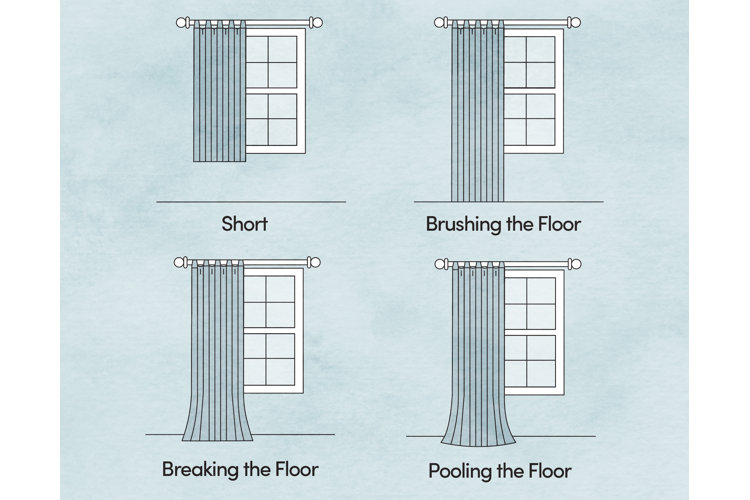
Before hanging each curtain remember to measure the height from rod to floor. Make sure to account for the height of the rings or hanging hardware and the amount of space you want between the curtains and the floor.
Decide the length that you want the curtains to be: at the windowsill (short), below the windowsill and just touching the floor (brushing the floor), to the floor (breaking the floor) or pooling the floor. If you want curtains to pool on the floor, be sure to get curtains with 15 - 20cm of added length.
When in doubt, overestimate the curtain length that you need. It is easier to fix if the curtains are too long than if they're too short - you can always hem later.
Curtain Width
If the curtain has softer folds (waves in the curtains), each panel should be one-and-a-half times the width of the window frame. For a more tailored look, curtain panels shouldn't overlap too much. Look for curtains that total 5cm wider than the window. For a draped, more romantic look, the curtains should measure three times the window width and may often pool on the floor for a more dramatic, elegant feel.
Tip: Take note of any immovable elements like plug sockets and light switches, and avoid covering them. If there is no other place to put the curtain, you can use curtain tiebacks.
Curtain Hanging Style
The top of the curtain (referred to as the header) comes in a number of styles:
Grommet or eyelet Curtains are hung by inserting the curtain rod through metal rimmed openings, or grommets, along the header. Tab top curtains have a row of fabric tabs (loops) at regular intervals that are used to hang the curtain panel from the curtain rod. Pleated Curtains allow curtains to be shaped into neat pleats and hung by rings. Read our guide on how to choose your next set of curtains for more information about curtain styles.
Tip: How do the pros get their curtains looking so... lovely? Easy, just iron (or steam) them before they're hung. Wrinkled curtains will never fully 'unwrinkle' without a little help. Avoid a messy finished look and grab that iron.
Step-by-Step Guide to Hanging Curtains
What you'll need:
- Curtain hardware (rods, brackets & screws)
- Tape measure
- Screw driver
- Power drill
- Hammer
- Level
- Stud finder
- Drywall anchor (optional)
- Curtains
- Finials for finishing touches
Tip: Hanging curtains 15 -20cm above the window frame and 10 - 15cm out creates the illusion of a larger window and the curtains end up blocking less light. Perfect for making a room feel larger, light, and airy.
Step 1
Measure and mark where you would like the bracket to be installed. Be sure to allow room on the outside of the bracket to accommodate a finial (the detail at the end of your rod) if you have one.
Step 2
Use the level to determine if the marks you have made for the brackets are even so that your rod hangs exactly parallel to the floor. Double check your measurements to be sure your curtains will fall where you would like them to at the bottom.
Step 3
Before drilling your pilot holes (small holes used to guide the screw), check to make sure that you are installing into a stud by using a stud finder. If you do not have a stud finder or cannot find a stud, install drywall anchors to support the weight of your curtains.
Step 4
Carefully screw in the hardware, following the manufacturer's instructions, into the pilot hole or drywall anchor and attach your curtain rod brackets.
Step 5
Once the brackets are up, string or clip the curtains to the rod and place the rod in the brackets. Keep in mind that you may have to remove the finial on some rods to do this.
Tip: For a room that gets too much sun or is used for TV watching, consider installing blackout curtains or blackout liners to existing curtains. This will keep your space cool, dark, and movie ready!
