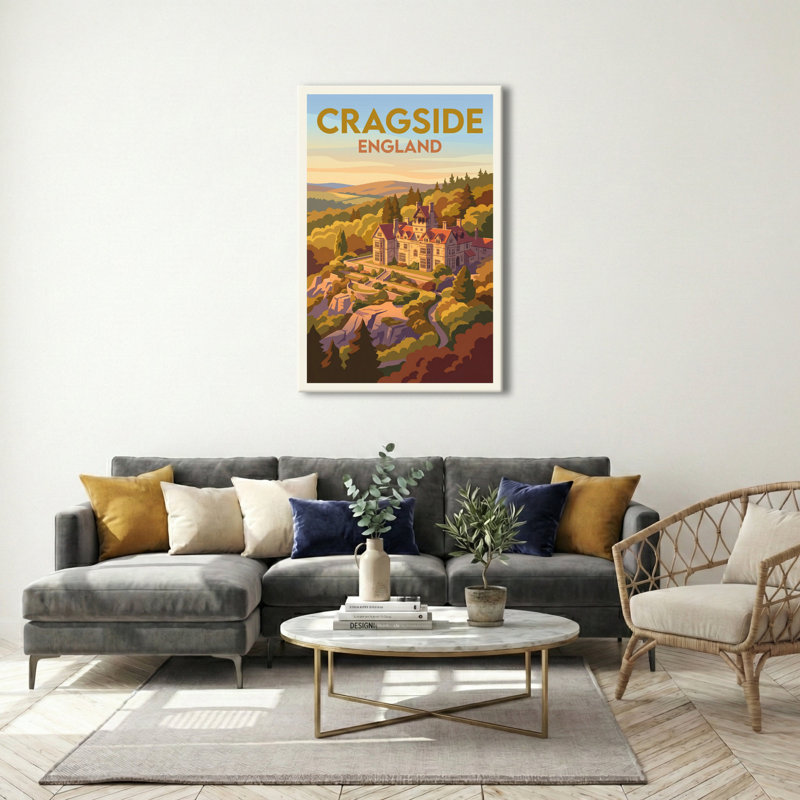
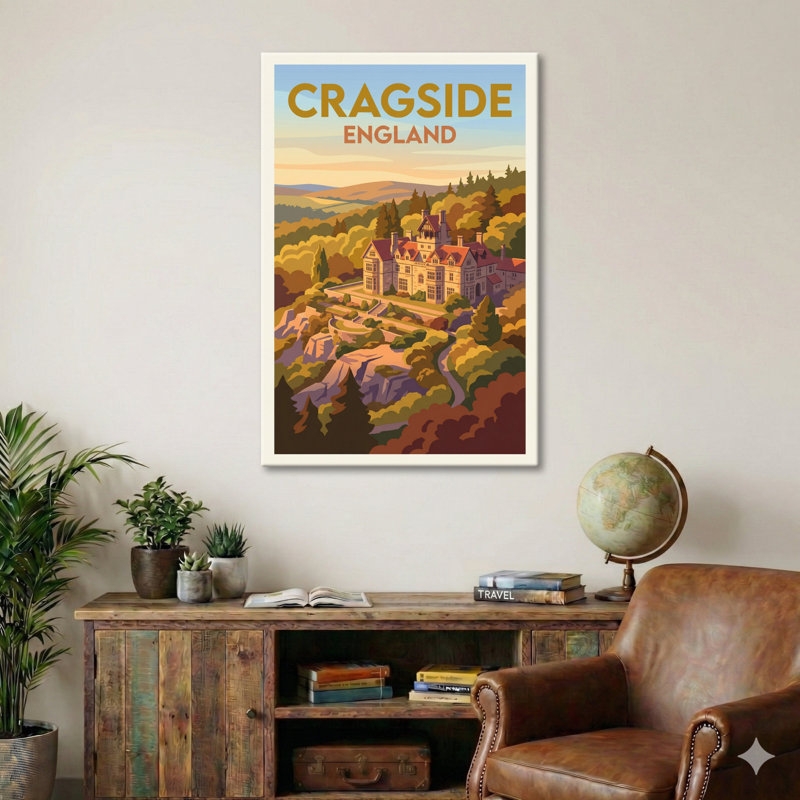
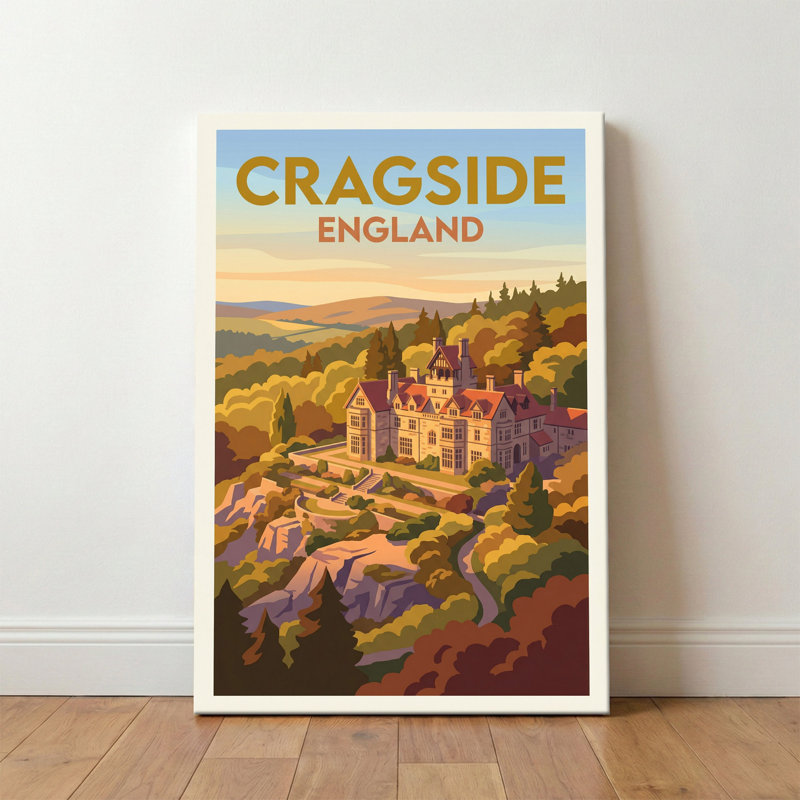
Perched above steep rocky outcrops and wrapped in ancient woodland, Cragside feels like a private stage set for a quieter kind of adventure. This travel poster celebrates the Northumberland house in England where Victorian invention meets wild British landscape - a place of terraces, waterfalls, winding paths and long views that sweep over rolling hills to the horizon.
Cragside's story is part romance, part engineering triumph. Built and enlarged in the late 19th century by William Armstrong, the estate became famed for its daring blend of technology and taste. It was among the first houses to be lit by electricity and powered by water, an imaginative meeting of millwright skill and aristocratic retreat. Today the house stands as a handsome example of Victorian country-house grandeur: gables and chimneys caught in warm light, stone steps leading to terraces that look out over dramatic crags and carefully planted gardens.
Beyond the architecture, the real splendour is the setting. Ancient pine and beech cloak the slopes, punctuated by roaring waterfalls and quiet lakes. The estate paths invite exploration - a visitor might follow a faint track into copper-bronze undergrowth or find a sunlit promontory that frames the house against far hills. In spring, carpets of bluebells and rhododendrons add a theatrical flourish; in autumn, the woodland becomes a blaze of ochres, russets and evergreen, perfect for slow country walks and stolen moments.
This poster channels that mood. Rendered in a retro travel-poster style, it uses broad, confident colour blocks and simplified forms to capture the feeling of place rather than a photographic likeness. The palette leans into late-afternoon warmth - buttery ochres, soft terracotta, deep pine greens and mauve shadows - suggesting the golden hour when the house and cliffs glow and the landscape exhales.


 18+, T&C apply, Credit subject to status.