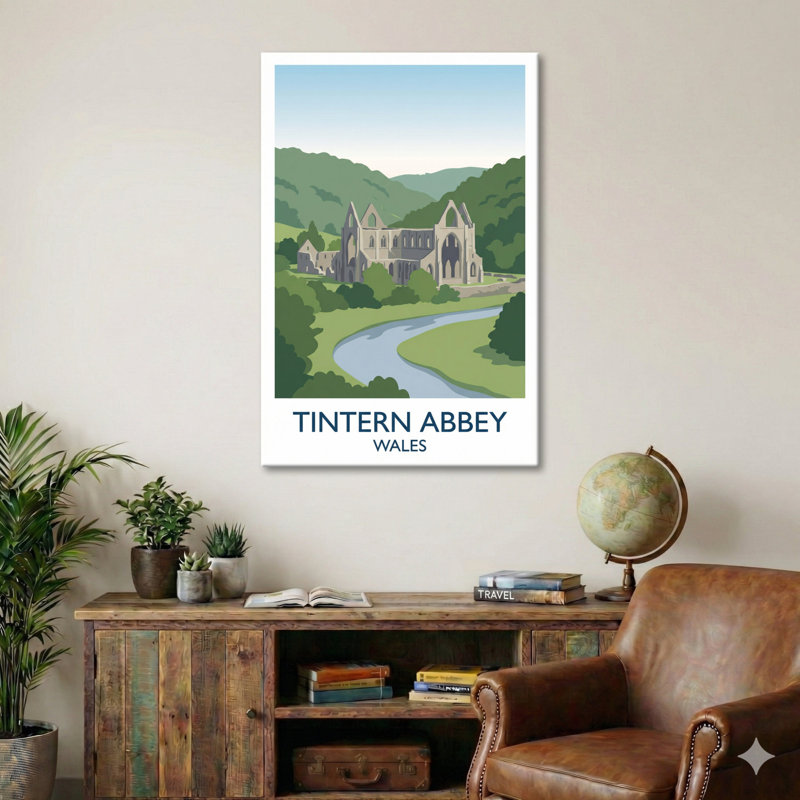
Tintern Abbey sits like a memory in the Wye Valley, its stone arches and empty windows framing the hush of river and wood. Founded in 1131 as a Cistercian monastery, the abbey grew into a place of quiet ritual and craft before the Dissolution of the Monasteries left it a ruin. Centuries later it became a touchstone for artists and poets - a place where Wordsworth and others found a particular kind of consolation - and today its silhouette still draws visitors who want to walk in that same historic light.
Set within the Wye Valley Area of Outstanding Natural Beauty, Tintern Abbey is as much about its landscape as its architecture. The River Wye curves past the nave, reflecting the weather and the seasons: misty mornings that blur the hills, bright summer skies that sharpen the stone, autumn light that gilds the trees. Woodland slopes rise behind the ruins, a patchwork of greens that move from moss to pine to the deep blue-greens of distant hills. It is a landscape that invites slow travel - a riverside stroll, a picnic on the grass, a quiet bench where you read or listen to the water.
This travel poster celebrates that mood. The composition reduces detail to essentials: the abbey's Gothic arches, the river's gentle S-curve, the layering of hills. A restrained palette of soft greens, river blues and muted stone greys mirrors the place itself - calm, timeless and slightly romantic. Subtle gradients suggest morning light while flat, confident shapes give a vintage travel-poster clarity. Typography sits at the base in clean, elegant letters that echo classic posters from the early twentieth century, giving the image a sense of occasion without shouting for attention.