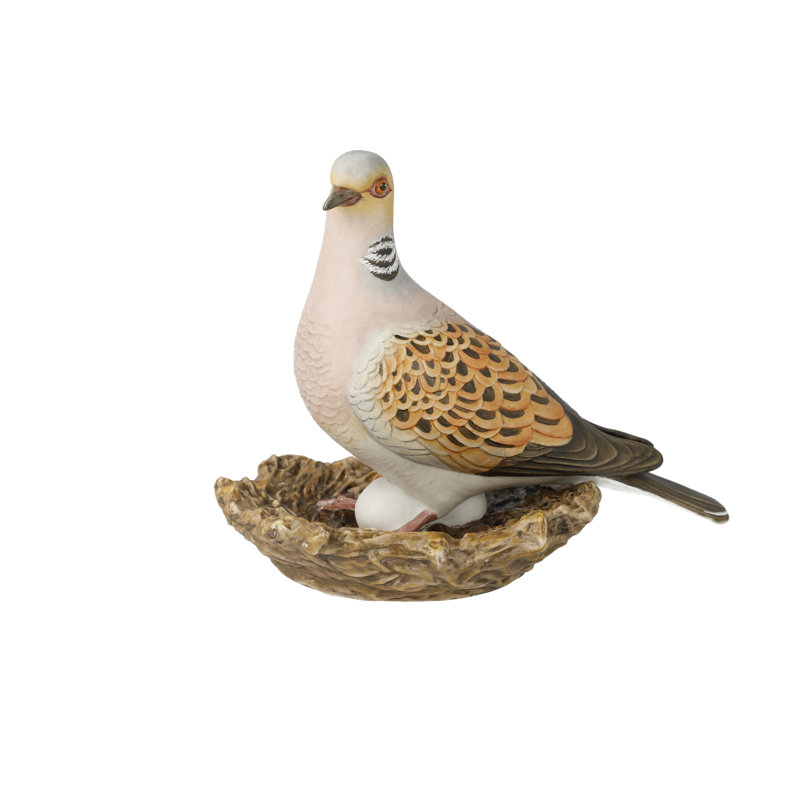
Turtle dove (Streptopelia turtur) Large. The turtle dove is considered to be a messenger of happiness or love, but its real living conditions are less romantic. After losing almost 90% of German populations since 1980, the species is now highly endangered. Whole areas are now lovebird-free. Originally found in riparian forests and forest edges, as well as around clearings The preferred habitat of the turtle dove today is in the cultivated landscape with field trees and hedge structures or in sparse forests with undergrowth, but sometimes also in villages or settlements or in former military training areas or in gravel and coal mines. Does the turtle dove prefer to stay where it has enough pesticide-free seeds of wild herbs and water for drinking? nd. Optimally, a mosaic of different land-use types and crops provides a lush food base throughout the breeding season. As the only one of our native pigeons, the turtle dove lives as a migratory bird and is therefore exposed to new dangers such as climate change, the loss of habitat in the Sahel zone and legal and illegal hunting in the Mediterranean region. Visually, the turtle dove is unmistakable among domestic pigeons. On the au? Its colourful design looks almost exotic. Its clearly stepped, dark tail with a white end is unmistakable. The top of the head and the outer upper? Iron blankets look blue-grey. On the other hand, are the back and the inner upper? Rusty brown coloured blankets with black feathers. The sides of the turtle's neck are decorated with a black and white striped spot. Throat and chest are delicately coloured. A clearly reddish eyelid ring surrounds the orange-red eye.


 or
or 18+, T&C apply, Credit subject to status.