Cooking with Cast Iron: Le Creuset Cooking Guide
Tips to last a lifetime.
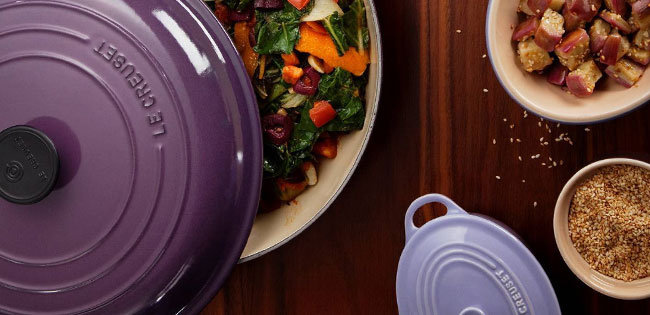
Cast iron is an extremely versatile and quality cooking material. Whether you're slow cooking or high-temperature searing, cast iron can be used reliably on any heat source, including induction, oven and grill. Cast iron is ideal for taking dishes straight from the stove to the table. It's ability to retain heat means it keeps food warmer longer. and it can also be used to keep food in the fridge or freezer for storage or food prep.
Before your first use remove all packaging and labels. Wash your new piece of cookware with hot, soapy water, then rinse and dry thoroughly. Unlike raw cast iron cookware Le Creuset is ready to go right out of the box. There's no need for seasoning or further preparation before you start cooking. Use this guide for other helpful tips as you learn to cook with cast iron.
Cast Iron Cooking Tips
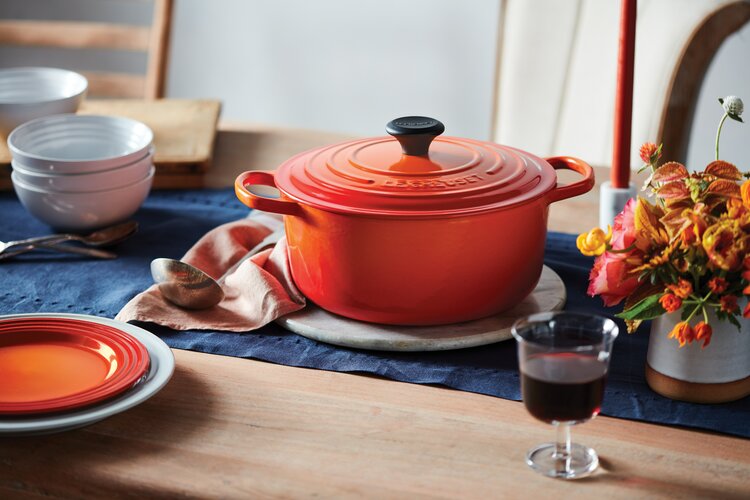
Le Creuset cast iron cookware can be used on all heat sources. As a general rule, always match the pan's base size to the stovetop heat zone size. This prevents overheating of the pan and sides, as well as any potential damage to the handles. Gas flames should never extend beyond the base area to the sides of the pan as this can case damage.
Safety & Care
Cooking Care
Always make sure that the longer handles of your cast iron pan are positioned safely over the cook top and don't hang over the front of the stove.
Handles and knobs will become hot during cooking, so it's recommended to use a thick cloth or oven mitts when lifting. Medium and low heat will provide the best results for almost any type of cooking, including frying and searing. It's a common myth that higher heat is required for searing, however the real trick is to pre-heat the pan before you begin.
High temperatures should only be used when boiling water or for reducing stocks and sauces. A Le Creuset cast iron pan should never be pre-heated over high heat as the material retains heat so well that this will cause your food to burn.
Deep Frying with Le Creuset
For deep frying, the oil level should not exceed one third full. This allows for sufficient height for the oil to rise once you add food to cook. When frying, keep the lid close by to use in the case of overheating or flaring. Silicone, wood and heat resistant plastic tools are recommended for stirring.
Enamel Care
With the exception of grill pans, the enamel surface of Le Creuset cast iron cookware is not ideal for dry cooking. Your choice of oil, butter or fat should completely cover the base of the ban before heating begins. Never pre-heat a pan without and liquid as this can cause damage to the enamel.
Metal utensils can be used but pay special attention not to scrape over the enamel surface. Hand-held electric or battery-operated mixers and beaters can also damage the enamel, so try to avoid using these. Remove all food from the pan and chop with knives and replace if needed.
Additional Care
When serving from your Le Creuset cookware make sure to always place hot items on a trivet, wood board or silicone mat. Hot cast iron placed on unprotected surfaces can leave burns and stains. For use in the oven, note that the black phenolic lid knobs on Le Crueset Signature cookware are heat-resistant to 250°C.
The black phenolic lid knobs on Le Creuset Classic cast iron cookware are heat-resistant to 190°C. Pieces that feature integral cast iron handles or stainless steel knobs can be used at any oven temperature. Any pans with a wooden handle or knob must not be placed in the oven.
Do not place any cookware on the floors of ovens with cast iron linings. This will increase the cooking temperature inside the oven, resulting in an increased cooking rate with detrimental effects on food. Try not to drag your Le Creuset cookware across the floor of the liners - for best results always place on a shelf or rack.
Cast Iron Cooking Tips for Grilling

For expert grilling and searing, place the empty cast iron pan on medium heat allowing it to heat up for several minutes. Do not add oil to a cold pan, this can cause the oil to become too hot and smoke.
To test that your pan is hot enough, take a few drops of water on your fingertips and scatter over the hot surface. You're aiming for the water to sizzle and evaporate immediately to know whether the pan is hot enough and ready for use.
Sear lines from ribbed grills will not be produced if the pan surface is too cold so wait a little bit longer if the water doesn't evaporate immediately. Once the surface is ready lightly oil with cooking spray or brush with oil. Vegetable, ground nut, and corn are preferable to olive oil which may cause excessive smoking.
For distinct sear lines, leave your food undisturbed on the surface for several minutes. Make sure that any food you are attempting to grill is dry before you begin cooking. Cooking with wet food may result in a less than ideal flavor and sear. If needed use paper towels to pat off excess moisture before you begin cooking. Note that this also applies to foods that you are marinating.
Liked This Article? Shop The Look!
ad
