Everything You Need to Know About Space Heaters
Stay warm this winter.
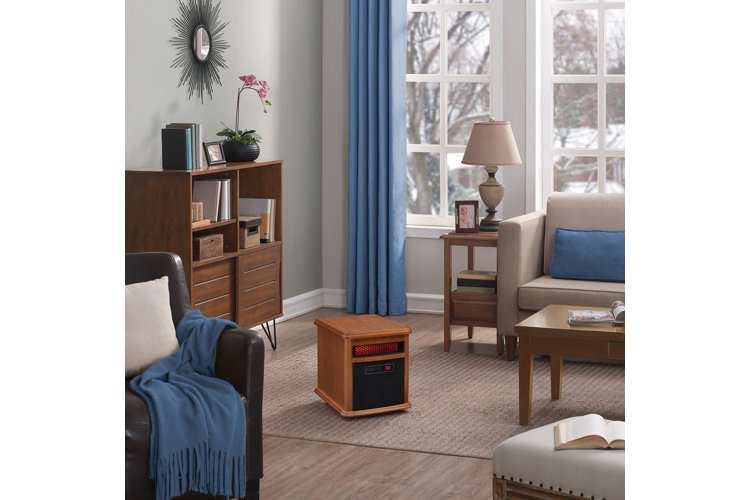
When the cold weather really sets in, it's worthwhile to consider investing in a quality space heater. But which space heater should you buy? When shopping for a space heater, there are a number of things to consider including wattage, design, fuel type, heating method and more. In this guide, we'll walk you through all the different space heater types so you can choose the absolute best space heaters for you and your home.
Space Heater Buying Guide
Best Space Heater Fuel Types
One of the biggest choices you'll need to make before you buy a space heater is what type of fuel you'd like your space heater to use.
Tip: It's important to keep in mind that space heaters that run on gas produce carbon monoxide - a colour and odorless gas that can be deadly in high concentrations. If you're using a space heater that combusts gas, pay strict attention to the safety instructions and be sure to ventilate the space properly. You must also have a functioning carbon monoxide detector to alert you if carbon monoxide is leaking into your home.
Electric: All that's needed to run an electric space heater is an electrical outlet. Though electric heaters can be some of the most expensive to operate, they don't emit carbon monoxide and therefore don't require outside ventilation. Some electric space heaters can pose fire and burn risks, so it's best to use them away from other objects, children and pets.
Natural Gas: If your home already runs on natural gas, natural gas space heaters are a great choice. Natural gas is one of the most commonly used fuels for heating homes – though prices do fluctuate, natural gas tends to be one of the cheapest fuel options. This type of space heater will need to be properly vented, as there is a carbon monoxide risk.
Propane: These space heaters are fueled by propane gas. Unlike natural gas space heaters, propane space heaters don't require a connection to an external gas pipeline; instead, propane is available for purchase in individual tanks or canisters. As with any gas-fueled space heater, propane space heaters release carbon monoxide and thus will need to be vented to your home's exterior. Improper ventilation could result in a dangerous carbon monoxide leak into your home.
Kerosene: Kerosene space heaters function like kerosene lamps; they ignite a large wick that draws kerosene upward from the fuel tank. The heater then oxygenates and evenly distributes that flame, which heats the air around it via convection or radiation. These heaters are sometimes preferred because they don't need to be vented, but a carbon monoxide risk still exists. It's best to use a kerosene heater in a larger space with windows and doors open to prevent asphyxiation. It's also a good idea to keep a kerosene lamp away from other objects and avoid using it overnight. These heaters shouldn't be lit around children or pets and must be handled according to their safety instructions.
Diesel: Typically preferred for commercial or industrial use, diesel space heaters are best for efficiently heating a large area in a short amount of time. Diesel space heaters produce carbon monoxide, so it is best to use them in appropriately sized spaces with proper ventilation.
Best Space Heater Types
Cabinet: Cabinet space heaters are often used to warm small enclosures that hold electronic equipment that is susceptible to the cold. They're also commonly used as standard residential space heaters as they can effectively heat average-sized residential rooms. Most cabinet space heaters are electric and come with a remote control that allows you to control the temperature from a distance. Some cabinet space heaters resemble wood stoves, while others are designed to look like mini fireplaces.
Compact: When you imagine a space heater, you probably picture a compact heater: a small, portable electric device surrounded by a metal grill that protects heated coils within. Compact space heaters tend to be smaller than other space heater types. They're great as personal heaters but can also work well at heating small, enclosed rooms.
Panel: Panel space heaters are electric heaters that warm air using convection. These sleek, narrow devices look best positioned beside a wall. They're praised for their fast-acting heating and variety of temperature controls.
Radiator: Many modern radiators are electric, using heated mineral oil instead of steam to heat their coils. Radiators are well-loved for their reliability. These devices require some airflow to work properly and can be hot to the touch, so it's best to use them in open spaces away from children.
Tower: Tall and narrow, tower space heaters are great if you don't want your space heater taking up too much floor space. These heaters use electricity to heat internal ceramic plates and then blow out hot air using internal fans. Many tower space heaters even oscillate to better distribute heat.
Utility: Utility space heaters are designed to heat large areas. They're best for wide-open industrial spaces and are not recommended for residential use. The design and heating method of utility space heaters can vary but almost all require significant airflow or ventilation to be used safely.
Best Space Heater Sizes
If you'd rather shop for space heaters by their recommended space requirements, you can do that as well. These options take much of the calculation out of your hands and allow you to explore many options for space heaters that would be appropriate for spaces of approximate sizes.
Personal: 0–100 sq. ft.
Small Room: 100–300 sq. ft.
Medium Room: 300–600 sq. ft.
Large Room: 600–1,000 sq. ft.
Extra-Large Room: Over 1,000 sq. ft.
Tip: Space heater sizes can also be listed by their wattage or Btu output. Both metrics are used to describe a space heater's efficiency and can help you choose a space heater that will effectively heat a space of a certain size. Find this information on-site under a product's specifications.
Space Heater Safety
With space heaters come several potential risks, from fire hazards to carbon monoxide dangers. Improper use of space heaters is one of the leading causes of fatal house fires. It's absolutely necessary that you adhere to the safety instructions of your chosen space heater to avoid fires, burns and carbon monoxide poisoning. Below are some guidelines that you must follow to avoid some of the dangers associated with space heaters.
- Install smoke detectors and inspect them regularly.
- If you're using a gas heater, ensure proper ventilation and install carbon monoxide detectors.
- Always place your space heater at least 3ft away from anything flammable.
- Always place your space heater on level ground.
- Never use an extension cord with an electric space heater; always plug it directly into a wall outlet.
- Never leave your space heater unattended, especially while you're sleeping.
- Inspect your space heater for damage before each use.
- Ensure your space heater is properly cleaned and maintenanced before use.
- Do not touch your space heater while it's on, except to use built-in controls.
- Allow your space heater to cool before you touch or move it.
- Install a safety gate or prohibit children or pets from entering an area with a space heater.
