Choosing the Best Type of Vacuum Cleaner for Your Home
Tackle the many hoover options with our guide.
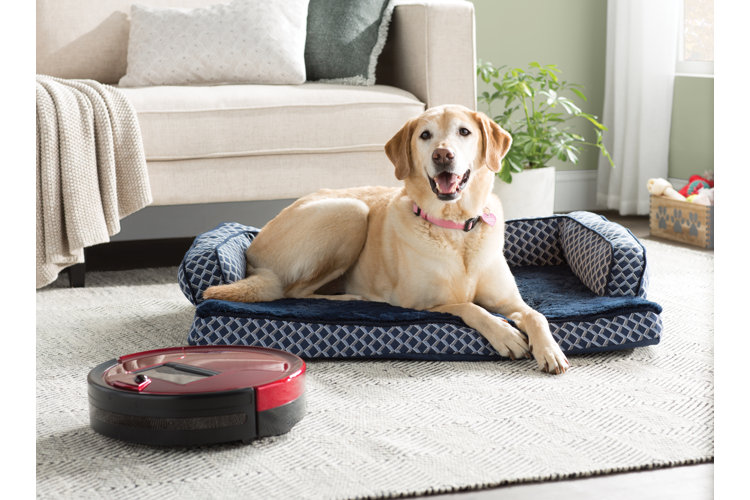
With so many hoovers on the market it can be hard to decipher which model will work best around your home. From robotic to upright and handheld, our guide answers all your vacuum cleaner questions and covers all the important things to know such as 'what does HEPA stand for?' and 'which vacuum will clean up the most pet hair?' - keep reading!
Types of Vacuum Cleaner
Upright
Upright vacuum cleaners are a great option if you have a one-level apartment or will be leaving the vacuum on one floor of your home since they tend to be bulkier and hard to carry up stairs. Upright models require less lifting and bending and can cover large areas in your home quickly.
Canister
Canister vacuum cleaners consist of a lightweight canister attached to a hose, allowing them to easily to pick up dirt and debris, as well as maneuver. Canister-type hoovers a great choice for hardwood and laminate floors, curtains, stairs and vertical surfaces.
Robotic
Robotic vacuums are self-powered, therefore taking the work out of vacuuming. This futuristic, cordless vacuum cleaners combine dirt and motion sensors, as well as a head that adjusts to accommodate different carpet heights,
Stick
Stick vacuums, also known as broom vacuums, are lightweight, cordless vacuums that are also compact in design, making them a popular option for smaller homes. These hoovers tend to use less power than the larger varieties. Often cordless, these models are best for small messes and don't come with agitators.
Handheld
Handheld Vacuums are small, lightweight and cordless, which makes them perfect for small clean-up jobs in tight spaces. Some models come with agitator attachments to help remove dirt from carpeting.
Deep Cleaning
Deep cleaning vacuums use steam cleaning to sanitise and deep clean carpeting. This model would be ideal if you live with small children or pets as it removes deep set stains and dirt with ease.
Tip: For more tips on how to keep your home clean with pets, check out these guides:
Steam Cleaners
Steam cleaners work to sterilise hard surface flooring using steam instead of chemicals. Consider this option for high foot-traffic spaces such as the kitchen, hallway and bathroom.
Bag or Bagless?
Benefits of Bagged Vacuum Cleaners:
- Typically cheaper than bagless vacuums
- Greater capacity for holding dirt and debris
- Easier waste disposal
- Extra filtration. There are different grades of filtration bags that can help prevent allergy build-up in the home
Benefits of Bagless Vacuum Cleaners:
- No bag, means no money spent on replacements
- More efficient at picking up pet hair
- Easier to clean
- No suction is lost as the canister fills up
Tip: Dump out your bagless vacuum's canister every time or every other time you use it to be sure it doesn't clog up with hair or other small objects you may vacuum up.
What is an Agitator?
An agitator is the part of the vacuum that comes in contact with the carpeting. It lives in the front of the machine and is either a metal, plastic, or wood piece that has bristles. These bristles work the carpet fibers to release dirt and debris so that the vacuum can suction it up more easily.
- Be sure to check your agitator for string and hair regularly. These pieces can get stuck and jam up the machine. To clean, just use your fingers, or a comb, to release the strands
- Look for a metal agitator with replaceable bristles for a long term investment
- Keep an eye on the bristle length. Shorter bristles are less effective in removing dirt
What Does HEPA Stand For?
HEPA stands for 'high efficiency particulate air'. HEPA filters are important to consider, especially if someone in your family suffers from allergies.
- Filters work to remove particles from the air that other vacuums would just release back into the air
- True or Absolute HEPA filters are certified filters with serial numbers that have passed a test where they are required to filter at least 99.97% of particles
- HEPA type filters are similar to the True HEPA filters, but have not passed the same test. These typically capture 85 to 90 percent of particles in the air
- A true HEPA filter is only necessary if you have someone in the household who suffers from allergies
Understanding Your Vacuum's Power
- Amps: The amount of electric current flowing through the vacuum
- Watts: The amps multiplied by the voltage drawn
- Most Upright cleaners are 7 to 12 amps
- Higher ampage does not necessarily equate to more power. If you require more power, instead consider the amount of suction a machine offers and the quality of the agitator
Tip: Small cordless vacuums make it easy for kids to pitch in. Try keeping one in the playroom or kid's bedrooms so they can be responsible for vacuuming their own space.
What is Suction?
Suction is what makes for a more powerful machine that is capable of picking up deep down dirt
- Look for a vacuum with two or three fans instead of one which improves suction power
- Keep in mind hose and nozzle quality. Suction power can be lost through small gaps in the hose design
- Handheld models (like the one pictured to the right) or upright versions often offer superior suction since there are few opportunities for suction loss
Types of Attachments
Not all surfaces are created equal, so finding the right tool to clean up their dust and debris is vital. Most vacuum cleaners include a range of attachments, otherwise you can buy them separately.
Crevice Tool
A crevice tool is a skinny, angled tool that works well to clean in tight spots such as behind a radiator or along a skirting board.
Dusting Brush
Dusting brushes are soft, bristle brushes. These attachments are ideal for picking up dust along skirting boards, windowsills and shelves.
Upholstery Brush
Often wider than their dusting counterparts, upholstery brushes come with a lint strip that easily picks up dirt from sofas, curtains, armchairs - any upholstered piece of furniture.
Mop Pads
Steam cleaners include mop pads that can easily be removed and placed into the washing machine when needed.
Additional Things to Consider
- Think about the surfaces you plan to use your vacuum on. If you have more hardwood than carpeting, think about investing in a steam cleaner. If you have pets, consider getting a vacuum specially made for pet stains and fur
- If you have a lot of stairs in your home consider a lightweight model that can maneuver up stairs and into tight spaces
- Be sure that whatever model you decide on comes with a warranty from the manufacturer. This protects you from defaults in the vacuum's design
