How to Organise a Fridge for Maximum Use
Getting the most out of your fridge from the top down.

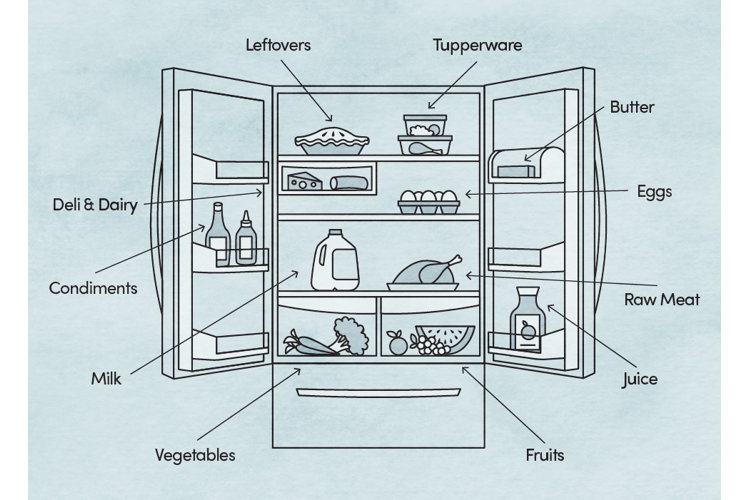
Did you know the different sections of your refrigerator vary in temperature? Help your food to last longer by organising your fridge and strategically placing your groceries in all the right spots. Our guide to optimal fridge organisation shows you how.
Jump to:
Fruit & Veggies
Your fridge will likely come with two drawers, or crispers, with varying degrees of humidity. Fruit belongs in the low-humidity drawer as too much moisture can cause them to rot faster. Place veggies in the high-humidity drawer. Are your vegetables always going bad? Try washing and prepping them before refrigeration. Onions, tomatoes, potatoes, bananas and garlic don’t actually require refrigeration and pitted fruits should only be refrigerated after they ripen.
Tip: Put berries and other fruits that rot quickly on an eye-level shelf rather than in the drawer, so they won’t be forgotten.
Raw Meat
Place uncooked meat on the bottom shelf of your fridge and away from other raw items. This way, it won’t drip onto items beneath it or cross-contaminate other food. Some fridges have designated drawers for raw meat.
Milk
Milk belongs in the coldest part of the fridge, which is a back corner of the bottom shelf. The side door is actually the warmest section, so it is the last place you want to hold your milk.
Eggs
To keep other food odours out, leave eggs in the carton they came in. Then place them on the middle shelf as this is the most temperate section of your fridge. You don’t want your eggs experiencing temperature fluctuations.
Tip: Write 'best by' dates on your food to remind you when it is time to throw items away.
Deli & Dairy
Keep deli meats and cheeses in the deli drawer, a shallow bin slightly colder than the rest of the fridge. If your fridge does not have this drawer or you have more dairy items to store, place them on the bottom shelf. Butter, however, should be kept in its own exclusive penthouse on the side door so it does not get too hard.
Drinks & Condiments
The side door is perfect for processed items such as cartoned juices and condiments. These items will last the longest, so the warmer temperatures of the side door will impact them the least. To keep this section organised, constantly downsize your condiments into smaller containers as you use them. You can also group them by type, so that your BBQ sauces don’t get lost behind your salad dressings, causing you to buy multiple.
Leftovers
The top shelf is the perfect home for already-cooked items. Ready-to-eat food won’t be harmed by this slightly-warmer shelf and it’s easily found when it is front and center.
Tip: Keep leftovers in square tupperwares to utilise the most space.
As well as organising, remember to clean your fridge regularly to avoid odours, making sure to get stuck into the difficult corners with an old toothbrush to remove any bits of rotten food or mould.
