90 Years of British Design Infographic
We're taking a look back at British milestones which helped shape our style over the last 90 years.
This past year has been a great one for Queen Elizabeth II. She became the longest-reigning British monarch back in September 2015, when she surpassed Queen Victoria. In 2016, it's time to mark yet another event, Her Majesty's 90th birthday. The celebration season began on April 21st with the Queen's real birthday and even more festivities were organised on a weekend in mid-May. However, June 11th is when the official birthday takes place and the famous Trooping the Colour military parade will, as always, mark the occasion.
To join in the festivities, we've created an infographic for Her Majesty's 90th, with our very own take on this momentous event. We'd therefore like to use the occasion to celebrate the past 90 years in terms of British design and innovation as well! The result of our efforts is this beautiful timeline, showing interesting, yet lesser-known facts from the Queen's life, alongside British innovations that left a mark in the design world from the same year. The timeline starts in 1926 with Princess Elizabeth's birth and ends, of course, in 2016 with the royal birthday.

http://common1.csnimages.com/docresources/2664/35/356329.jpg
Our hope is that we've piqued your interest and, as a result, you'll be searching for more British
innovations or interesting fun facts about Queen Elizabeth II on your own. There is, of course, much more to discover on either side of the timeline above, so here are a couple of British designers that we would've loved to include on our infographic.
Ernest Race
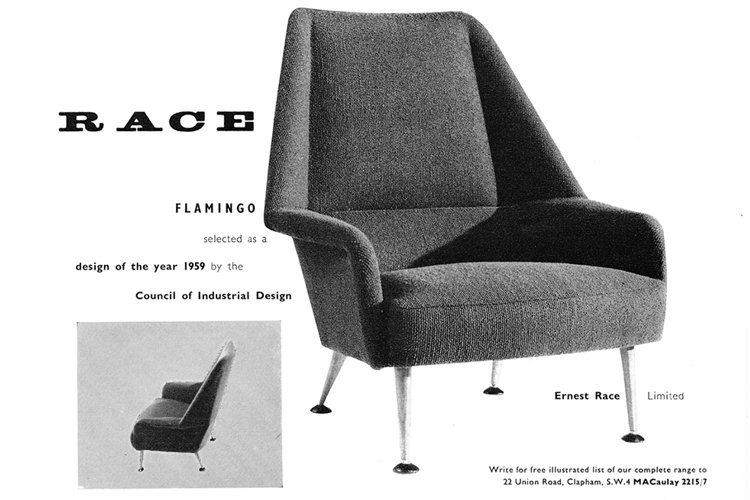
Race is one of the most important British designers of the past century and he distinguished himself producing furniture under the Utility Furniture Scheme. The scheme restricted the use of wood, which was to go towards rebuilding houses, so Race had to make affordable furniture made from other materials, such as aluminium from British warplanes that were no longer in use. Just like Lucienne Day, Race got a great deal more attention thanks to the Festival of Britain in 1951, for which he created two chairs. One of them is the iconic Antelope, an outstanding epitome of post-war chair design. Race continued to innovate with his designs. As you can see on the right, his Flamingo chair was awarded 'Design of the Year' by the Council of Industrial Design in 1959 and it also received the Design Centre Award in the same year.
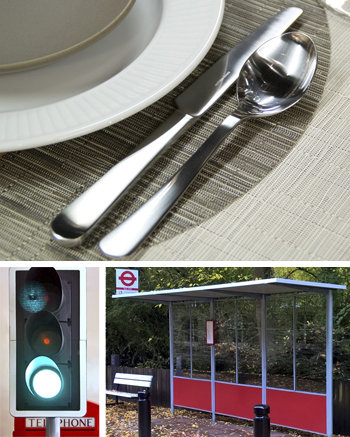
Above: "David Mellor Knife and Spoon", under CC BY 2.0; Below left: "This is Design", under CC BY-NC 2.0; Below right: "David Mellor street design", under CC BY-SA 2.0
David Mellor
Mellor is also one of the greats in the world of product and industrial design. He specialised in metalwork and is best-known for his outstanding cutlery. Pride, for instance, is a cutlery service Mellor designed in 1953 while he was still a student at the Royal College of Art and it was one of the first Design Centre Award winners in 1957. As a result, Mellor was commissioned to create cutlery for official British institutions, such as the Embassy range in 1963, to be used in British embassies, and the Canteen cutlery in 1965, designed for use in public spaces like hospitals or prisons. Despite Mellor making a name with his exquisite flatware, his contributions to British design go well beyond that. He's responsible for designing many items found on the streets of the UK, even today. The best example is the national traffic lights system, redesigned by Mellor in 1966, which is still in use. His industrial design work includes lamp posts, park benches, bus shelters, rubbish bins and pillar boxes.

