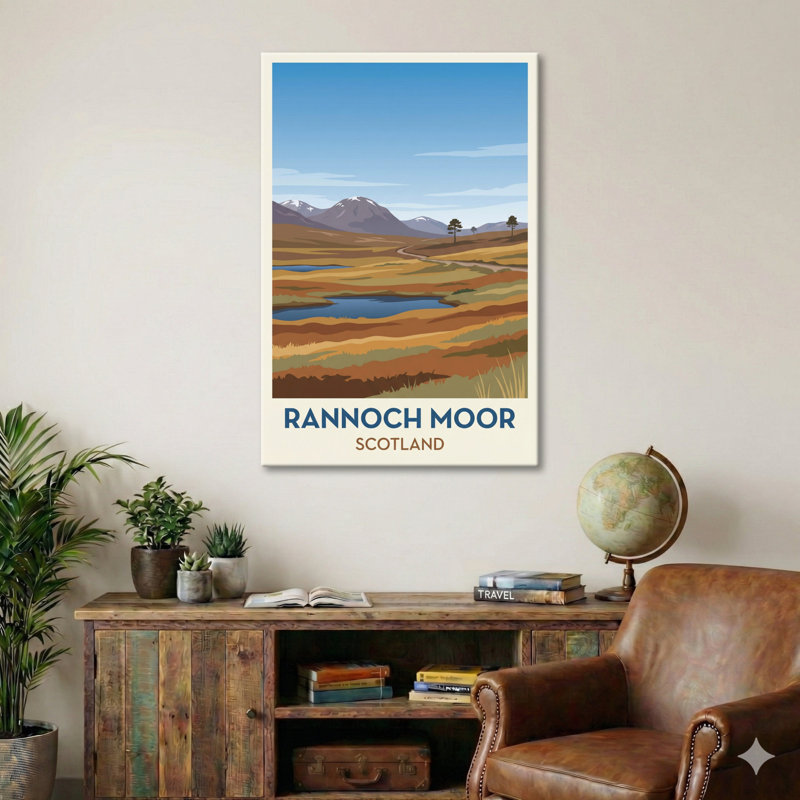
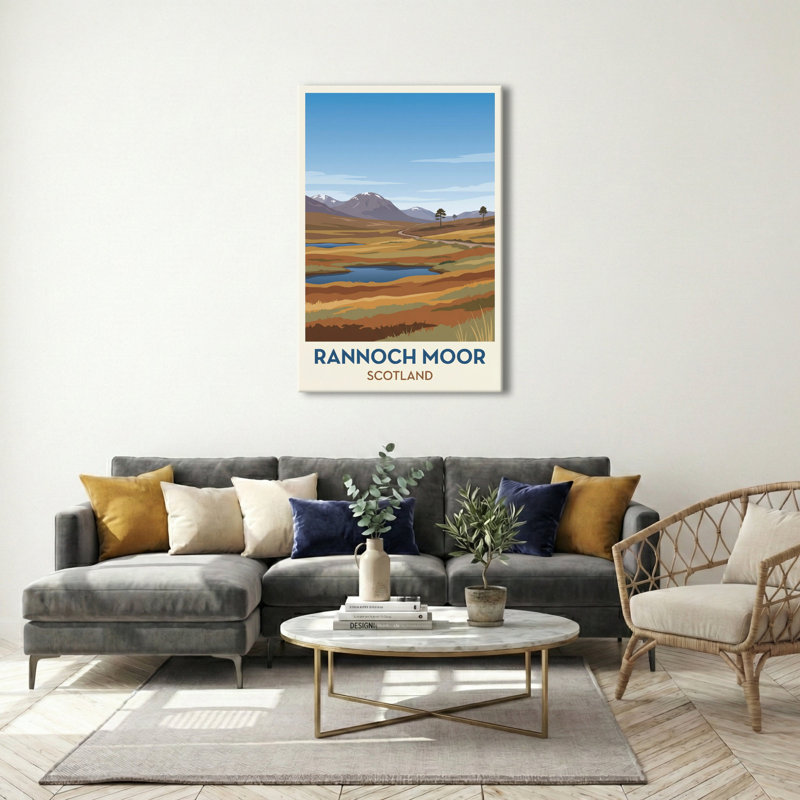
Rannoch Moor is one of Scotland's great landscapes: a vast, open expanse where wind and water have shaped a wild, beautiful terrain. Stretching between mountains and lochs, this moorland feels timeless. Peat bogs and scattered lochans catch the light; distant ridgelines rise and fall like a sleeping army. The place has a quiet drama - both lonely and consoling - that has inspired walkers, poets and photographers for generations.
The moor's story is written in geology and weather. Glacial action carved the surrounding peaks and left hollows that collect rain, peat and mirror-like pools. Over centuries the land has been shaped by crofting traditions, old drove routes and the rhythms of seasons. You can sense history in the trackways and the hardy grasses, and in the way the light changes from the soft, warm tones of autumn to the crystalline blues and whites of winter. The West Highland Line runs close by, and the sight of a small station at Rannoch - a remote gateway to this landscape - only adds to the romance of arrival by train.
Wildlife moves quietly across the moor: red deer may appear against a skyline of peaks; birds ride thermals and call across the open ground. The soundscape is pared back: wind, water, the distant cry of a bird. It's a landscape for slow discovery, where a single track can lead to a viewpoint that feels entirely your own.
This travel poster celebrates Rannoch Moor in the spirit of classic mid-century travel art. The composition is deliberately pared down, using broad, graphic shapes to capture the sweep of heather and peat, the reflective pools and the silhouette of far-off mountains. The colour palette favours autumnal ochres, russet browns and muted greens, offset by cool sky blues and soft greys, producing a mood that is both warm and clear.


 or
or 18+, T&C apply, Credit subject to status.