to:
Tabletop Games
Mini Desktop Games
Backgammon Set
Checkers Set
Dominoes
Tic Tac Toe
Chess Set
Stacking Game
Brainteaser
Puzzles


Tabletop Games
Mini Desktop Games
Hockey
Multi-Game
6,000 Items

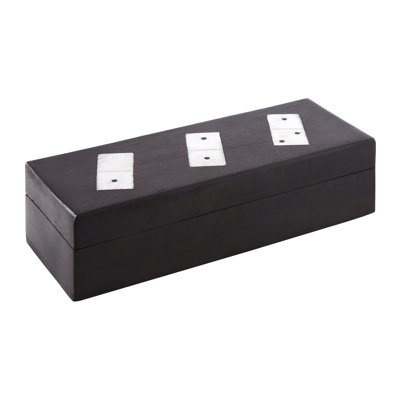
The Check Games Domino Decorative Box is made from eco-friendly mango wood and has a black finish that enhances the wood's distinctive straight grain pattern. A trio of aluminium domino motifs provides a reflective touch to the lid. Inside the box is a complete set of dominoes, made from mango wood, each one featuring silver aluminium dot detail on its textured surface.
Great gift really happy with it. Michelle. Sun Jan 08 2023


By Alpen Home
Excellently handcrafted and polished, the game set is made from Sheesham wood. Featuring ten wooden skittles and two balls, they come in an understated rectangular wooden box to keep them organised after playing.

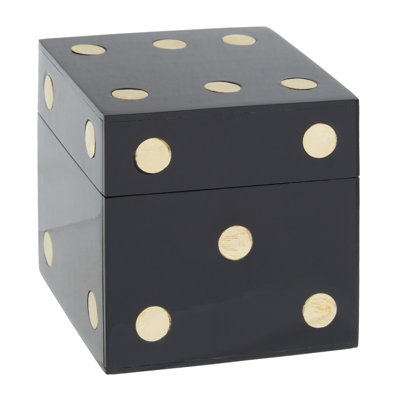
This dice box is elegantly crafted from premium quality MDF and given a resin coating. Boasting a gold effect detail, this game set is complemented with five dice in a white finish which brings a fun element to the living area while incorporating an array of styles.


Free Delivery
A fun game for any occasion, the Stax four-in-a-row is perfect for all ages. With a metal plated finish and frosted playing pieces, this elevated twist on the classic game also doubles as a unique piece of decor to display in your home. Modern brass metal finish and frosted playing pieces create an eye-catching look on any table or counter space. The metal wire stopper keeps pieces and place and provides a simple, and decorative design.
This 4 in a row game was exactly what I wanted as an accent piece for my office/game room!. Meka. Norfolk, VA. Fri Jul 22 2022

Free Delivery
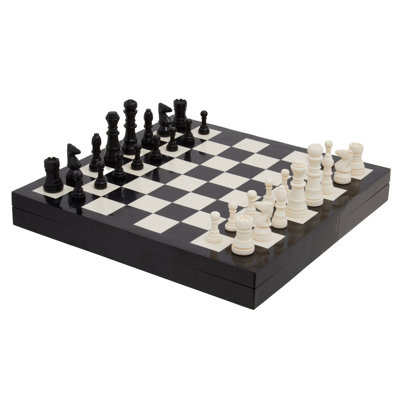
This stately traditional chess set is made from premium quality MDF with an inspiring blend of antique charm. This chessboard is complete with a full set of intricately carved chess pieces and given resin coating for optimum protection.
worth the price and well made. Elizabeth. London, GB. Thu Jun 23 2022

By Borough Wharf
Elevate your games night with this Wooden Cards and Dice Set from Harvey Makin®. The set includes a premium lidded gift box and a sustainable rosewood case featuring an elegant brass inlay design of cards and dice. Inside, you’ll find a standard 52‑card deck along with five rosewood dice, each crafted with inlaid brass dots for a refined finish. This beautifully presented set makes the perfect gift for any discerning gentleman.

By Philippi
Free Delivery
28 melamine stones, wooden box, magnetic closure

By Freeport Park
Get it by Wed, 14 Oct
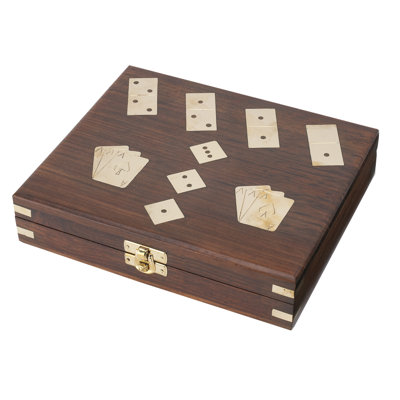
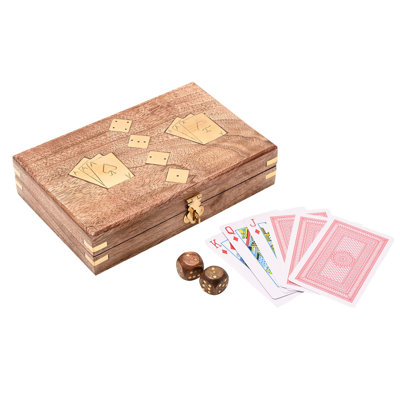
A full set of dominoes, two packs of cards, and five wooden dies, in a very smart solid hardwood box with brass inlaid lid.

This dice set will elevate the living space in sublime style with its two tonal contrast of white and warm metallic finish. The rectangular tray with raised edges allows organising the dice neatly, and it creates a luxe statement on the mantlepiece or side table.

Free Delivery
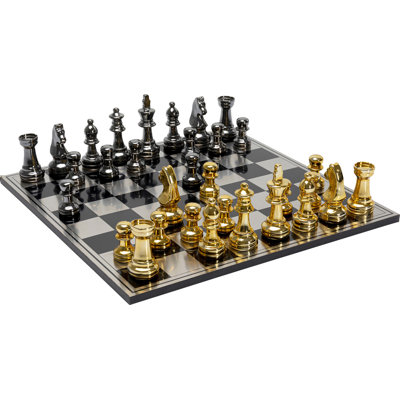
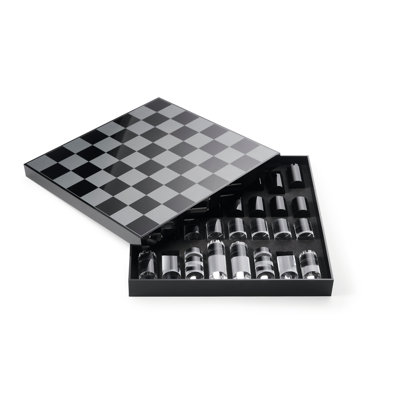
This purist chess set is perfect for anyone who wants to combine the sport of chess with high-calibre design. The all-glass pieces fit comfortably in the hand and help to keep a cool head with their pleasant feel.
Beautiful product and I love it! The biggest chess set I have found! Eye catching! And a centre piece. Joanne. Doncaster, GB. Thu Jul 25 2024

By ClassicLiving
Rated 4.7 out of 5 stars9 total votes
This Millington Game Tic Tac Toe Decorative Box is made from eco-friendly mango wood. The textured wood is painted black, with silver aluminium nought and cross detail decorating the sides. Its pieces are made from mango wood to coordinate with the case, each one topped with aluminium for a reflective counterpoint.
Looks lovely and classy on the coffee table.. nice lil play that catches eye ). Kavita. Mon Mar 02 2026

By METAL-TIME
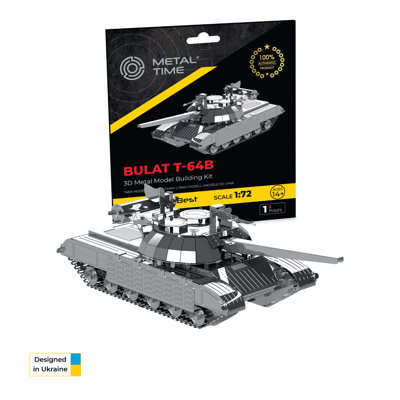
The modernisation programme, transforming T-64 MBTs to BM Bulat MBTs, focused on improvement of its fire power, mobility and protection. The upgraded sights and aiming devices include a Buran-E night vision system for detection, identification and engagement of targets, and a TKN-4S, the sighting system for the tank commander. The modernisation work included installation of a 1G46M sight and a TO1-KO1ER night sighting system or Buran-Catherine thermal imager for the gunner, some 2E42M main armament stabiliser units, a 1V528-1 tank ballistic computer, a TAKO-621 guided weapon system, a 1ETs29M control system for anti-aircraft machine guns and a PNK-5SR observation and sighting system. The “Bulat” T-64 is the main battle tank of the Ukrainian Armed Forces. It is the result of a rethinking and deep modernization of the Soviet T-64 tank. Over decades of painstaking work, designers were able to bring the fire control, protection, and firepower systems up to the level of modern T-80 and T-84 models. Due to its predecessor, “Bulat” has a recognizable design: side protection side screens, a low-profile turret equipped with passive protection plates, and an ammunition bunker. “Bulat” T-64 is one of the main mechanized combat units in the Ukrainian army. Inheriting the simplicity of the base model, it has significantly improved in characteristics. This combat vehicle can reach speeds of up to 60 km/h on the highway and has a combat range of up to 385 km. The turret turning speed is 40 degrees per second, allowing the tank to quickly respond to threats.

7 Sizes
By ClassicLiving
45.72 cm H x 45.72 cm W x 1.91 cm D
Great art deserves to be on canvas! Unlike thin posters and paper prints, Giclée canvas artwork offers the texture, look and feel of fine-art paintings. This artwork is crafted in the United Kingdom with artist-grade canvas, professionally hand-stretched, and stapled over pine-wood bars in Gallery Wrap style; a method artists use to present artwork in galleries. Fade-resistant archival inks guarantee perfect colour reproduction that remains vibrant for decades even when exposed to strong light. Add brilliance in colour and exceptional detail to your space with this contemporary and uncompromising style!

By Fairmont Park
Free Delivery
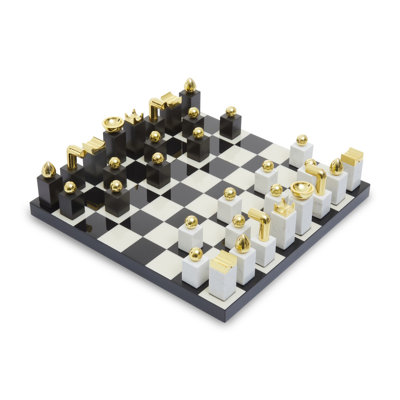
This traditional chess set is made from sturdy marble with an inspiring blend of antique and contemporary charm. This set is complete with a full set of chess pieces that are carved from wood and alloy. The gold effect topping on chessmen creates a luxe accent.

(Set of 300)
By Symple Stuff
This poker chip set is a great way to get the casino feel at home with your friends and family. Professional poker set: This set includes 5 dice, 2 decks of cards, 1 dealer button, and 300 laser chips.Vivid chips: All the chips are in classic casino colours. Each chip weighs 11,5 g to give an authentic and premium feel.Portable carry case: The poker set comes with a stylish aluminium carry case that keeps everything together and organised. The case is lightweight and portable which makes it easy to store away when not in use and ideal to be taken from one venue to the next.

Free Delivery
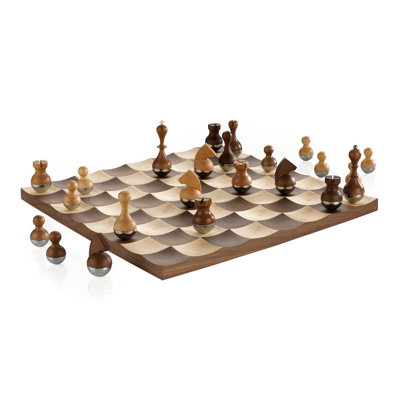
A concave landscape stabilizes freely quivering chess pieces, creating a lively interaction between chessboard and pieces. A perfect living room showpiece. A classic game with a modern twist. Motion is added to an otherwise still game with the board’s concave landscape that supports freely moving, weighted, playing pieces. This prize-winning chess set is made of beautifully polished maple and walnut wood and detailed with accents of chrome for a modern aesthetic. The wobble chess set comes in a natural maple and walnut wood finish with chrome.
Bought as an office piece. Looks great, fine to play on despite the wobble. From a few other comments, I was concerned that the light pieces would not be different enough in color than the dark, but that is not the case — there is an easy contrast between the two. . Richard. Missouri. Sun Sep 19 2021

By August Grove
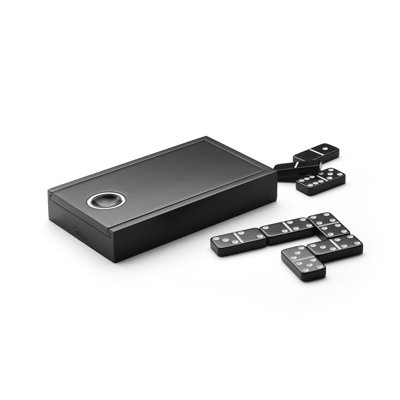
This grey domino box is made from premium quality MDF and given resin coating for durability. Each playing piece in the black finish is exceptionally crafted with a bone inset for the number of dots and central dividing line.

This nostalgic tic tac toe games set adds style to games nights. Nine smooth white cubes are decorated with contrasting black noughts and crosses. The cubes sit in a wooden display case, finished in smooth black to counterpoint the light cubes. This strikingly minimal design piece is a contemporary take on a traditional game.

By METAL-TIME
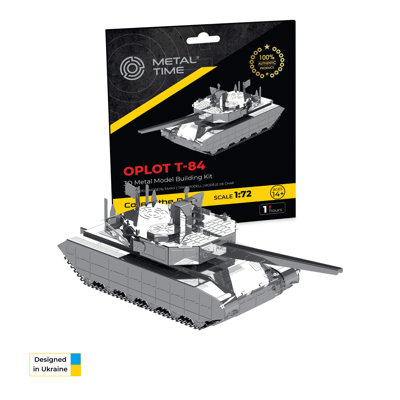
The T-84 is a Ukrainian main battle tank (MBT), based on the Soviet T-80 main battle tank introduced in 1976. The T-84 was first built in 1994 and entered service in the Ukrainian Armed Forces in 1999. The T-84 is based on the diesel-engined T-80 version, the T-80UD. Its high-performance opposed-piston engine makes it a fast tank, comparable to other modern MBTs with a power-to-weight ratio of about 26 horsepower per tonne (19 kW/t). The T-84 Oplot is an advanced version incorporating an armoured ammunition compartment in a new turret bustle. Ten of these entered Ukrainian service in 2001. The T-84-120 Yatagan is a prototype model intended for export, mounting a 120 mm gun capable of firing standard NATO ammunition and guided missiles. Main Battle Tank "Oplot" is the pinnacle of tank development in Ukraine and one of the best tanks designed and produced in series in the post-Soviet space. Based on the Soviet model T-80, "Oplot" underwent almost ten deep modernizations until it met NATO standards and became part of the family of advanced European combat vehicles. "Oplot" T-84 is equipped with a 1200 hp engine 6TD-2E, capable of reaching a speed of up to 70 km/h on the highway and operating at up to 450 km. The tank's armament consists of a main 125 mm gun, a 12.7 mm anti-aircraft machine gun, and paired 7.62 mm machine guns. Digital and analog equipment for the commander's console, targeting systems, and a multi-level protection system, including anti-nuclear protection, make this combat vehicle one of the effective European tanks. Successful tests in real combat conditions during the Russian-Ukrainian war only add to this model's score, as it has demonstrated its ability to actively engage in combat, protect, and effectively destroy enemy vehicles and personnel.

By METAL-TIME
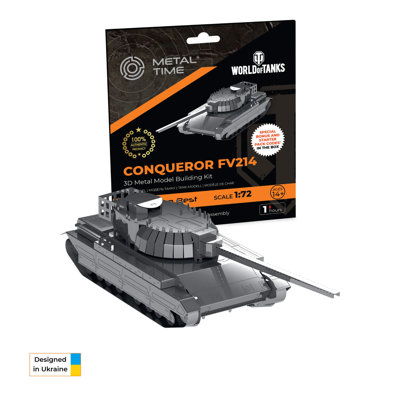
The FV214 Conqueror was conceived in 1946 as a response to two other categories of vehicles: the German panzer tanks that had demonstrated superior firepower during World War II, and the Soviet IS-3 heavy tank that entered service in 1945. The Conqueror’s 120mm gun was considered an advantage, but tank crews generally found the vehicle difficult to maneuver. Once the Centurion was outfitted with a 105mm gun, the Conqueror was withdrawn from use in the 1960s. Large-scale battles did not accompany the Cold War on the battlefield. But fierce battles raged in the design bureaus. New military challenges demanded new technical solutions. British engineers, abandoning the idea of "cruiser" tanks, began to develop heavy ones. One of the promising models was the FV 214 "Conqueror". The project of the over 60 tons tank appeared in 1949, but this tank went into serial production only in 1955. The main weapon of the tank was a 120-mm gun. The length of the fighting vehicle together with the cannon was more than 11 meters. The engine with a power of 810 hp drove this huge thing with a speed of up to 35 km/h on a hard surface. The aiming fire could be made only from a standing position. In combat, the main firepower of the "Conqueror" was two 7.63 mm M1919 machine guns. Distinctive features of the tank's architecture were a turret and hull with ricochet panels and a chassis with four bogies of two rollers and two drive wheels. The crew of the heavy tank consisted of four men. The mechanic driver was in the platform and three other soldiers were in the turret. There was also a commander's turret with all-round visibility. In addition to combat duty in the British Armed Forces, the "Conqueror" was a testing ground for engineering research. Its weak point was considered insufficient protection, but this was corrected in the new modifications. However, the tank could not withstand competition with other models and its production was stopped by the 60s.

By METAL-TIME
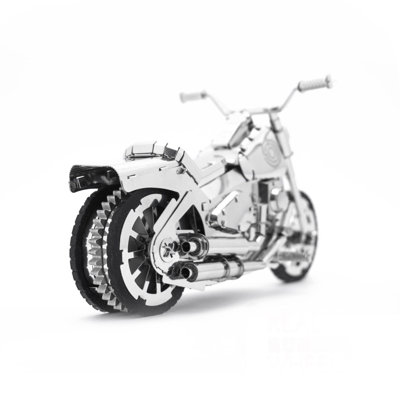
In 1901, William S. Harley drew up plans for a small engine with a displacement of 7.07 cubic inches (116 cc) and four-inch (102 mm) flywheels designed for use in a regular pedal-bicycle frame. Over the next two years, he and his childhood friend Arthur Davidson worked on their motor-bicycle using the northside Milwaukee machine shop at the home of their friend Henry Melk. It was finished in 1903 with the help of Arthur's brother Walter Davidson. The sun is quickly setting in the horizon, making the mountains look like lava flowing down a volcano. The highways lines shoot by like they were tapped on the road; the hot air is blowing in your face. And the sound of the motorcycle’s engine gives you confidence you will get to town before dark. The excitement of the sound of the engine revving through the open road flows through your body. And as you glide down the road on your steel horse, you have never more free. Harley Davidson is an American icon, a symbol of freedom, known by motorcycle enthusiasts around the world. Harley Davidson began its journey on the American roads in the early 20th century. Americans quickly fell in love with Harley Davidson. Word spread so fast that in 1920 the company became the world's largest motorcycle manufacturer. The name "Harley Davidson" is renowned to all motorcycle lovers. The American motorcycle has been the inspiration for countless books and movies. "Metal Time" presents Roadway Fantasy. Our homage to America's legendary motorcycle, Harley Davidson. The Metal Time's designers behind this model were motivated by the legendary Harley Davidson Model-F. To many, this two-wheeled mustang symbolizes motorcycle travel. The motorcycle has appeared in books, films, comics, and even video games. Harley Davidson is loved around the world and has a huge cult following. Harleys are known for their representation of freedom and independence. Regardless of the seeming conciseness of the name, the "Roadway Fantasy" model is very challenging. It has over a hundred parts, and therefore, it requires attention to detail so that you can proudly display your model.

By August Grove
Skilfully handcrafted, the dice set boasts a fusion of premium quality mdf and grey bone with five black finish dice. This game set is sure to bring a fun element to the interior while incorporating an array of styles.

By METAL-TIME
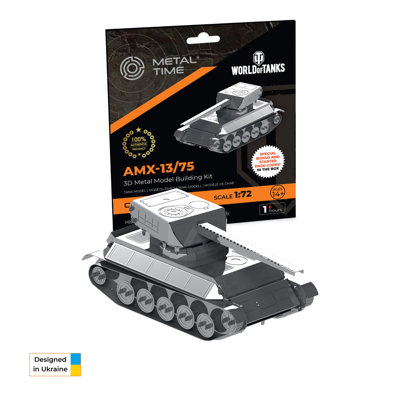
Maneuverable light tank with an oscillating turret and a 75 mm autoloader gun that could fire up to 10 shots per minute. At that time, the gun on this vehicle had superior penetration compared to the guns of most other medium tanks. The tank has a decent top-end gun and good dynamic performance. In the last years of World War II strategists and manufacturers of military equipment began to think about new generations of weapons. And one of the successful embodiments of the new concepts of armored fighting vehicles was the French light tank "AMX-13". Its first prototypes appeared in 1945 and its subsequent modifications were used in military operations until the XXI century. This maneuverable tank with a length of 5 meters and a height of 2.4 m originally possessed several unique design features. The most important of these was the "rocking" turret. The main design principle was that after the gun had fired, returning impulse was delivered to the turret and caused a new shell to move to the breech block of the gun and the loader mechanism to push it inside the barrel. This allowed automatic firing at a rate of up to 12 rounds per minute! Considering that such tanks were equipped with a 75-mm gun, this turned the tank into a vehicle for the continuous destruction of everything in the line of fire. Further modifications of the "AMX-13" were equipped with 100-mm and even 155-mm guns. In such a form it could compete with medium tanks and mobile guns. However, another difference of this tank was its speed. It could reach up to 60km/h on a hard surface (up to 400km), get over obstacles up to 60cm high, ditches up to 1.5m deep, and water obstacles up to 0.8m deep. Along with the brilliant characteristics, "AMX-13" also had disadvantages. It had weak armor, which was typical of light tanks, and the downside of rapid fire - the need to replenish ammunition. When the shells ran out in combat, the tank became unarmed and was often doomed to destruction.

By METAL-TIME
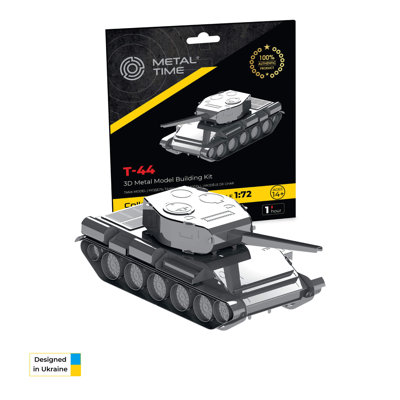
After the cancellation of the T-43, a replacement for the T-34 was still desired and work began on the T-44 in late 1943. Three prototypes were produced, with a 122 mm armed design being rejected. The 85 mm variant was accepted for production, which commenced in 1944 and the tank remained in service until the 1970s. The medium tank “T-44” could have become the best tank of World War II, but it never fired a shot on the battlefield. This combat vehicle was created in 1943 but never came into the front lines. In the last years of the war, the Soviet command realized that despite their quantity and decent mobility and reliability, the “T-34” tanks, even with the 85mm gun modification, were inferior to the best German armored vehicles - the “Tiger II” and “Panther” tanks. In head-to-head battles, the Soviet tanks had no chance due to their weak armor protection. Therefore, it was decided to create a tank with similar mobility and long-range capabilities as the “T-34”, but with significantly reinforced frontal armor. Thus, the “T-44” was born. It underwent significant modifications. The decision was made to abandon the Christie suspension, and increase the power of the gun while maintaining the advantages of a medium "cruiser" tank. The result was a powerful, fast, and well-protected combat vehicle capable of combining the armor protection of a heavy tank with the mobility of a medium one. Modifications were released with 100 mm and even 122 mm caliber guns, but due to the vehicle's weight increase, they had to be abandoned in favor of the 85 mm gun created based on the rapid-fire D5-T gun. Despite its worthy characteristics, the “T-44” was not put into mass production until the end of World War II, so as not to disrupt the production cycle of the “T-34-85”, which had similar parameters. However, after the war, the tank was produced in large batches and remained in service with the Soviet army until the 1970s.

By METAL-TIME
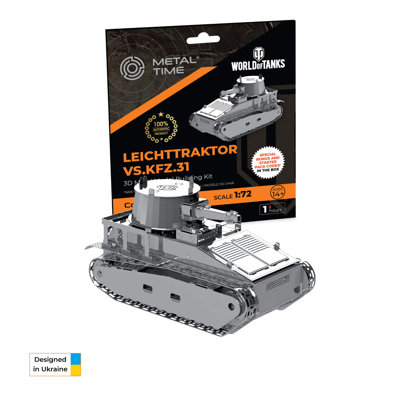
The Vs.Kfz.31 Leichttraktor (Light tractor), also known at the time as the Kleintraktor (Small tractor), was a prototype German light tank, of which four distinct versions were made. It was developed and tested in secret at the Soviet-German Kama facility, during the Weimar Republic. This was part of the Leichttraktor, also known as the Kleintraktor, project. The tank was designed *around* 1929 and used through early WW2 as a training vehicle. In spite of having a 37 mm cannon, it was rejected in favor of the Panzer I, in a competition to make a new light tank for Germany, like the Grosstraktor project at the same time. The German Wehrmacht started World War II... with tractors. That is what the first German tanks were called. This happened because, under the terms of the Treaty of Versailles, which witnessed the defeat of Germany in World War I, the country was not allowed to develop and produce heavily armored fighting vehicles. Therefore, these products had the name of civil technology, and it was not far from the truth. The first samples of German tanks were modernized tractors. An example of this is the Leichttraktor Vs. Kfz.31 light tank. The development of the tank was carried out by two well-known manufacturers of first-class military equipment: “Krupp” and “Rheinmetall”. They presented two models that differ from each other in some detail. But the main ones were the same. The first tank "Leichttraktor Vs. Kfz.31" was created on a tractor chassis with 12 rollers, combined into six carts. The chassis was covered with an armor shield, however, the design of the tracks and suspension was vulnerable even to large-caliber small arms. The “Daimler Benz” engine with 100 hp the designers placed it in front, which was a controversial decision. On the one hand, he covered the crew of 4 people, and on the other hand, he was vulnerable to the enemy and increased the risk of immobilizing the combat vehicle in the battle. The welded-riveted turret was moved back, which made the tank look like a self-propelled gun, however, the armament of the "Leichttraktor Vs. Kfz.31" was not very powerful. The main gun was a 37 mm KwK 36 L/45 cannon, and a 7.92 mm Dreyse machine gun was also mounted on the tank.

By METAL-TIME
Free Delivery
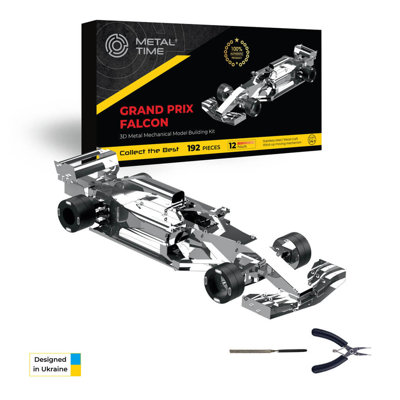
Formula One is the highest class of international auto racing for single-seater formula racing cars. The World Drivers' Championship, has been one of the premier forms of racing around the world since its inaugural season in 1950. The word formula in the name refers to the set of rules to which all participants cars must conform. A Formula One season consists of a series of races, known as Grands Prix, which take place worldwide on both purpose-built circuits and closed public roads. Hot afternoon, the smell of hot asphalt and burnt rubber. The stands are noisy in anticipation of the Grand Prix - top-class technoshows, pilot battles and the triumph of designers' skills. The roar of warming up engines easily covers the noise of the stands, because engines with a capacity of almost a thousand horsepower are trying their strength. And now - a green light and roaring fireballs take the pilots to the first circle. Everyone is extremely concentrated - both the audience, and the mechanics, and the daredevils who dared to defy the laws of physics. After all, this is Formula 1, the queen of motorsport, the main competition in the world of cars. Even people far from the racing theme know the names of the legendary F-1 pilots. Niki Lauda, Alan Prost, Jos Verstappen, Damon Hill, Ayrton Senna, Louis Hamilton, Sebastian Vettel and, of course, Michael Schumacher have long been among the cult characters of world sports and culture. Books are written about them, films are made, covers and front pages of newspapers and magazines are dedicated to them. No less famous are their "stables" - workshops where miracles of automotive technology are created - Formula 1 cars. McLaren, Ferrari, Lotus, Williams and Mercedes - each workshop accumulates the best mechanics and engineers to create seemingly impossible mechanisms. But every year, updated fireballs enter the tracks and the competition flares up with renewed vigor. In the collection of a car lover, there must be a Formula 1 car. At least his model. The Metal Time team created it for you. "Grand Prix Falcon" is a modular model of an open-wheel racing car (bolide) designed for racing in the top division of motorsport. To create a model, a standard racing car concept with characteristic components was chosen. Over the past decade, the overall concept of the car has not changed dramatically, limiting itself to minor improvements. Therefore, the Grand Prix Falcon model is relevant for this type of machine. The front spoiler, fairing and landing gear make up the front of the model. The wheels are made in the form of hollow cylinders attached to the suspension structure. The spoiler is a structure with wavy cuts that perform a decorative function and lighten the model. In the cockpit of the pilot, you can see the dashboard and steering wheel. Above it rises the central air intake. The main body with side air intakes hides the winding mechanism that drives the rear wheels of the model. The design is crowned by a rear spoiler.


By METAL-TIME
Free Delivery
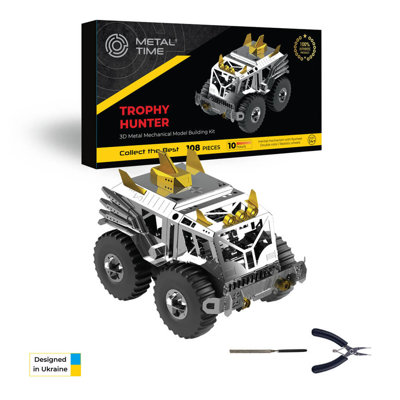
Obstacles do not block the path, they are the path! All-terrain vehicles designed for rough and soggy terrain. The key feature of this ATV is the large wheels with an onboard system to inflate or deflate them, which allows vehicles to travel through water, cross brushwood, scramble and climb up thin ice. This technology helps customers to overcome obstacles, to solve their pains, to value trust and collaboration. Many secrets of the planet would not have been discovered if people had not invented cars that could drive along the most difficult route. There are no obstacles for all-terrain vehicles since obstacles are their usual road. Powerful engine, large low-pressure wheels, independent suspension, sealed windows and doors - and you are ready to search for treasures where no man has gone before. ATVs have gone through many transformations, and now engineers are inventing more and more new configurations - from amphibians to rovers. Therefore, all-terrain vehicles are an eternal source of inspiration for technical creativity. The designers of ‘’Metal Time’’ took the Ukrainian ‘’SHERP’’ all-terrain vehicle with ultra-low-pressure wheels as the basis for the ‘’Trophy Hunter’’ self-assembly model. Such machines have long been working in remote areas of the planet. But the creators could not resist the temptation to give the model futuristic features, thanks to which it became like a character in a science fiction film about the conquest of other planets. Space opera lovers will love it.

By METAL-TIME
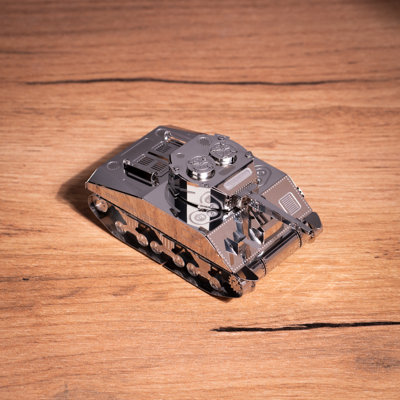
The first production version of the Sherman, the most common American tank, with an amazing total of 49,234 vehicles manufactured. The Sherman first saw combat in North Africa. The medium tank "M4" is one of the most mass-produced tanks of World War II. It stands alongside other legendary "victory tanks" as it successfully fought in many local conflicts even after the war. The "Sherman," named after a hero of the American Civil War, has become the subject of numerous books, films, and comics. Its successful design and the possibility of modifications made this tank almost irreplaceable in battles. The "M4" began serial production in 1942 and was adopted by the United States, Great Britain, and the Soviet Union. Over 50,000 tanks of various modifications were produced, but they all retained the original design. The "Sherman" was operated by two driver mechanics on the main platform, and three crew members in the turret were responsible for its combat power. The main weapon of the "M4" was a 75mm tank gun. In some modifications, it was a mortar or even a flamethrower. Machine guns or automatic cannons were used for close combat. The chassis consisted of three bogies with two rollers each on a spring suspension and leading wheels.

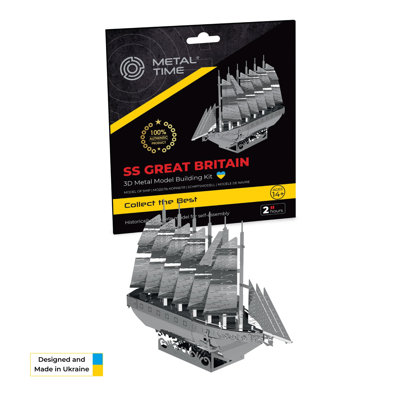
By METAL-TIME
SS Great Britain is a former passenger steamship and it was the largest passenger ship in the world from 1845 to 1854. She was designed by Isambard Kingdom Brunel (1806–1859), for transatlantic service between Bristol and New York City. Great Britain is a former passenger steamship that was advanced for her time. She was the largest passenger ship in the world from 1845 to 1854. She was designed by Isambard Kingdom Brunel (1806–1859), for the Great Western Steamship Company's transatlantic service between Bristol and New York City. While other ships had been built of iron or equipped with a screw propeller, Great Britain was the first to combine these features in a large ocean-going ship. She was the first iron steamer to cross the Atlantic Ocean, which she did in 1845, in 14 days. When launched in 1843, Great Britain was by far the largest vessel afloat. But her protracted construction time of six years (1839–1845) and high cost had left her owners in a difficult financial position, and they were forced out of business in 1846, having spent all their remaining funds refloating the ship after she ran aground at Dundrum Bay in County Down near Newcastle in what is now Northern Ireland, after a navigation error. In 1852 she was sold for salvage and repaired. Great Britain later carried thousands of emigrants to Australia from 1852 until being converted to all-sail in 1881. Three years later, she was retired to the Falkland Islands, where she was used as a warehouse, quarantine ship and coal hulk until she was scuttled in 1937, 98 years after being laid down. After the initial success of its first liner, SS Great Western of 1838, the Great Western Steamship Company collected materials for a sister ship, tentatively named City of New York. The same engineering team that had collaborated so successfully on Great Western—Isambard Brunel, Thomas Guppy, Christopher Claxton and William Patterson—was again assembled. This time however, Brunel, whose reputation was at its height, came to assert overall control over the design of the ship—a state of affairs that would have far-reaching consequences for the company. Construction was carried out in a specially adapted dry dock