Ask the Experts: What is a Ladle?
Elevate your soup scooping.
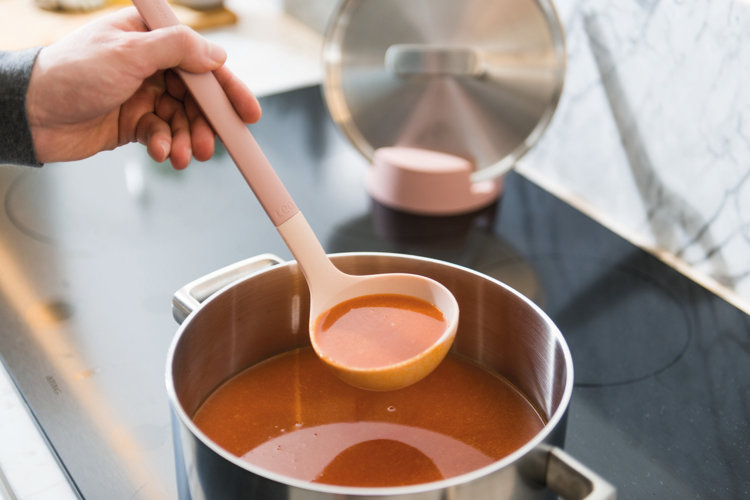
Whether you're new to cooking or kitchen utensils, our experts are here to help answer all your culinary questions. Up first, 'what is a ladle?'. Read our guide to learn more about ladles and the different types available.
What Is a Ladle?
Designed to be the perfect utensil for serving liquid dishes such as soup, stew, gravy, sauce and even punch, a ladle is a large spoon with a deep, round bowl and a sturdy handle between 13" and 14" long. If you prepare soups and stews often, no other utensil can do the job of scooping and serving quite like a ladle can. Its bowl is the optimal size for serving single portions and the length of the handle ensures that your hands are safe from the hot liquid at all times.
Typically, the end of a ladle's handle is curved so that the ladle can rest naturally against the edge of a large bowl or pot without falling in. Some ladles are equipped with a built-in spout that allows for even easier pouring while others have drainage holes on one side of the bowl to allow for handy straining of pasta, meat or vegetables.
Tip: To make uniform pancakes, cakes or waffles, use a ladle to measure out even amounts of batter while keeping your hands mess-free.
Ladle Materials
Ladles come in a variety of materials including metals like stainless steel, aluminium and copper, as well as natural materials like wood and bamboo and synthetics such as nylon, silicone and plastic.
Stainless Steel: If you want your ladle to last for years and years without staining, warping or absorbing odours, stainless steel is the material of choice. Stainless-steel is sleek, shiny and well-balanced but can also be placed in the dishwasher for easy cleaning.
Aluminium: Just as durable as stainless steel but lighter in weight, aluminium ladles are easier on the wrists. It's not recommended to use aluminium ladles for serving acidic foods, such as tomato sauce, as they can wear down easily.
Copper: Of the metal materials, copper's honey-rose-gold colouring renders it one of the most stylish but it's also not recommended for use with acidic foods.
Wood and Bamboo: The traditional, simple look of a wooden or bamboo ladle would make the perfect addition to your country house-style kitchen. Though wood and bamboo do require a bit more care to remain in top condition – it's recommended to clean, sanitise and dry them thoroughly after every use and oil them monthly – they are lightweight and won't damage your pots and pans.
Synthetic: Synthetic materials, though less heat-resistant than metal, are lightweight and easy to clean by hand or in the dishwasher. Most nylon and silicone ladles are nonstick, with better heat-resistance than plastic. Silicone, though the most expensive, has the highest heat resistance and is the most eco-friendly of the three synthetic ladle materials. Plastic, nylon and silicone are flexible and won't scratch your existing cookware.
Tip: Enjoyed this article? Then why not also get our expert tips on:
- Ask the Experts: What is a Dutch Oven?
- Ask the Experts: What is a Ramekin?
- Chop, Chop! These are the Best Cutting Boards
