How to Choose the Best Food Processor For Your Culinary Needs
A whole new level of food preparation.
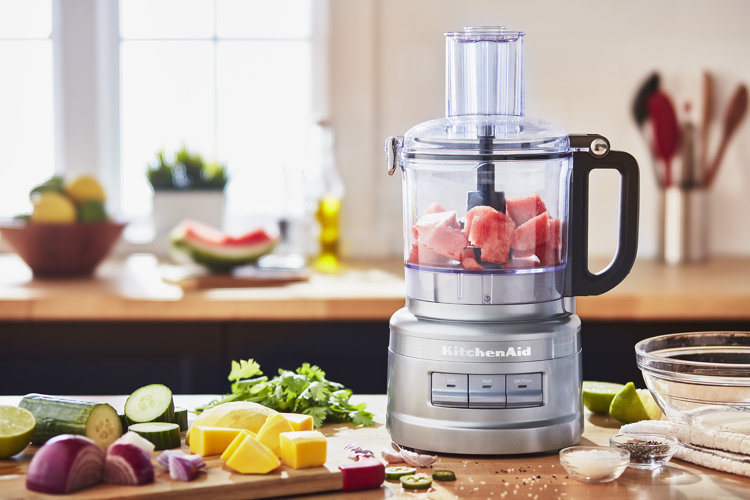
The right food processor can make food preparation so much easier. If you're still yet to own a food processor or simply looking for to replace the one you have, it's a good idea to do your research before you buy. Read our guide as we cover all you need to know about this handy kitchen appliance, so you can buy the best food processor for you.
Food Processor vs. Blender
First thing's first: A food processor is not the same as a blender. Though these appliances look and function similarly, the biggest difference between these two appliances is the tasks they're designed to do. Food processors are designed to perform a wide variety of food preparation tasks, while blenders are designed to pulverise and combine (aka blend) wet and dry ingredients.
Best Type of Food Processor
Electric
Electric food processors are large, worktop appliances that can facilitate several different kitchen tasks, including chopping, shredding, grating, slicing, dicing, kneading and more. The key to a food processor's ability to do such versatile tasks is its rotating blade attachments. Many electric food processors come with a multitude of blade attachments, each suited to a different task. If you're in search of a standard food processor that can handle a wide range of tasks, we recommend an electric food processor. These appliances are powerhouses; you won't realise how many tedious food preparation tasks you do until your food processor is doing them all for you in a matter of seconds.
Electric food processors consist of a heavy base with buttons and settings, a container or bowl that mounts atop the base, blade attachments that insert into the bottom of the container or bowl and a container lid with a tall feed tube. The settings located on the base can control the blades' speed and allow for pulsing. The bowl and blades are mounted onto a motor-driven shaft that protrudes from the base. Most food processor containers are wide and can typically hold a significant amount of ingredients. Electric food processors are topped off by a secure lid that locks into place. The feed tube in the lid allows you to add ingredients as you process with a plastic plunger top that you can use to push food down the chute toward the blades. Most electric food processors require that all parts be properly locked into place before their motor will start rotating the blades. Electric food processor blades are easy to remove for replacement with other blades or for cleaning.
Mini Chopper
Smaller, lighter and easier to clean than full-size electric food processors, mini choppers are the best food processor for someone looking for a more user-friendly appliance. Their smaller size limits their efficacy and makes them best suited for small batches of salsa, chopped vegetables and nuts or ground spices and herbs. If you see yourself using a food processor mainly for small side tasks while you cook, opt for a mini chopper.
Mini choppers can have capacities of 1–6 cups and 3–4 cup capacities are the most common. Most mini chopper food processors look exactly like downsized electric food processors, while others look slightly different due to their offset bases. Mini choppers can do more than just chop; with several blade attachments, some mini choppers are just as versatile as full-size electric food processors.
Manual
As their name suggests, manual food processors are not powered by an electric motor. Instead, they rely on your labour to do the job.
Manual food processors tend to be much smaller than electric food processors, so they can only handle a certain amount of ingredients at a time (typically 1–3 cups). Most manual food processors have a small clear plastic container body, a set of small attached blades and a lid with a hand-powered crank or large push button. To use a manual food processor, you simply fill the container, close the lid and operate the manual mechanism – turn the crank or push the button.
As you might expect, these inexpensive devices are not on the cutting edge of food processor innovation. Their blades are lightweight and not so durable, so we recommend avoiding using manual food processors too often or for tough ingredients. Despite the fact that manual food processors do require you to put in a little elbow grease, they still make some repetitive, messy food prep tasks a lot quicker, cleaner and easier than they would be if you did them completely by hand. If you want a quick and easy way to make rough salsa or guacamole, the manual food processor might be the food processor for you.
Best Food Processor Capacity
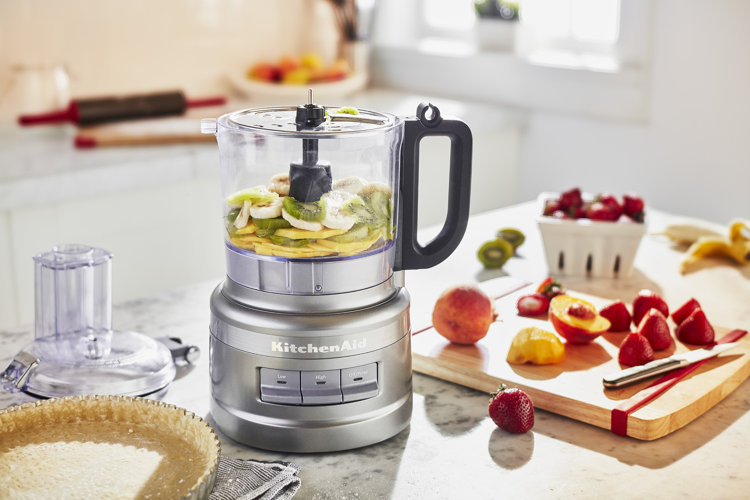
Food processor capacity describes the size of the container in which ingredients are processed. There are four main food processor sizes: mini, small, medium and large. Depending on your intended food processor use, you might want to choose a smaller or larger appliance.
Larger food processors tend to be the most versatile and durable, albeit more expensive, heavier and sometimes more difficult to clean. Smaller food processors are inexpensive, lightweight and easy to rinse but most likely won't withstand the test of time. Large food processors are best suited for handling major food prep tasks for family-size meals, while small food processors are better at accomplishing accessory tasks you'd rather not get your hands dirty doing, like mincing garlic.
Mini: 1–2 cups
Small: 3–4 cups
Medium: 5–10 cups
Large: Over 11 cups
Best Food Processor Features
Dishwasher-Safe Parts: Cleaning your food processor shouldn't take so long that it eats up all the time the processor saved you. With dishwasher safe parts, cleaning your food processor is as easy as cleaning any other dish in your kitchen.
Interchangeable Blades: Ensure that your food processor can do more than just chop by narrowing your search to include only food processors with interchangeable blades.
Pulse Function: Achieve a higher level of control over your food processing with a pulse function that allows you to stop and start the blades at the touch of a button.
Blending Feature: Interested in a food processor that can handle a blender's tasks? Look for food processors with a blending feature that allows them to handle wet and dry ingredients at the same time.
Continuous Feed: Food processors with a continuous feed feature don't stop processing when the feed tube cap is opened. This allows you to add ingredients continuously throughout the food preparation process.
Double Feed: Double-feed tubes are twice as wide as typical feed tubes, allowing you to insert larger ingredients. This will cut down your prep time, as you won't need to cut your ingredients as small to fit in the feed tube.
Tip: Enjoyed this article? Then you should also check out:
- Everything to Keep in Mind When Buying a Fridge
- Investing in a New Dishwasher?
- Chop, Chop! These are the Best Cutting Boards
