Investing in a New Dishwasher?
Helping to decide which dishwasher is best for your home.
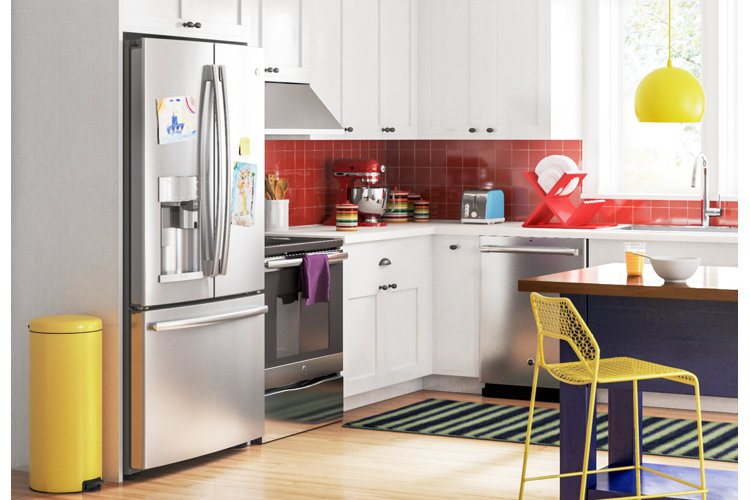
A dishwasher is often considered one of the more luxurious appliances that over time, becomes more and more necessary. Whether you're throwing weekly dinner parties or just looking to expedite dinner cleanup, our dishwasher buying guide will help you find the perfect model for you and your home.
Dishwasher Types
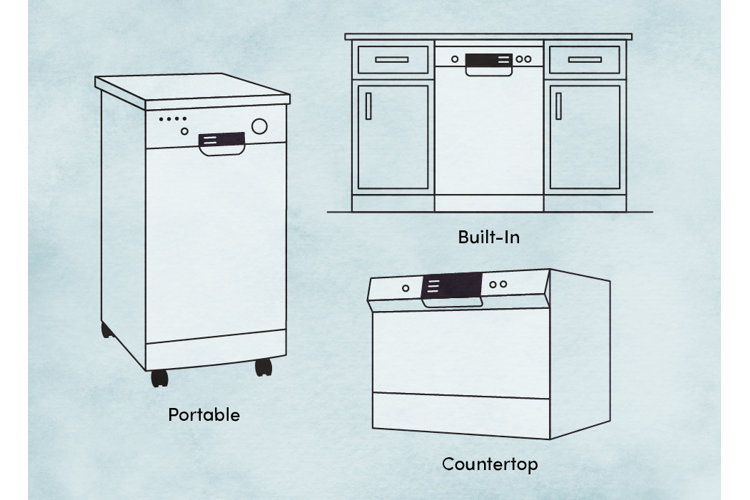
Built-In: Built-in models have unfinished sides, so they need to be installed under a counter or against a wall. Built-in dishwashers are typically the most popular option due to their seamless look and ability to store 12-16 place settings.
Countertop: An economical option, countertop dishwashers need to operate next to the sink so they can drain. Though they're small, newer models now have some enhanced washing cycles and heated drying.
Portable: Perfect for a small kitchen or an apartment, portable dishwashers only need a faucet adapter to run. They can be wheeled in and out to be used whenever you need.
Dishwasher Features
Delay Wash: This setting allows you to set the dishwasher to start cleaning on a timer. This is great if you want to load the dishwasher, set the delay start to begin washing in an hour and take a shower in the meantime.
Energy Star-Qualified: These washers use less water and energy than a standard dishwasher.
Cycle Indicator Light: This shows you what part of the cycle it's currently in, such as washing, drying or clean.
Panel-Ready: An appliance with this feature allows for a custom cover to be installed over it – allowing your dishwasher to match your kitchen’s style and aesthetic.
Hard Food Disposal: This feature uses a blade to pulverise food into particles so they move down the drain easier. This eliminates the need to pre-rinse dishes. The blade is typically made of stainless steel and won't rust.
Stainless Steel Tub: Dishwasher interior tubs are available in stainless steel or plastic. Generally, stainless steel models are more energy efficient as their high-heat retention allows the interior to dry faster. Stainless steel is more stain-resistant and doesn't hold on to odours like plastic alternatives.
Third Rack: A third rack feature allows more space and flexibility when loading. It's great for larger kitchen utensils, oddly shaped or small items and other cooking tools that you may have trouble finding space for in a regular dishwasher.
Filters: Filters collect food waste so that food doesn’t transfer back on to the plates. There are two types of filters: self-cleaning and manual. Self-cleaning filters have a grinder that pulverises the debris and flushes it down the drain. While convenient, it can be noisy. A manual-clean filter doesn’t have a grinder, so you need to clean it regularly to avoid odours.
Control Options
Front Control: The control panel is fully visible on the front of the dishwasher door
Top Control: Fully integrated controls are on the top lip of the dishwasher, completely hidden from view when the dishwasher is closed. This can be a useful feature if you have small children who love to push buttons.
Semi-Integrated: Has controls on both the front and top of the dishwasher door.
Dishwasher Size & Racks
The two most common dishwasher widths are 18" and 24". The average height is 35", however, it can vary based on the manufacturer.
Sound Ratings
Dishwashers are available with different sound ratings, which are measured in decibels. The lower the decibel, the quieter the appliance. The three most common sound ratings are: ultra quiet (45 or fewer decibels), quiet (46–50 decibels) or standard (51 or more decibels). Ultra quiet dishwashers are almost silent, quiet dishwashers can be heard from a few feet away and standard dishwashers can be heard from across the room.
Exterior Finishes
When buying a dishwasher, you can choose a model to match the existing decor of your kitchen. The most popular options are white, black and stainless steel.
How to Measure For a Dishwasher
Before buying a dishwasher, take a few crucial measurements to ensure that it fits in your home properly.
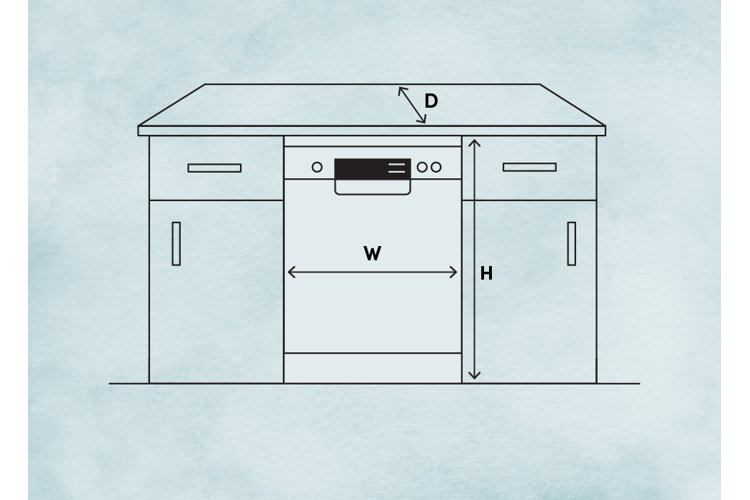
If you want a built-in dishwasher, measure the width, depth and height of the opening, as well as your current dishwasher (if you have one).
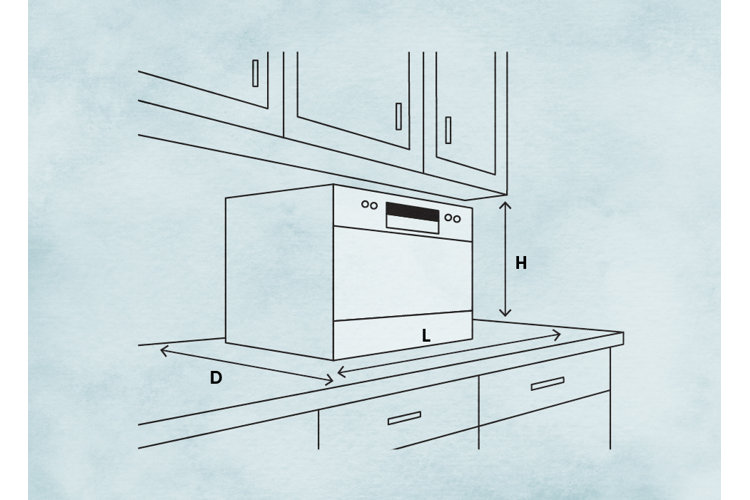
If you're measuring for a kitchen worktop model, measure the length and depth of your worktop. Also measure the distance between your countertop and any cabinets sitting above it to make sure the dishwasher can fit between them.
For a portable dishwasher, measure the area where you will be storing or placing it. There needs to be enough room in front of your sink to place the dishwasher while it is connected to your sink tap.
Installation
Installing a dishwasher requires significant knowledge of plumbing. It's crucial that all of the hoses and plumbing are connected to avoid leaks and water damage. We recommend hiring a professional to install your built-in dishwasher.
That said, portable and worktop dishwashers don't require a plumber as they often only require a simple hook-up to the local water line. Read the manufacturer’s instructions to properly hook up portable and kitchen worktop models.
Tip: For more kitchen appliance know-how, check out our guides:
- The Coolest Guide to Mini Fridges Out There
- Understanding Coffee Grinders
- Choosing the Best Juicer for Your Morning Routine
