Choosing the Best Juicer for Your Morning Routine
Level up your celery game.

Every year juicing grows in popularity, and rightly so. A natural way to feed our bodies with essential minerals, vitamins and living enzymes, juicing has gone from social media craze to most people's morning routines. Unsure which juicer type will suit your needs? Our juicer buying guide covers everything from centrifugal juicers to blender types and more, to help you find the best model for your home.
Benefits of Juicing
Regularly consuming fresh juice helps to improve your energy levels, digestion, skin tone and even mental clarity. On top of those, juicing is an easy way to increase your daily serving of healthy nutrients. If you're already a fresh juice fan, a home juicer is more cost-effective than purchasing from a juice bar daily.
Types of Juicer
There are two common types of home juicers:
Centrifugal Juicers
Commonly referred to as high-speed juicers, centrifugal juicers are cost-effective models that pulverise fruits and vegetables with a fast-spinning, round cutting blade while it pushing juice through a metal strainer. This high-intensity method adds oxygen to the juice, making it more aerated and foamy. One downside? The high-speed motor might a bit noisy.
Fast Facts:
- Best for: fruits and vegetables. Doesn't work well with leafy greens. Cannot juice wheatgrass.
- Easy to use, great for beginners
- Doesn't require much food preparation time to cut fruit and vegetables in small pieces
- Available in range of prices for those on a budget
- Quick juicing time
Masticating Juicers
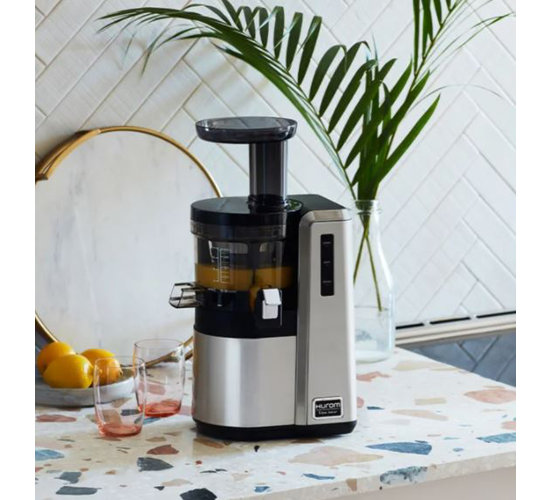
Masticating juicers, commonly referred to as slow juicers, grind and crush fruits and veggies at a slow pace to extract the juice from the pulp. This slow pace makes the juice thicker and leaves it wil more pulp, also keeping healthy nutrients intact throughout the juicing process.
Fast Facts:
- Best for: all fruits and vegetables, including leafy greens, herbs and wheatgrass
- Some special attachments can mash bananas, avocados and other soft fruits
- Produces a thicker and smoother juice
- Juice lasts longer (up to 72 hours), especially when refrigerated, because it's not aerated
- Minimal juice separation and foam
- Much quieter process than centrifugal juicers
Blenders
Whilst not technically a juicer, blender are great for creating smoothies if that's what you prefer during breakfast. Blenders process fruits and vegetables with a blade at the bottom of a single container, which means none of the pulp is removed after the ingredients are blended since the process takes place in a single container.
Fast Facts
- Makes: smoothies, soups, frozen drinks and more
- Can blend fruits, leafy greens, vegetables and frozen ingredients
- Retains the most nutrients from ingredients
- Produces the thickest liquid
Tip: Look for a model with a juice container that fits over the spout. Juicing can be messy but this will help eliminate splashes and cut down on clean-up time.
