Keep Your Feathered Friends Happy With These Bird Feeders
Prepare for springtime birding.
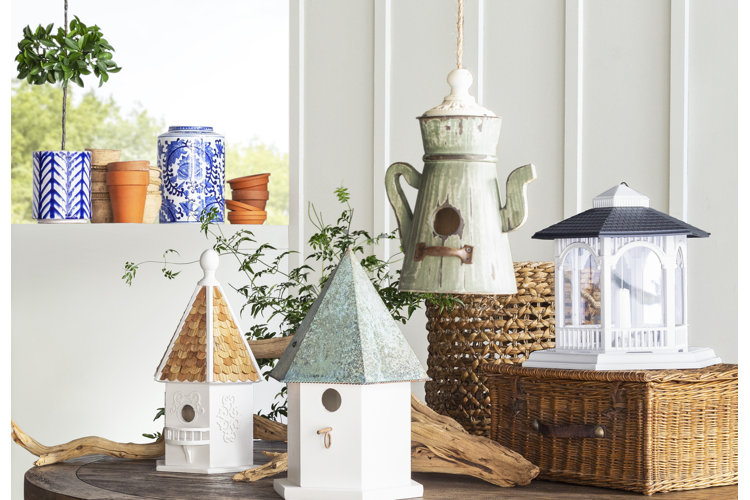
With the wide variety of styles and structures available, shopping for a bird feeder can be a little confusing for beginner bird-watchers. When you’re shopping for a bird feeder, it’s important to think about where you'll keep your feeder, the kinds of birds you'd like to attract, as well as the birds and animals you'd like to avoid. Read on to learn about all the different types of bird feeders to choose from.
Types of Bird Feeders
Bird feeders are built with a specific purpose in mind. Some feeders attract a wide range of birds, while others are designed to feed only a select few. These designs include wide trays where birds of all sizes can land, small holes that can only fit tiny beaks and perches that are too small for squirrels.
House/Hopper Feeders: House and hopper feeders are sealed at the top and dispense seeds into a bottom tray. These feeders are often designed to look like a house with a sloped roof and straight sides. They attract a wide variety of birds as the wide tray allows birds of all sizes to perch. Hopper feeders can be filled with birdseed via an opening in the top and may not require refilling for several days. These feeders protect seeds from moisture and rot, but make sure to check the seeds every few days to asses if they're in good shape. These feeders should also be cleaned and dried once a month and more often during rainy seasons.
Tube Feeders: A tube feeder is a hanging, tube-shaped type of bird feeder with perches where birds can land and eat. The birds pull seeds out of small, filtered holes on the sides of the tube. These feeders usually discourage squirrels and attract smaller birds as the perches tend to be petite in size. While these feeders protect seeds from the elements fairly well, you should check and empty your tube feeder frequently to make sure seeds at the bottom don’t rot.
Nectar/Hummingbird Feeders: Nectar (or hummingbird) feeders are specifically designed to attract hummingbirds – they hold sugar water rather than seeds, as hummingbirds are highly active and draw lots of energy from sugar water. This bird feeder type is typically brightly coloured to attract hummingbirds, who are drawn to colourful flowers for nectar. You may receive more visitors other than hummingbirds, such as butterflies, fruit bats and other birds with a taste for sugar water. You should replace your nectar every three to five days and clean your feeder once a week. Allowing sugar water to ferment longer than the recommended time period can be deadly for hummingbirds, so keep your feeder clean and fresh.
Nyjer/Thistle Feeders: Nyjer (colloquially referred to as thistle) feeders are filled with nyjer seeds, which are tiny black oilseeds. Nyjer seed is expensive, but it attracts a small group of birds that tend to be colourful and hard to draw to a feeder. These are the best bird feeders to attract birds with small beaks such as finches, sparrows, doves, towhees and buntings. Squirrels and large 'bully' birds such as starlings and blue jays tend to leave nyjer feeders alone – they're not particularly attracted to nyjer seed and the feeder is specifically shaped for small beaks. These feeders do not have to be refilled as often because they attract a small group of birds that eat sparingly, and the seeds are small and take longer to consume than larger seeds.
Suet/Seed Cake Feeders: Suet cake (or seed cake) feeders usually consist of a wire-grated rectangle or square. This square is sometimes sheltered by a wood roof to protect the interior from the elements. Suet cake and seed cake feeders are designed to hold suet cakes, fat-based squares filled with seeds to provide nutrition for birds. Suet attracts blue jays, house sparrows, chickadees, titmice, warblers, woodpeckers, mockingbirds, nuthatches and starlings.
Tip: If there are a lot of starlings in your area, they can quickly swamp your suet cake and scare off other birds. To discourage starlings, use a suet cake feeder that is only open at the bottom. Starlings don't enjoy hanging upside down to eat, but many of the other birds you’d like to attract will happily stay in position.
Platform/Tray Feeders: A tray or platform feeder is simply an open tray which birds can perch upon and feed from. Some of these feeders are hung, while others can be placed on the ground to attract ground feeders. The open nature of these feeders makes them easy to clean and allows you to easily view visiting birds, but it can also make it easy for other animals (such as squirrels) to eat from the feeder. Remember to frequently check and change the seeds, especially after rain – the open construction makes it easy for seeds to go bad quickly.
Mount Type
Hanging Feeders: Hanging feeders are commonly placed on a tree branch to simulate a natural feeding environment. Birds are more likely to use feeders in trees because they feel more sheltered and safer than they would out in the open. At the same time, make sure that you can see the feeder and that a bird could easily spot it whilst flying by. These feeders are best for back gardens with some extra space to avoid disturbing birds – distance the feeder from your garden path, driveway or busy play area. You can also mount a hanging feeder on the side of your home or garage by installing a hook.
Pole Mounted Feeders: Pole mounted bird feeders are typically very easy for passing birds to spot and are useful when there are no trees in your yard to hang a feeder. Try to place your feeder out in the open but within 10ft of shrubs or another form of shelter to give birds a place to hide if they're frightened. Place your pole mounted feeder in a place that feels safe to birds for a better chance of attracting visitors.
Window Mounted Feeders: Window mounted feeders are perfect for viewing birds. These feeders have suction cups that are stuck to the outside of a window, so you can see the feeder from inside. When you first set up a window feeder, try scattering feed on the ground beneath the window to draw birds' attention. It might take them a while to otherwise notice a window feeder, which is typically translucent and in an unexpected place.
Tip: Before you apply the suction cups to the window, use water and a washcloth or paper towel to wipe the dirt off the window. The suction cup will not stick properly if there is dirt or detritus on the window. Avoid using soap because it can weaken the suction.
Freestanding Feeders: Freestanding bird feeders typically look like garden decor with built-in dishes for birdseed. Many of these feeders are small statues you can place in a flower bed, next to a pathway or on a doorstep to add a fun element to your outdoor area. These types of feeders usually need to be refilled more often because they only have a small tray for birdseed.
Feeder Size
Bird feeders come in a wide range of seed capacity, from less than 1kg to more than 4.5kg. Think about how many birds tend to visit your garden before you decide on a size. If you get lots of birds, go for a larger capacity so you don’t have to replace seed too often. If you get fewer birds or mostly small birds, opt for a smaller feeder. Remember that you should clean your feeder and replace seed once a month, so don’t get a large feeder to store seed for months at a time.
Tip: If you’re not sure what size feeder to get, try purchasing an inexpensive feeder to gauge how much seed the birds in your area will eat. You can judge what size feeder to get once you figure out how quickly the seeds will be eaten.
How Can I Keep Squirrels Away from My Bird Feeder?
Squirrel-Proof Feeders: Squirrel-proof bird feeders are constructed to discourage squirrels from scaring off birds. The best squirrel-proof bird feeders don't come with a place for squirrels to sit and feed. They have a locking top so they can't enter the seed reservoir and small feed holes that they also can't access.
Squirrel Feeders: If your bird feeders are constantly plagued by squirrels, consider investing in a squirrel feeder to keep them away from the birds. Squirrel feeders hold large seeds for squirrels and can be placed far away from your bird feeder. By giving squirrels a better feeding option, they’ll no longer need to visit your bird feeder.
