This is How to Remove and Install a Bathroom Sink
It doesn't take a pro.
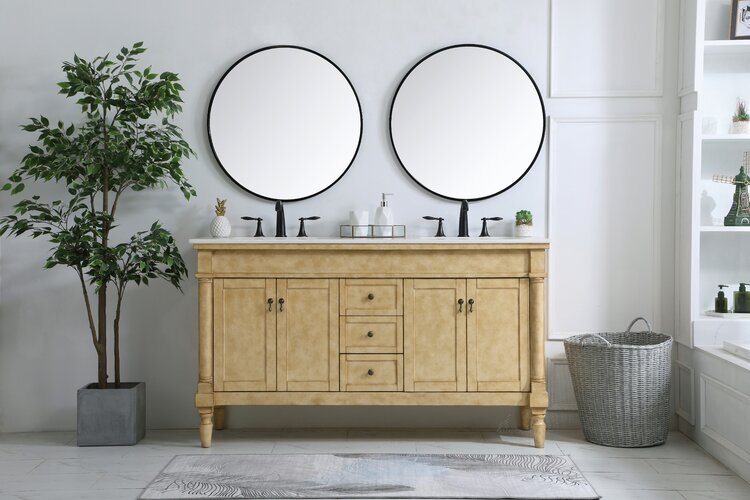
If you’re renovating your bathroom, knowing how to install or replace a bathroom sink yourself can be empowering and cost-effective. Our guide on how to install a bathroom sink is here to help you. Read on for information on how to measure for a new bathroom sink and all the materials, tools and required components you’ll need to complete the installation.
Overview:
Understanding Sink Installation Types and Sizes
How to Install a Bathroom Sink
How to Remove an Old Sink
How to Install Bathroom Sink Hardware
How to Mount a Bathroom Sink
How to Connect a Bathroom Sink to Your Plumbing
Understanding Sink Installation Types and Sizes
Before you begin, it's important to understand the installation type of the sink you’ve chosen because all bathroom sinks don’t install the same way. For tips on choosing a bathroom sink and details about the different bathroom sink styles, check out our guide on Types of Bathroom Sinks.
Make Sure It Fits
To make this project easier, we recommend using the existing plumbing in your bathroom for your new sink. If you want to move your sink to a different location, we recommend hiring a professional.
If you’re planning on replacing your old bathroom sink with a new one of the same style, simply use the same width, length and depth measurements for reference when purchasing. Width refers to the measurement from the front of the sink to the back of the sink, length refers to the measurement across the sink from left to right, and depth refers to the measurement from the top of the sink basin to the bottom of the sink basin.
If you want to size up or down in length or width, you will either have to widen your vanity countertop’s existing cutout or purchase a new countertop with the right size cutout. This will require a professional’s help.
If you’re working with a countertop basin, just make sure to choose a tap that will fit over the height of the sink. Also keep in mind the heights of surrounding cabinetry, mirrors and light fixtures so the sink will fit on your vanity.
For wall-hung, pedestal, cloakroom and corner sinks, be sure to measure the length of the wall you’d like to mount the sink on and ensure you have enough room between other fixtures for the sink. If the bathroom doors open near where you’d like to position your sink, make sure they have room to fully swing open.
Know the Parts of a Bathroom Sink
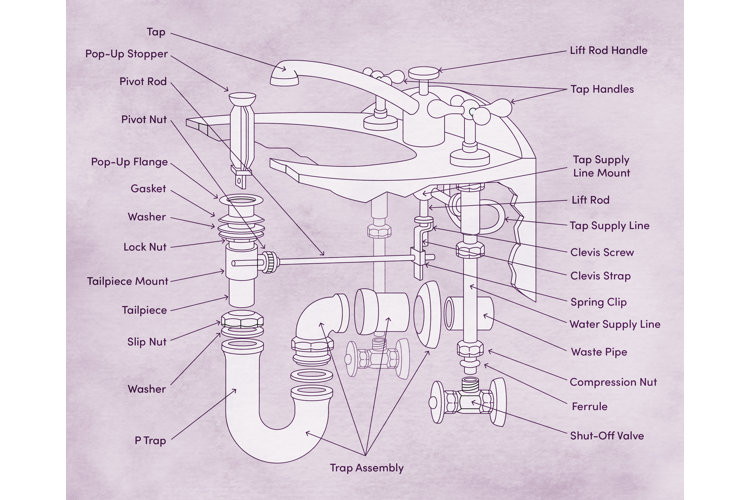
Though most bathroom sink types look and install differently, they all have the same basic anatomy. Refer to the following diagram of the parts and plumbing of a bathroom sink and drain for help while you install.
How to Install a Bathroom Sink
What You’ll Need
- All appropriate sink and sink plumbing components for your sink style
- Bucket
- Adjustable wrench
- Pliers
- Utility knife
- Chisel
- Power drill
- Hacksaw or other pipe cutter
- Pipe thread sealant or plumber’s tape
- Plumber’s putty
- An extra person to help lift the sink
Tip: If you have a granite or marble countertop, make sure you are not using oil-based plumber’s putty – it will bleach your countertop.
How to Remove an Old Sink
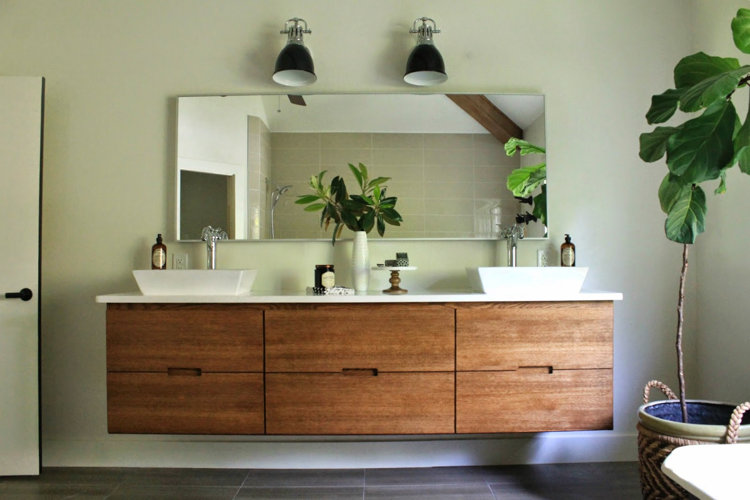
If you want to learn how to replace a bathroom sink, these steps will get you started. If you’re starting from scratch, skip to the next section.
Step 1: Disconnect the Water Supply
Place a bucket beneath your sink setup and use the two shut-off valves below or behind the sink to turn off the water to your sink. Test both faucet handles to ensure water is shut off.
Step 2: Disconnect the Hot and Cold Water Supply Lines
Using an adjustable wrench, loosen the nuts holding the hot and cold water supply lines to the shut-off valves until you can remove them. Some residual water might drip out of them – that’s what the bucket is for.
Step 3: Disconnect the Drain Connection
Use pliers to loosen the large slip nut holding the P trap to the tailpipe of your sink’s drain until it’s loose enough to remove easily. You can remove the entire trap assembly by loosening the large nut holding the trap assembly to the waste pipe in your wall, but that might not be necessary if you’re replacing the sink.
Step 4: Remove Clips or Bolts
If your sink is installed on a vanity, use your power drill to unscrew the clips holding the sink to the underside of the countertop. If your sink is wall-hung, pedestal, cloakroom or corner style, remove the bolts holding the basin to the wall. You might need a friend to hold the sink for you while you do this so that it doesn’t fall.
Step 5: Remove Caulk or Sealant
Run your utility knife along the crease between your sink and the countertop or wall to release the silicone sealant.
Step 6: Remove the Sink
Lift up the basin to remove it from a countertop. If your sink has a pedestal or console attachment, remove that after you take off the basin.
How to Install Bathroom Sink Hardware
If your countertop sink is installed independently of the tap and tap handles (all countertop basin and some undermount, inset and trough styles do), install the tap and tap handles first. If your tap and handles must be installed into holes in your sink basin, skip to the next step and do this one afterwards.
Step 1: Install the Tap Spout
If your tap didn’t come with a gasket, wrap a 0.5cm - 1cm thick ring of plumber’s putty around the underside of the tap where it will meet the sink or countertop. Lower it into the appropriate installation hole and secure it in place by tightening a nut or plate beneath the sink or countertop with a wrench or drill. Remove any excess putty.
Step 2: Install the Handles
If separate from the spout, install the tap handles the same way you installed the spout.
Step 3: Connect the Tap Supply Hoses
Wrap plumber’s tape around or apply pipe thread sealant to the threads (grooves) of the supply line hose mounts under each tap handle. Attach a flexible supply line hose to each of those mounts and tighten using a wrench on each corresponding nut. Using the same method, attach the other end of each supply line hose to the corresponding side of the T-shaped supply line mount on the underside of the spout.
Step 4: Connect the Hot and Cold Water Supply Lines
Attach a water supply hose to each water supply mount under each tap handle using plumber’s tape or pipe thread sealant, a wrench and the applicable nut. The water supply hoses will be thicker than the faucet supply line hoses, and will eventually be connected to the water supply valves in your wall.
How to Mount a Bathroom Sink
Step 1: Drill Holes in the Underside of Your Countertop for Clip Screws
Note: This step only applies if your countertop doesn’t already have them.
Clips are used for undermount and inset styles. You’ll usually need four, positioned at the corners of a rectangular mount or equidistant around a round mount. Make sure you use the right size drill bit for the clip screws you’re using.
Step 2: Apply Sealant to the Sink
Squeeze a thin line of silicone caulk to the edge or edges of the sink that will be adhered to the wall or countertop.
Step 3: Mount the Sink on the Countertop or Wall
If your sink is inset, countertop basin or trough, simply lower your sink and its hardware in position onto the countertop. If your sink is recessed, you’ll have to mount your sink from below. For wall hung sinks, ensure that the sink is level before you move on to the next step.
Step 4: Secure the Sink in Place Using Clips or Bolts
For countertop-mounted sinks, place clips and clip screws into the corresponding holes in the countertop and tighten until your sink feels snug in place. For wall-hung sinks, drill the sink basin into the wall using lag screws into the sink’s mounting holes. You might want a friend to help you so that the sink doesn’t fall. Clean up any excess silicone after tightening.
Tip: If you’re also installing a new countertop to go with your new sink, you can do all of these installation steps with the countertop upside-down – this is great for visibility and excellent if you’re installing an undermount sink.
How to Connect a Bathroom Sink to Your Plumbing
Step 1: Connect the Hot and Cold Water Supply Lines to the Shut-off Valves
Apply plumber’s tape or pipe thread sealant to the male pipe threads and screw the hot and cold water supply lines to the corresponding valves on your wall using compression nuts and brass ferrules.
Step 2: Install the Lift Rod
Lower the lift rod into the top of the tap and attach the clevis strap to the bottom of it using the clevis screw.
Step 3: Install the Pop-up Flange
Wrap some plumber’s caulk or putty around the underside of the flange, or strainer and press it gently into the drain opening of the sink. From below the sink, push the gasket onto the bottom of the strainer and then secure it in place with a washer and the lock nut. Tighten using a wrench, but don’t tighten too much or else the sink might crack.
Step 4: Install the Tailpiece Mount
Place a gasket into the top of the tailpiece mount (the T-shaped piece with the side opening) and screw it in place using a wrench. The side opening of the tailpiece should be perpendicular with the dangling clevis strap. Adjust if not.
Step 5: Install the P Trap Assembly, if you Removed it.
Connect it to the waste pipe in your wall and tighten using a wrench on the applicable nuts and washers.
Step 6: Install the Tailpiece
The tailpiece should fit snugly between the tailpiece mount and the P trap – if it’s too long, you may have to use a pipe cutter to shorten it. You may need to loosen the P trap and move it aside to fit the tailpiece under the tailpiece mount. Once it’s positioned correctly, apply some plumber’s tape or pipe thread sealant to the grooves on the tailpiece, screw it in place and secure it with the accompanying nut and gasket.
Step 7: Install the Pop-up Stopper
Lower the pop-up stopper into the bottom of the sink.
Step 8: Install the Pivot Rod
Fit the pivot rod ball-first through the side opening in the tailpiece mount. Thread one side of the spring clip, the clevis strap in its natural position (not too far up or down), and then the other side of the spring clip onto the pivot rod. Secure the pivot rod into place with the pivot nut and accompanying gasket.
Test It Out
Step 1: Turn on the Water Supply
Step 2: Test the Hot and Cold Water
Check that each handle works and there are no leaks. If there are, you might need to disconnect the water again and re-seal some plumbing connections.
Tip: For more useful tips, read our guides:
- This is How to Unblock a Bathroom Sink
- Every Bathroom Sink Style, Explained
- Bathroom Tile Designs: Choosing the Best Tiles for Your Bathroom
