Need to Measure for a Ceiling Light? This Guide Shows You How
We’ve got you covered.
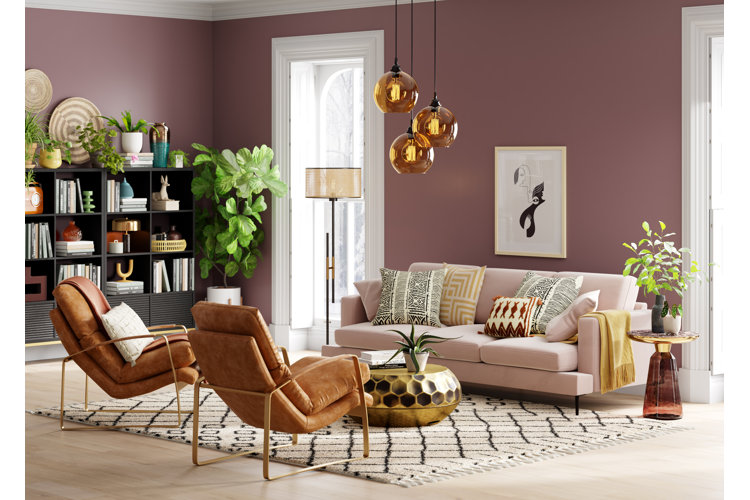
Two of the most important aspects in planning for a new ceiling light is taking the correct measurements and knowing the right placement for it. This will ensure that your fixture is proportionate to your space and looks balanced. Read on to find out how to measure for a new ceiling light.
Overview:
How to Measure for a Drop-Down Ceiling Light
How to Measure for Recessed Lighting
Placement: Best Practices
How to Measure for a Drop-Down Ceiling Light

Follow these placement recommendations for chandeliers, pendants and flush or semi-flush mount lighting.
What You'll Need:
- Pencil
- Paper
- Tape measure
- Step stool or small ladder
Step 1: Measure the Room
The first step to picking the perfect fixture is understanding your space. Measure the length and width of your room as well as the ceiling height. Remember that the style and visual weight of the ceiling light also affects the size you should choose.
Step 2: Determine Light Width
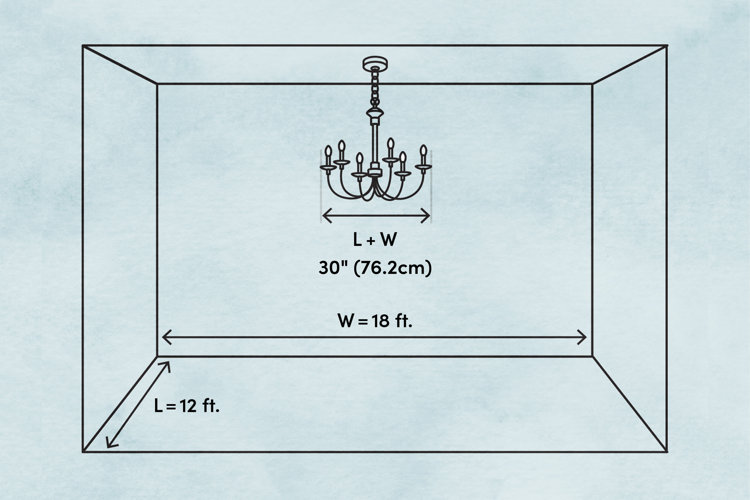
To choose the best width for your light fixture, measure the length and width of the room and convert that number to inches. Here’s a simple formula for calculating the width.
Room Length (feet) + Room Width (feet) = Fixture Width (inches)
For example, if your room is 12' x 18', their sum is 30'. Change the total into inches and your light should be 30" wide (if working in centimetres, convert to total from imperial to metric, e.g. 30" = 72.6cm).
However, if you plan on placing the light fixture over your dining table, choose a light that’s about 12" (or 30.48cm) narrower than the table to keep the room balanced.
Step 3: Determine Light Height
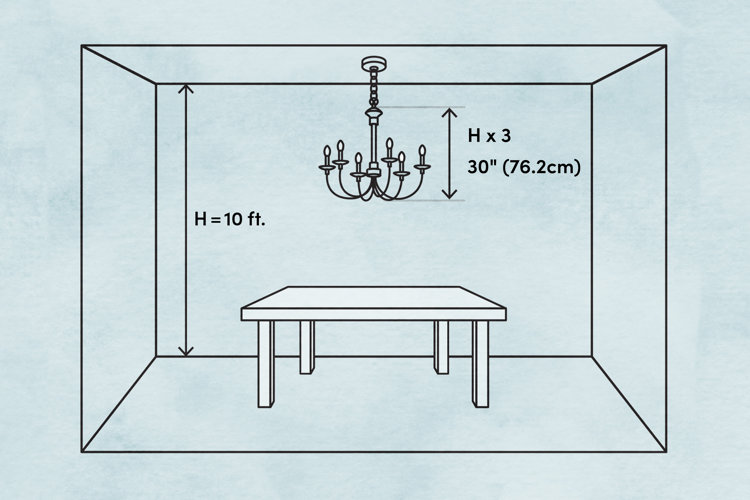
In general, we recommend that the light is 3" tall for every foot of space between the floor and ceiling. You can find this number by multiplying the height of your ceiling (feet) by three. For example, if your ceilings are 10' high, your chandelier should be 30" tall (10 x 3 = 30). If you’re working in centimetres, you’ll need to then convert from imperial to metric (30" = 72.6cm).
If you have low ceilings, flush mounts, semi-flush mounts and recessed lighting are perfect for your home. Not only will these add light to your space but they take up little room. Use our formula above to calculate how tall your flush and semi-flush lights should be. Remember that you want enough room to pass under it without hitting your head.
How to Measure for Recessed Lighting
To determine spacing for your recessed lights, divide the height of your ceiling by two. For example, if the room has an 8' ceiling, space your lights 4' apart from each other on all sides. This rule may change slightly depending on the wattage of your bulbs and the natural light already in the room; however, use this guideline as a starting point.
Tip: A safe option to ensure you’ll have adequate lighting in any space is to 'overlight' the room with dimmable lighting options, so that no matter the occasion, your space will always have the right ambience.
Best Practices for Ceiling Light Placement
Hanging Light Over a Table
Hanging lights should be proportionate to the room. Centre the fixture over the table and 34" (86.36cm) above from the tabletop. Remember that if you plan on placing the light fixture over your dining table, choose a light that’s approx 12" narrower (30.48cm) than the table to keep the room balanced and so no one hits their head.
If you want to fill a larger room, consider spacing out multiple pendants above the dining table.
Hanging Light Over a Kitchen Island or Table
When you’re hanging lights over a kitchen island, counter, table or bar, hang the lights 30" – 36" (72.6–91.4cm) above the surface. This will give those sitting or standing around enough visibility to see across. If you're hanging multiple pendants above a surface, space the fixtures 24" (60.9cm) away from each other.
Hanging Light in a Hallway or Bedroom
If you're hanging a pendant or chandelier in a bedroom, hallway or other room in which people will be moving around in, the bottom of the fixture should be at least 7' above the floor.
Hanging Light in a Two-Story Foyer
The chandelier or pendant should be at eye level or slightly lower when viewed from the second floor.
Placing Accent and Track Lighting
Knowing the correct placement for accent lighting is vital to showing off your pieces effectively.
Measure the distance from the ceiling to the middle of the object you want to highlight. Multiply that number by 0.55 to determine how far the track fixture should be from the wall. For example, if you have 8' ceilings and the middle of a painting is 4' high, install the track lights 2.2' away.
Position the track heads at a 30° angle to prevent glare and shadowing.
Tip: Track lights should be at least 6' away from curtains and other flammable materials.
