Improve Your Quality of Sleep With The Right Mattress
For a long and restful night's sleep.
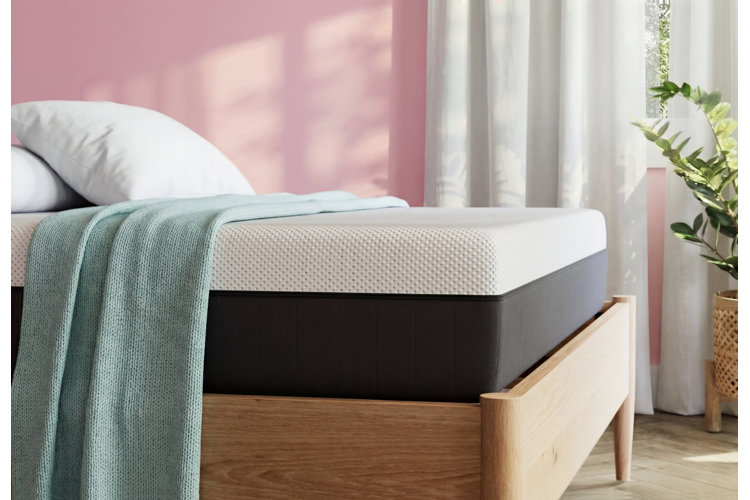
We spend up to a third of our lives sleeping, so why spend it lying on a less-than-perfect mattress? A good mattress can mean the difference between broken sleep and the sweetest of dreams, so learn how to choose the right supportive and comfortable mattress for you with our buyer's guide.
Overview:
When to Buy a New Mattress
How to Choose a Mattress
Choose a Firmness
Understanding Mattress Types
Choose a Foundation
Choose a Mattress Size
Features to Consider
Caring for Your Mattress
Mattress Finishes
When to Buy a New Mattress
- Your mattress is more than eight years old.
- You wake up with aches and pains in your back or joints.
- Your sleep is restless; you toss and turn or wake up frequently at night.
- Your mattress shows visible signs of wear and tear (i.e. sagging).
- You feel the coils when lying on your bed.
- Your mattress doesn't support your body in the places you need support.
- You hear noises/creaks when moving around.
- You roll toward the middle of the bed or you easily roll off the edge of the bed.
- You’ve outgrown your current mattress size or want to upgrade.
- Your body or sleeping position has changed recently.
- You're moving and would like a fresh start for your bed.
How to Choose a Mattress
Decide on Firmness
Firmness is a crucial aspect of a mattress. Depending on your desired comfort level, you can choose from soft to firm. For the best sleeping results, you want the mattress to contour to the curves of your body while providing enough support to maintain neutral alignment. We recommend choosing firmness based on your personal sleeping habits.
Side Sleepers: If you sleep on your side, choose a mattress that has a soft to medium comfort level. This will allow your body to sink into the mattress and align your hips and shoulders, preventing pressure points.
Tip: Find more information about mattress and pillow options for side sleepers in our guides: Best Mattress Pad and Toppers for a Good Night’s Sleep and Choosing the Perfect Pillow Types.
Back Sleepers: Medium comfort level is best for back sleepers. The mattress will contour to the curve of your lower back, while providing enough support to keep your body aligned and your legs from sinking.
Stomach Sleepers: Stomach sleepers need mattresses with a firm or extra-firm comfort level to keep their torsos from sinking in throughout the night.
Tip: An easy way to test the firmness of a mattress is by checking to see if your spine is horizontal when lying on your side, and that you can turn with ease. If your mattress is too soft, your body will slouch and make your spine out of line. Too hard, and it'll cause you tension while sleeping.
Understanding Mattresses Types
The chart below provides a quick insight into how different mattress types stack up against each other. Read on for a more detailed look at each:
Pocket Sprung & Open Coil
These mattresses are constructed with steel coils for traditional support. Mattress coils are described by two measurements: gauge and count. Coil gauge describes the thickness of the coil. High coil gauges correspond with thin coils, while low coil gauges correspond with thick coils. The lower the coil gauge, the firmer the mattress. Coil count describes how many coils are in the mattress. The higher the coil count, the more supportive the mattress. Pocket sprung mattresses tend to have between 400 and 900 coils, with 700–800 being the average.
There are often two different forms of coils – open coils and pocket coils.
Open coil models are made up of one interlocking coil system and designed for support and durability. They offer a classic bounciness, making it effortless to change positions during the night – though your partner may feel that motion transfer.
Pocket coil models are made up of individually wrapped coils that provide targeted support and limit motion transfer.
Tip: It's a common myth that mattresses with exceptionally high coil counts are significantly better than mattresses with average coil counts. As long as you choose a mattress with a coil count of at least 400, you should sleep perfectly fine. Plus, you'll save on cost as mattresses with very high coil counts tend to be more expensive.
Non-Spring Mattresses
Memory Foam & Pure Foam
Foam mattresses mold to your body's shape in varying degrees which allows you to move around without bothering your partner. The stacked layers of foam conform to the body by reacting to its heat and pressure. They evenly support your entire body and spread your weight across the bed’s surface, relieving aches and pains. Memory foam mattresses are best for side sleepers because they contour well to your hips and shoulders. Memory foam is dust, mould, and allergen-resistant, however it does trap heat. Pure foam plays a similar role to memory foam although it is much denser.
Latex Mattresses
Similar to memory foam, latex mattresses conform to your body's curves. The material is composed of a natural substance which is harvested from rubber trees. Latex mattresses offer a lighter feel and more bounce than memory foam but are slightly less contouring. The material is breathable and hypoallergenic.
Hybrid Mattresses
Hybrid represents the best of both worlds – a coil base topped with foam layers. This combines the traditional feel and support of pocket sprung mattresses and the contouring pressure relief of foam mattresses.
Tip: Want to make your sleep retreat even cosier? Try an adjustable base for customised comfort. All foam mattresses and some coil mattresses are compatible with adjustable bases. Look at individual product information to see if your perfect mattress is compatible.
Orthopaedic Mattresses
Orthopaedic mattresses come in a range of materials and tensions and are designed to support the joints, back and overall body. Many back pain sufferers find that orthopedic mattresses ease their symptoms. Available in a wide range of materials and tensions, open coil, memory foam and pocket sprung mattresses that are firm and supportive can all be used as an orthopaedic mattress.
Tip: For more information on how to relieve pain and tension while sleeping, read our guide: Suffering With Back Pain? These Are the Best Mattresses for Pressure Relief.
Choose a Foundation
Whether or not you need a box spring depends on your bed, not your mattress. In order to best support your mattress, use any solid foundation like a platform bed or a slatted foundation with slats less than 4" apart.
Choose a Mattress Size
Take a look at the standard dimensions for UK mattresses using the following mattress size chart.
Small Single/Single: If you're searching for a mattress for a single person, a small single or single is the one for you. Single size mattresses are slightly longer than small single mattresses and are standard in student accommodation – they're great if you're on the taller side or if you want more legroom while you sleep.
Small Double/Double: If you're an individual sleeper but need a lot of space to sleep comfortably, opt for a double or small double-sized mattress. You'll be able to stretch out without hanging off the bed.
Kingsize: Kingsize mattresses offer that extra bit of comfort and easily fit two people without having too much extra room left over. This mattress option is very popular for couples.
Super King: Sleep lavishly on a super king mattress. With enough space to fit you, a partner, and even a pet, these mattresses almost guarantee your limbs won't hang off in the middle of the night.
Flippable / Double-Sided
Although one-sided mattresses (sometimes called non-turn or no flip mattresses) are popular, it's usually better to choose a double-sided aka 'flippable' mattress. Double-sided mattresses can be flipped and rotated as needed so that the mattress layers can settle and contour to each individual and in some cases can actually last up to twice as long as a one-sided mattress.
Caring For Your Mattress
Mattress Protectors
Mattress protectors do just what you think - protect your mattress from spills and stains. They'll also increase the lifespan of your mattress, add a cosy extra layer and some can even help allergy sufferers.
Airing Your Mattress
A few times a year, it's a good idea to strip your mattress and air it outside for a few hours. Make sure to cover the floor with a ground sheet and take it inside at the slightest chance of rain (water on mattresses can lead to mould growing). You might also want to hoover your mattress, especially if you have allergies.
Rotate It
Rotate your mattress every six to eight weeks, especially while it's new, turning it in all directions to ensure optimum comfort and even support. Check if your mattress has handles before buying, as these will help you move it around easily.
Freshening Your Mattress
Remove odours and nasty smells by sprinkling a layer of baking soda over your mattress next time you wash your bedding. If you like, add some crushed vanilla or dried lavender. Leave to sit for a few hours and then vacuum off. The baking soda acts as a sponge for odours, leaving your mattress smelling wonderfully clean. You could also just spritz an odour-eliminating spray over the mattress if you're short on time.
Mattress Finishes
Tufted
Tufting involves passing tapes through various points of the mattress to pull it together and keep its shape. This is part of pocket sprung mattresses; some people aren't keen on tufts as they can create an uneven surface, so it's worth checking this before you buy.
Quilted
Quilted tops give mattresses a smooth finish. Some people prefer the look to tufted mattresses; it's most commonly used on open coil mattresses.
Damask
This is the name given to the woven finish on the top of some mattresses. Damask can be made from many fabrics, from cotton to silk or acrylics, so it's best not to assume all damask feels the same. The defining quality is coolness and smoothness.
Pillow Top
As the name suggests, pillow top mattresses come with an inbuilt, pillow layer on one side. This means that they can't be turned but instead come with a built-in cushioned, comfortable feeling.
Tight Top
These mattresses come without an extra layer on them like the pillow top.
Tip: Enjoyed this article? Then you should also check out:
- How to Clean Your Mattress Like a Pro
- How to Properly Clean a Bed Frame, Headboard and Mattress
- Too Hot to Sleep? Here's How to Stay Cool at Night
