Expert Tips on What to Look For When Buying a New Oven
Invest in the best.
Need a little help choosing the best oven for your kitchen? Read through our guide to explore the different oven types, understand what makes each so great, and find out which oven will work best for you and your home.
What is an Oven?
Before you can select your next oven, it’s a good idea to learn exactly what an oven is/does. An oven is just the chamber that uses either gas or electricity to bake, grill and cook your food. It uses no external burners. A stove (or cooktop) is a separate cooking appliance which doesn’t have an oven. It uses cooking elements to directly heat and cook the food by using either electricity or gas. The stove comes with control knobs and is usually recessed in a kitchen countertop or a cooking island. A range however, is the combination of a stove and an oven fueled by gas, electricity or a combination of the two. While a range and an oven are not mutually the same, more often than not the two are used interchangeably to refer to a range. With this in mind, the best ovens described in the guide will actually be referring to ranges (stove and oven combinations). Purchasing a range is more cost-effective than buying each appliance separately.
How to Choose the Best Oven
When selecting your range, you’ll want to consider what type of oven will offer the best features for you.
When exploring different oven types, you’ll first need to consider your lifestyle and what cooking environment is best suited to you. Are you an amateur chef in need of a stove with various and effective heat settings? Are you a home baker in need of a large oven that bakes evenly and consistently? Do you enjoy making small meals or spend as little time in the kitchen as possible? Or do you regularly need to produce large amounts of food for entertaining and family gatherings? Your answers to each of these questions will help you choose the best oven for your home.
Best Ovens: Fuel Types
Once you know what your intentions are for your new oven, you can get into the basics and consider what fuel type you prefer. Electric, gas and combination fuel types each lend themselves to your primary use of the oven itself.
Gas Oven
Listed as one of the most popular types of ovens out there, gas ovens are fueled by either natural gas or liquid propane. Both fuel types have a specific Btu (British thermal unit) rating which determines the amount of energy content each fuel has, which in turn determines how powerful the appliance is. A gas oven limits the amount of heat used when cooking, so it is useful if you need a particular Btu rating for the dishes you plan to cook. A gas stove uses an open flame that is protected by a grate on which you place your cookware rather than placing it directly onto the flame.
Pros: Offering more control over the temperature, particularly on the stove, gas ranges are favored by professional chefs. The instant flame means you don’t have to expend electricity while waiting for the stove top to warm up. A gas oven has a shorter preheating period, not only saving energy but time as well. Gas ovens produce a moist heat that stops cooking almost as soon as the oven is switched off. Gas ranges are more dependable and last longer than electric ones and can even be used in the event that you lose power. Pick natural gas for a more affordable fuel source and propane for a faster flame.
Cons: A gas range costs more than an electric range, especially if you don’t already have a gas line in your kitchen. You will need to have your range installed by a gas-safe engineer to ensure that everything is up to code. Gas ovens are prone to hot spots (pockets of hot or cool air due to uneven heating), so make sure to rotate your dish to prevent it from burning in spots. The open gas flame does pose a burning hazard and many people are afraid of the gas tank exploding (though this is an uncommon occurrence). Natural gas is a nonrenewable resource that produces greenhouse gases. Switching to propane can be a costly move in itself, especially if you need to upgrade your appliances to be suited for a propane setup.
Electric Oven
An electric range is fueled solely by electricity.
Pros: Electric ovens are the best ovens for avid bakers because they heat evenly. Electric ovens are often more affordable, particularly because you don’t need a gas line as you would with a gas oven. Many people prefer electric ovens because they pose no risk of a gas leak.
Cons: Electric ovens are usually hotter at the top than at the bottom, so be sure to use the middle rack when baking. Unfortunately, both the stove and oven of an electric range take longer to heat and cool, causing a burn risk and wasting energy. Electric ovens often need maintenance and pose the danger of an electric fire.
Dual-Fuel Oven
A dual-fuel range is flexible because it relies on both gas and electricity. The stove top is gas-ignited while the oven relies on electricity.
Pros: Dual-fuel ranges have risen in popularity because they offer the best of both worlds. The flame on the gas stove can quickly be adjusted to your desired temperature, making it ideal for cooking. The electric oven produces a drier heat, allowing for a more consistent bake.
Cons: If you don’t already have one, you will need to have a gas line installed in your kitchen. Dual-fuel ranges are significantly more expensive than a gas or electric oven due to their enhanced features.
Best Ovens: Cooking Surface
Don't forget to take cooktop into account. Electric ranges come in either a smooth top or a coil burner through which the heat is transferred. Gas and dual-fuel ranges use cooktops with flame burners which can either be grated or deep-recessed. The following are the best ovens based on cooktop surfaces.
Smooth-Top Surface
More often than not, a smooth-top surface is made of a ceramic-glass blend. These are made only for electric ranges.
Pros: Smooth cooktops promote even cooking because of their flat surface. These cooktops are easy to clean because there are no protruding elements or inconvenient gaps to have to clean. The burners are sealed with the elements beneath the surface. A smooth-top surface has a sleek and modern look, making it a great kitchen addition.
Cons: The flat surface requires extra care because it is easy to scratch. Instead of sliding pans around, pick them up and place them down where needed. The best cookware to use on a smooth cooktop is stainless steel. Cast iron will not only scratch the cooktop with its uneven surface, but it also remains hot much longer, posing the risk of overheating the cooktop and causing it to shut off. Stoneware and glass cookware is also best to avoid on a smooth top, as they are also likely to scratch the surface.
Coil Surface
Coil-surface stove tops are a little more old-fashioned than smooth cooktops. The coils are made of steel tubing that houses a heating element powered by electricity. Your cookware is placed directly onto the coil, and heat is transferred into the pot or pan.
Pros: Coil-surface cooktops use the simplest technology and are easy to produce, making them the most affordable range. They are quite durable and can handle nearly any type of cookware without you having to worry about scratching the cooktop surface.
Cons: Coil surfaces have exposed heating elements which can be slow to heat and cool. They also tend to heat unevenly because of the uneven tilt of these elements. A coil-surface cooktop can be a chore to clean because the surface isn’t flat, allowing debris to get into hard-to-reach areas. However, the coils are made of untreated steel, so it is possible to use a more abrasive cleaner. Unfortunately, coil surfaces are not as modern or aesthetically pleasing as a smooth-top surface because of the protruding heating elements.
Grate & Deep-Recessed Surface
A grate surface and a deep-recessed surface are essentially the same thing. They are made only for gas or dual-fuel ovens. These cooktops house exposed gas burners with a grate that fits over them. The grate sits above the burners so that your cookware doesn’t rest directly on the flames. The difference between the two is that deep-recessed cooktops have a much larger distance between the burner and the grate. This is purely a stylistic difference.
Pros: The grate system accommodates oversized pots and pans and allows them to easily be moved from one burner to another without the risk of damaging the cooktop surface.
Cons: A grate is heavy, so removing it for cleaning can be inconvenient to clean because of the shape and tendency for grease to cook onto it. Due to their heaviness, if you do not clear the cooktop when lifting it off, you pose the risk of scratching the appliance.
Best Ovens: Features
Ovens have many features that you should consider and get to know. The best oven for you should have practical features suitable to your cooking habits.
Self-Cleaning Oven
Cleaning your oven yourself can be inconvenient. Grease gets baked on, making it difficult to keep looking new. Why not save yourself the trouble and opt for one that can clean itself? Self-cleaning ovens are pyrolytic, meaning they use extremely high temperatures to burn food residue and grease into easy-to-clean ash.
Pros: When in self-cleaning mode, the oven door will lock. The door will only unlock when the internal temperature is back to a safe level.
Cons: Self-cleaning can take anywhere from 1 to 3 hours. It's important to have your oven fan on so that it can filter out the unpleasant odors and fumes that are emitted during a self-cleaning cycle. As a safety precaution, never leave the house when the oven is in self-cleaning mode.
Wi-Fi Connected Oven
We live in an age of smartphones with ever-changing technology. It only makes sense that it would extend to appliances too. A Wi-Fi connected oven makes use of smart technology by connecting to your Wi-Fi and then to your phone’s Bluetooth, allowing you to remotely perform functions from the comfort of your couch (like preheating your oven).
Pros: Many smart ovens offer setting suggestions to help you cook your meal. You can use your smartphone to control the temperature settings, modes, and even which oven you turn on (if you have dual ovens). Some smart ovens can be controlled from beyond your house, allowing you to preheat your oven from your car while you drive home.
Cons: Most smart ovens require that you are within close proximity in order to use the Wi-Fi feature. This type of oven can be a little tough to use for those who are unfamiliar with this technology. You will also be unable to use this feature if you do not have access to Wi-Fi.
Timer Range Ovens
A timer feature most notably turns your oven off when the timer runs out.
Pros: This feature will switch the oven off as soon as the cooking time is over, helping to ensure nothing overcooks again. It’s especially convenient when you’re multitasking and can’t immediately attend to the oven, allowing you to cook accurately without extending beyond the cook time.
Cons: If your control panel stops working, you will not be able to use this function. Once the timer has switched the oven off, it will beep continuously until you attend to it, which can be frustrating if you don’t immediately switch it off.
Induction Cooktop
Induction cooktops transfer heat directly from the cooktop to your induction-compliant cookware without heating the stove itself.
Pros: Induction cookware is energy-efficient and boils water 50% faster, cutting down your time in the kitchen. The induction energy transfers directly into the pan rather than radiating heat. This not only keeps the kitchen cool but reduces the risk of burns.
Cons: Unfortunately, induction stove tops do require specific cookware in order to function. The upfront cost of the range will be more expensive than with an electric.
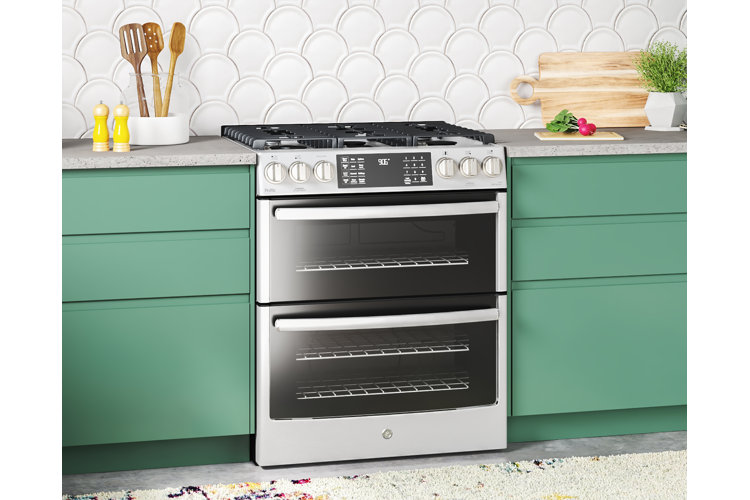
Tip: Double ovens allow you to simultaneously cook two dishes at different temperatures, making them ideal for bakers, frequent entertainers and large families.
Convection Oven
A convection oven uses electricity just like a conventional oven with the difference of a fan which circulates the hot air.
Pros: Professional cooks prefer convection ovens because the heat is evenly distributed by the fan, preventing areas that are too hot or not hot enough. Items on the bottom rack will cook in the same amount of time as those on the top rack thanks to the even heating.
Cons: Convection ovens can bake a cake faster on the outside than on the inside, so do keep an eye on your dish.
Tip: Enjoyed this article? Then you might also like:
- 5 Cooker Hood Ideas To Boost Your Kitchen's Design
- Investing in a New Dishwasher?
- Need Help Choosing Your Next Kitchen Sink?
