Your Go-To Guide to Internal Door Types
Increase your door appeal.
Even though we pass through them every day, most of us probably don't pay much attention to our homes' internal doors. Internal (or interior) doors are an essential part of your home's functionality. Choosing different internal door types and styles can make a big difference in the appearance of a room as well as improve your ease of mobility throughout your home. Read our guide for a comprehensive look at all the different internal door types and designs.
Internal Door Types
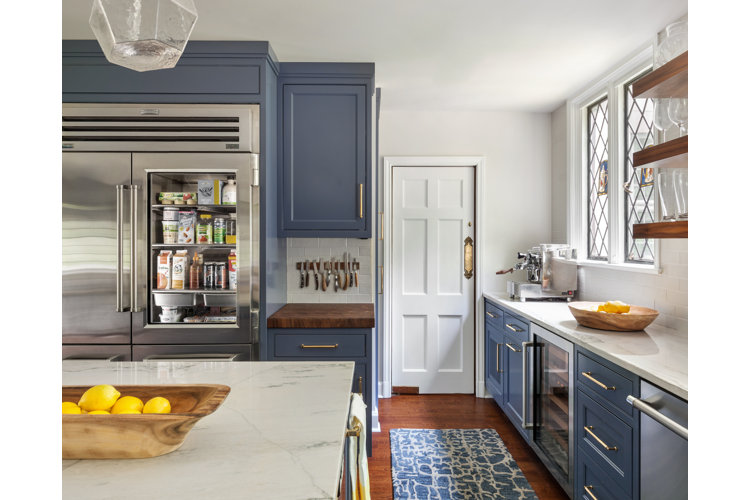
Standard: Solid, subtly paneled and undeniably classic, standard doors are most likely the doors your home was built with. Standard doors are sturdy and opaque, which means they can withstand wear and tear and ensure privacy. Don't let a standard door's simple appearance fool you – a set of stylish handles and hinges can dress it up or down.
French: Delicate French doors are inlaid with an array of glass panels that allow an abundance of light to stream through them. French doors usually come in pairs that either swing open where they meet or slide over each other. They're customarily installed in large door frames, especially ones that open to the outdoors. While beautiful and classic, these doors are a bit more fragile than their solid counterparts.
Bifold: Traditionally installed over wide, reach-in closets, bifold doors are lightweight and louvered (slatted) to allow for airflow, which is essential in preventing a closet from becoming mildewy and smelly. Each bifold panel is made up of two planks held together by hinges that allow them to fold together as the door is pulled open. Since they don't swing outward to open, bifold doors are less obtrusive than standard doors.
Accordion: Accordion doors are super retro. Typically made out of vinyl and PVC, these lightweight, accordion-style doors are designed to be compressed neatly to one side when open and extended across the entire doorway when closed. Most accordion doors are opaque, which makes them perfect for covering cluttered closets and other unsightly storage spaces.
Sliding: A sliding door is a sleek, modern alternative to the traditional bifold door. These lightweight sliding doors can be transparent, semitransparent, opaque, simple or decorative. Sliding doors are unobtrusive, as they won't fold or swing into your space. Though most sliding doors trend modern, there are several more traditional options.
Once you know what door type you'd like to install in your home, it's time to choose a design that resonates with you.
Panelled: If you've got an eye for the classics, a panelled door is the choice for you. Panelled doors have inset rectangle shapes that create dimension and set them apart from the wall. The panel profiles – the frame-like ridges around the inset panels – typically resemble crown molding. Other panel designs (including triangles and chevron) are available if you don't want to go with the most classic option.
Flush: The faces of flush doors are completely flat and flush with the wall. These doors are solid and simple in construction, so they're a great option if you're looking for something dependable and not too fancy. Minimalist modern homes favor flush doors because of their lack of texture and ornamentation – their smooth, sleek finishes fit right in.
Louvered: Embedded with angled slats, louvered doors enable airflow through the door but don't allow for any peeking; because the slats are at an angle, the door appears totally opaque. Louvered panels are typical of closet doors but can come in handy for closing off pantries as well.
Mirrored: If you're a fan of all things multipurpose, you'll love mirrored doors, which have mirrors embedded in their surfaces. Because the mirror is built into the door, a mirrored door can be a space-saving alternative to hanging a large wall mirror or propping up a full-sized, freestanding mirror.
Tip: Compliment your internal doors with the right door knob and lock. Our door hardware guide lays out all you need to know.
