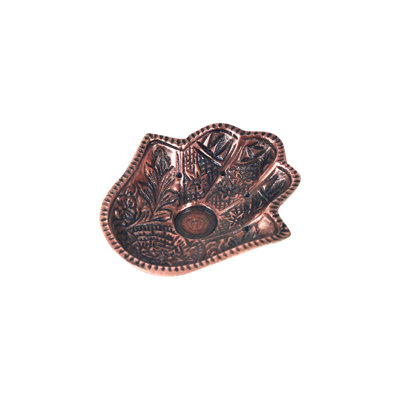
Marybeth Hand Finishing Figurine / Sculpture Decorative Object
By Fairmont Park
Rated 4.6 out of 5 stars5 total votes
£53.99
Show Related CategoriesCategory
191 Items

By Fairmont Park
Rated 4.6 out of 5 stars5 total votes
Made by hand from sturdy aluminium, this set of three balls shines brightly in two tonal gold and silver contrast. Each ball boasts a decorative textured outer enhanced by luxe accents.
Love these, solid balls. Look very classy.. Angharad. Ogmore Vale Bridgend, GB. Sun Dec 01 2024

Get it by Wed, 14 Oct
Handmade with a beautiful antiqued gold finish, this striking stag will make the perfect centrepiece to any Christmas table or decorative display.
Amazing. Olu. Doncaster. Thu Sep 17 2026


By Mercer41
Rated 5 out of 5 stars3 total votes
Crafted from a single piece of aluminium, the ginkgo leaf with stem trinket dish in the striking gold finish will be a charming accent piece for the desktop or table.
A Christmas present to my very dear one , much much loved. Homa Abdollahi. Hatfield, GB. Sun Dec 22 2024
By Mercer41
Rated 5 out of 5 stars1 total vote
Free Delivery
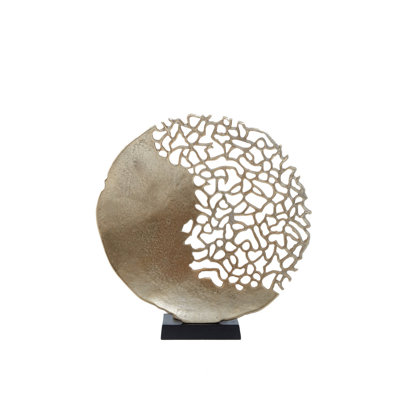
This aluminium sculpture features a visually appealing cutout design of intricate shapes. The round sculpture has a warm metallic finish exhibiting a rustic charm and it is neatly adjusted on a rectangular base to ensure stability
Just stunning. Anonymous. Sat Apr 22 2023

By Ophelia & Co.
Free Delivery
Add this stunning gold metal tree ornament to your home today! Featuring a sturdy quality aluminium metal construction. Middle eastern inspired design for the modern home!
By Metro Lane
Rated 4 out of 5 stars1 total vote
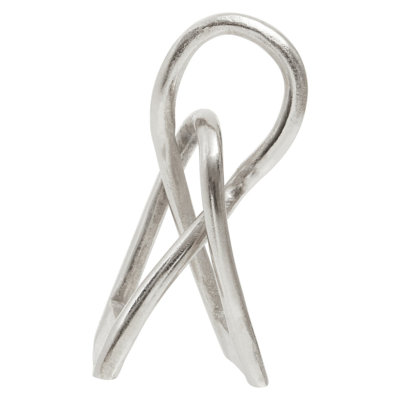
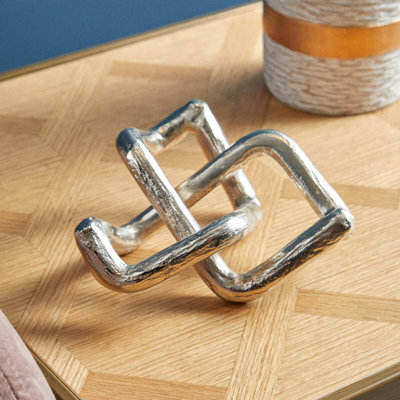
Expertly handcrafted from robust aluminium, this small looping sculpture in nickel finish creates a visual statement on the surface. The two interlocked links of the sculpture chain are inseparable.
Ein schöner Blickfang und von guter Qualität! Individuell einsetzbar im Regal oder man wickelt eine kleine Lichterkette drum und hat eine kreative Leuchte -). Stephanie. Solingen, DE. Mon Oct 17 2022
to:
Figurines & Sculptures
Statue
Decorative Book
Cloches & Water Globes
Vase Filler
Bust
Hourglass
Money Box
Crystal
Beach, Coastal & Nautical
Boho Chic
Cool Colored Industrial
Farmhouse Inspired
Glam Accents
Modern Accents

Offering detail and plenty of vintage-inspired charm, this standing leaf sculpture is a delightful addition to a side table, shelf or windowsill. It is made from aluminium with a rich gold finish and stands on a slim rectangular base.
Great product! As in the photos.. Andrei. Ilford, GB. Tue Apr 23 2024

Free Delivery
Bring a touch of nature indoors with this oval decorative bowl, crafted from lightweight aluminium in a delicate leaf design. Its silver finish and fine detailing create a harmonious focal point on any table or sideboard. Generously sized, it is ideal for holding keys, snacks or candles, and rests securely on three small feet.
Free Delivery
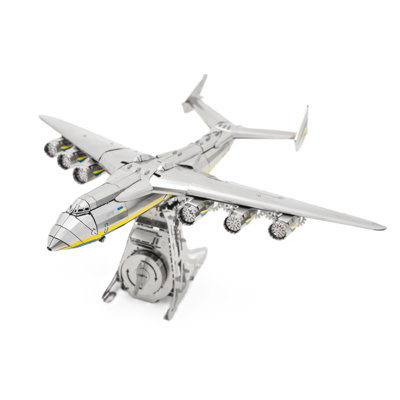
Mriya - the world’s largest transport aircraft AN-225 built by Ukrainian engineers and aircraft builders. Its codename is translated from Ukrainian - a Dream. This aircraft was the flagship of the world aviation fleet. The dimensions of this aircraft were indeed unique: Its length is 84 meters, its height is 18.2 m. To understand these figures, imagine a six-story building with four entrances. The “Mriya” weighed 550 tons and could lift another 250. This is an absolute record among the heavier-than-air vehicles that have ever been airborne on the planet. "Mriya" could transport a herd of 42 elephants, for example. Or a million iPhones. Or a whole Boeing 737. In the history of the flights of the Mriya AN-225, there were episodes of transportation of giraffes, yachts, and parts of power plants. On its fuselage, the first Soviet «Shuttle» called «Buran» made its longest flight. At the end of February 2022, during the Russian attack, the Mriya was destroyed. but the dream won`t be demolished. But engineers of “Metal Time” revive the plane as self-assembly scale model. Here is the Exclusive Edition of the awards winning “Ukrainian Dream” model. Its specifications were astonishing: it was 275 feet long, 288 feet wide and 59 feet tall. To understand just how enormous Mriya was imagine a six-story house with four entrances. The Mriya weighed 350 tons (700,000 lbs.) and could lift another 250 tons (500,000 lbs.). This was an absolute record. Mriya was a beast. No plane on earth could come close to that much carrying capacity. For example, Mriya could transport a herd of 42 elephants, or more than 1.8 million iPhones. Over the years, the Mriya AN-225, has transported giraffes, yachts, parts of power plants and other large items other planes could not transport. Mriya carried the first Soviet "Shuttle" called "Buran" made its longest flight. After a short flight into space, the Buran remained grounded, but the Mriya would continue to soar! Such an amazing feat of engineering has rarely been seen on earth. Each takeoff and landing of the Mriya became spectacle, attracting the press and people from all over the world. You can destroy a plane, but you can't kill a Dream. One day Mriya will fly again.

Expertly handcrafted from robust aluminium, this large looping sculpture in nickel finish creates a visual statement on the surface. The two interlocked links of the sculpture chain are inseparable.
By Metro Lane
Rated 5 out of 5 stars2 total votes
Skilfully handcrafted from robust aluminium, this sculpture in a rough grey finish creates a visual statement on the tabletop. The three intertwined links of this sculpture feature an endless loop design.
Elizabeth. Manchester, GB. Wed Jan 21 2026
Free Delivery

(Set of 2)
By Ebern Designs
Rated 4.5 out of 5 stars8 total votes
Free Delivery
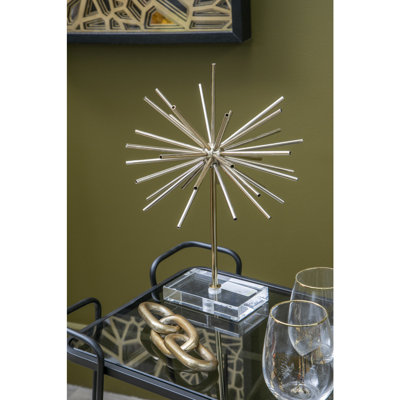
First-class, high-quality, perfect in form and timelessly beautiful. The combination of two materials makes these beautiful trees of precious metal and wood unique in our collection. Aluminium casting is a very old craft and an art in itself. 's aluminium tree of life stands on a mango wood base and has a magnificent tree crown. As a symbol of strength and life energy, it stands in many cultures. Decorated on a sideboard or in a showcase, this tree becomes a great piece of jewellery for the home. Wood is a natural product, which can show differences in colour and growth-related irregularities.
Martin. Leics, GB. Sat Apr 26 2025
2 Colours, 2 Sizes
By Williston Forge
3cm H x 24cm W x 6cm D, Gold
Rated 5 out of 5 stars1 total vote
Handcrafted with sturdy aluminium, this large decorative chain in the black finish creates an instant visual statement on the console table. The three interlocked links of this chain are inseparable.
Nice. Aa. Darlington, GB. Mon Apr 04 2022

Free Delivery
Delicately modelled on a real leaf, this elongated gold decorative bowl adds a warm, natural touch to your home. Crafted entirely from lightweight yet robust aluminium, its finely textured surface holds keys, snacks or candles with easy elegance. The smooth finish wipes clean in moments, and it arrives fully assembled, ready to style straight from the box.

By METAL-TIME
Construction of the tower began on 28 September 1843. Elizabeth Tower, originally referred to as the Clock Tower, but more popularly known as Big Ben, was raised as a part of Charles Barry's design for a new Palace of Westminster, after the old palace was largely destroyed by fire on 16 October 1834. Although Barry was the chief architect of the neo-gothic palace, he turned to Augustus Pugin for the design of the Clock Tower, which resembles earlier Pugin designs, including one for Scarisbrick Hall in Lancashire. The main clock tower in the most influential country of Europe, which ringing of bells the whole world listens to and the entire establishment checks the clock. Worthy of many mentions. Cinema, literature, billions of selfies, tens of billions of references. Undoubtedly, the Elizabeth Tower, the most recognizable part of Westminster Abbey and a symbol of London and the UK in general, has both cultural and technical value. One of the tallest clock towers in the world, with a height of 96 meters, was built in 1859. It has a unique clockwork that still works today and six bells, the main one weighing 13.7 tons and called Big Ben. Often the tower itself is also called that. The Elizabeth Tower is a worthy object for modeling and collecting. The main clock tower in the most influential country of Europe, which ringing of bells the whole world listens to and the entire establishment checks the clock. Worthy of many mentions. Cinema, literature, billions of selfies, tens of billions of references. Undoubtedly, the Elizabeth Tower, the most recognizable part of Westminster Abbey and a symbol of London and the UK in general, has both cultural and technical value. One of the tallest clock towers in the world, with a height of 96 meters, was built in 1859. It has a unique clockwork that still works today and six bells, the main one weighing 13.7 tons and called Big Ben. Often the tower itself is also called that. The Elizabeth Tower is a worthy object for modeling and collecting.

By Ivy Bronx
This stunning Art Nouveau sculpture adds a unique artistic touch to any room, blending elegance with quality craftsmanship. Its versatile enough for living rooms or offices and is made from quality aluminium to ensure durability. The intricate design is perfect for those who love sophisticated decor. Its man-shaped form reflects creativity while capturing the fluidity of Art Nouveau style. A perfect winter decoration, this piece doubles as a stylish ornament and a showcase of fine artistry. With dimensions of 10 x 16 x 49 cm, it fits well in any space needing a splash of charm.
By METAL-TIME
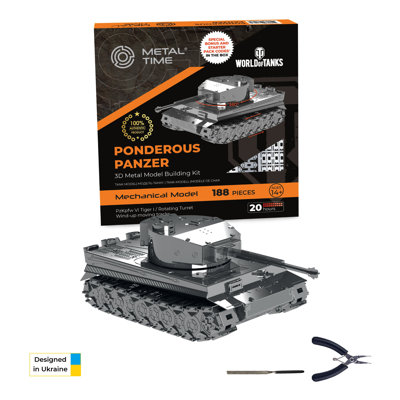
The Tiger was a German heavy tank of the Second World War. Development of a heavy tank design had been initiated in 1937, the initial design contract was awarded to Henschel. Another design contract followed in 1939, and was given to Porsche. Both prototype series used the same turret design from Krupp. The main differences were in the hull, transmission, suspension and automotive features. Summer 1942. Europe is lit. Nearly all countries in the region have found themselves drawn into Germany's scope of influence and are invading from all facades. The anti-Hitler coalition deals tangible blows to the Axis armies. For the first time in Germany, British bombs are exploded. The Americans block the Japanese fleet at Midway and the Solomon Islands. However, the attack on the Wehrmacht's military machine cannot is unstoppable. Because a new player, the Tiger heavy tank, went into the battle arena. This 24-ton vehicle with 88 mm main gun, 10 cm frontal armor, a duo machine gun, a mortar, and a 40 km / h travelling speed, turned out to be Third Reich's irresistible attacking force. "Tiger," the new technologies' embodiment of its time, still has significant interest among military equipment fans. This tank was movable, well-armed, and easily controlled using the steering wheel and pedals, just like a car. These factors worked in favor of the fact that the "Tiger" stayed in service until the end of the Second World War with virtually no deep modernization. "Metal Time" welcomes you to plunge into the legendary combat vehicles' history with the modular "Ponderous Panzer" model. The model retains all the original "Tiger's" features, including the "chess" arrangement of the rollers, the shape of the hull and turret, the command turret, and the gun. The tracks made up of individual tracks supplement realism and make you work hard when assembling them. The tank comprises a spring engine and can overpower small obstacles while driving. Cutting the set precisely does away with the likelihood of cuts in the event of assembling. The parts closely fit into each other and will not lead to joint problems.

Free Delivery
Letterings are not only decorative objects, but they also have a definitive message. They are the companions throughout the day. Placed on a sideboard, on a shelf or on the desk in the office, they bring back a lasting memory. This lettering block on a mango wood base is a natural product which may show colour differences and growth-related irregularities. It is provided with foam rubber plates on the base to avoid scratch marks. Beautiful living accessories make living rooms that certain something. Give a dear person a treat and give a gift of friendliness in a written word. Give your apartment or house an individual look. It is simply fun to redecorate again and again and to give your own living ambience a personal touch.

By Metro Lane
Make a bold artistic statement with this contemporary metal sculpture, featuring intertwined abstract loops and a sophisticated matte black finish. Crafted from premium lightweight aluminium, it combines fluid geometry with modern elegance to create a striking centrepiece for coffee tables, shelves, mantels, and sideboards. A memorable gift for those who love modern art and sculptural home décor.
By METAL-TIME
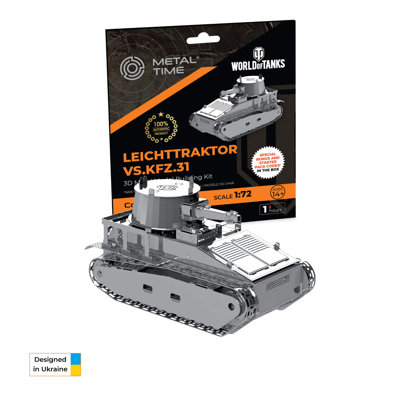
The Vs.Kfz.31 Leichttraktor (Light tractor), also known at the time as the Kleintraktor (Small tractor), was a prototype German light tank, of which four distinct versions were made. It was developed and tested in secret at the Soviet-German Kama facility, during the Weimar Republic. This was part of the Leichttraktor, also known as the Kleintraktor, project. The tank was designed *around* 1929 and used through early WW2 as a training vehicle. In spite of having a 37 mm cannon, it was rejected in favor of the Panzer I, in a competition to make a new light tank for Germany, like the Grosstraktor project at the same time. The German Wehrmacht started World War II... with tractors. That is what the first German tanks were called. This happened because, under the terms of the Treaty of Versailles, which witnessed the defeat of Germany in World War I, the country was not allowed to develop and produce heavily armored fighting vehicles. Therefore, these products had the name of civil technology, and it was not far from the truth. The first samples of German tanks were modernized tractors. An example of this is the Leichttraktor Vs. Kfz.31 light tank. The development of the tank was carried out by two well-known manufacturers of first-class military equipment: “Krupp” and “Rheinmetall”. They presented two models that differ from each other in some detail. But the main ones were the same. The first tank "Leichttraktor Vs. Kfz.31" was created on a tractor chassis with 12 rollers, combined into six carts. The chassis was covered with an armor shield, however, the design of the tracks and suspension was vulnerable even to large-caliber small arms. The “Daimler Benz” engine with 100 hp the designers placed it in front, which was a controversial decision. On the one hand, he covered the crew of 4 people, and on the other hand, he was vulnerable to the enemy and increased the risk of immobilizing the combat vehicle in the battle. The welded-riveted turret was moved back, which made the tank look like a self-propelled gun, however, the armament of the "Leichttraktor Vs. Kfz.31" was not very powerful. The main gun was a 37 mm KwK 36 L/45 cannon, and a 7.92 mm Dreyse machine gun was also mounted on the tank.

Free Delivery
Finely modelled on a real leaf, this elongated decorative bowl is cast from lightweight aluminium in a warm golden finish. Divided into seven sections, it is as practical as it is beautiful, ideal for serving snacks or arranging candles. Its delicate surface texture adds a cosy, natural touch to any table or sideboard, and it wipes clean in moments.
By Breakwater Bay
Rated 5 out of 5 stars2 total votes
Free Delivery
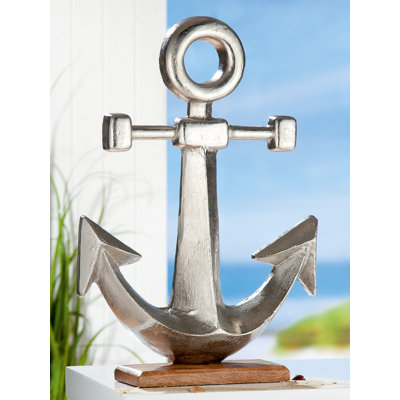
Do you love maritime and dream of journeys over the water? Then you are exactly right here. The aluminum anchor from the house glide on a mango wood base is a very effective decorative object that fits in any living space. Combine different decorative objects, boats, or shells with each other to get an impressive maritime effect. Create a small wellness oasis and a small retreat of peace.
Good quality. Katrina. Neath Abbey, GB. Wed May 13 2026
By METAL-TIME
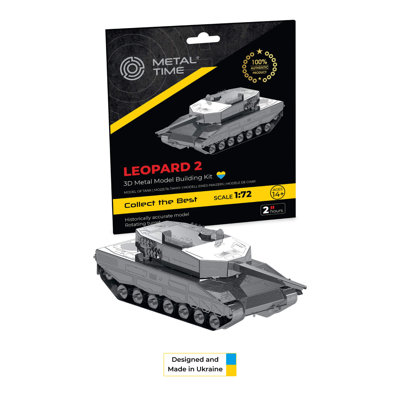
The Leopard 2 is a third generation German main battle tank (MBT). Various iterations of the Leopard 2 continue to be operated by the armed forces of Germany. The Leopard 2 is a third generation German main battle tank (MBT). Developed by Krauss-Maffei in the 1970s, the tank entered service in 1979 and replaced the earlier Leopard 1 as the main battle tank of the West German army. Various iterations of the Leopard 2 continue to be operated by the armed forces of Germany, as well as 13 other European countries, and several non-European countries, including Canada, Chile, Indonesia, and Singapore. Some operating countries have licensed the Leopard 2 design for local production and domestic development. There are two main development tranches of the Leopard 2. The first encompasses tanks produced up to the Leopard 2A4 standard and are characterised by their vertically faced turret armour. The second tranche, from Leopard 2A5 onwards, has an angled, arrow-shaped, turret appliqué armour, together with other improvements. The main armament of all Leopard 2 tanks is a smoothbore 120 mm cannon made by Rheinmetall. This is operated with a digital fire control system, laser rangefinder, and advanced night vision and sighting equipment. The tank is powered by a V12 twin-turbo diesel engine made by MTU Friedrichshafen. Following the end of the Gilded Leopard study in 1967, the West German government decided to focus on the Experimentalentwicklung (experimental development) in a feasibility study and to develop new components for upgrading the Leopard 1 and for use on a future main battle tank programme. At first 25 million DM were invested, but after the industry came to the conclusion that with such a low budget the development of the two projected testbeds was not possible, a total of 30 to 32 million DM was invested. The experimental development was contracted to the company Krauss-Maffei, but with the obligation to cooperate with Porsche for the development of the chassis and with Wegmann for the development of the turret.
Free Delivery
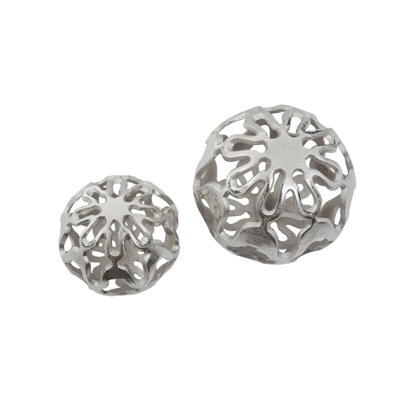
Made from rough aluminium, this set of 2 balls are accented in the luxe silver finish. Each ball sculpture has an art deco cutout hollow bead that lends them a classic aesthetic.
By METAL-TIME
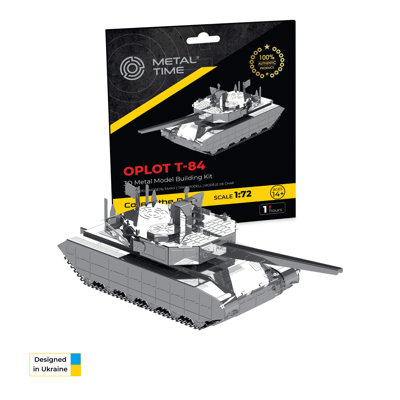
The T-84 is a Ukrainian main battle tank (MBT), based on the Soviet T-80 main battle tank introduced in 1976. The T-84 was first built in 1994 and entered service in the Ukrainian Armed Forces in 1999. The T-84 is based on the diesel-engined T-80 version, the T-80UD. Its high-performance opposed-piston engine makes it a fast tank, comparable to other modern MBTs with a power-to-weight ratio of about 26 horsepower per tonne (19 kW/t). The T-84 Oplot is an advanced version incorporating an armoured ammunition compartment in a new turret bustle. Ten of these entered Ukrainian service in 2001. The T-84-120 Yatagan is a prototype model intended for export, mounting a 120 mm gun capable of firing standard NATO ammunition and guided missiles. Main Battle Tank "Oplot" is the pinnacle of tank development in Ukraine and one of the best tanks designed and produced in series in the post-Soviet space. Based on the Soviet model T-80, "Oplot" underwent almost ten deep modernizations until it met NATO standards and became part of the family of advanced European combat vehicles. "Oplot" T-84 is equipped with a 1200 hp engine 6TD-2E, capable of reaching a speed of up to 70 km/h on the highway and operating at up to 450 km. The tank's armament consists of a main 125 mm gun, a 12.7 mm anti-aircraft machine gun, and paired 7.62 mm machine guns. Digital and analog equipment for the commander's console, targeting systems, and a multi-level protection system, including anti-nuclear protection, make this combat vehicle one of the effective European tanks. Successful tests in real combat conditions during the Russian-Ukrainian war only add to this model's score, as it has demonstrated its ability to actively engage in combat, protect, and effectively destroy enemy vehicles and personnel.
By METAL-TIME
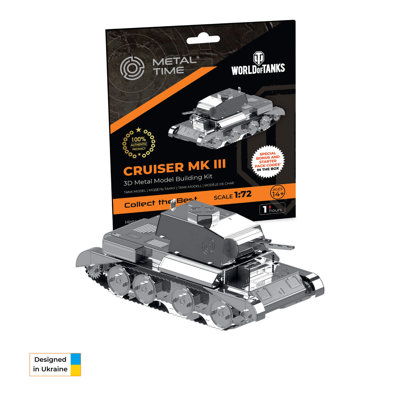
Developed by extensively upgrading two prototype M1931 Christie tanks purchased by the British Army in 1936. The vehicle was designed to be a fast, lightly-armored breakthrough tank. The modified design was deemed successful and became the basis for other cruiser tanks. Sixty-five vehicles of this type were built and saw combat in France and North Africa in 1940 and 1941. The British army began to prepare for the inevitable war at the beginning of the 30s. The industry was moving to a military footing, engineers were looking for advanced solutions for military equipment. American designer D. W. Christie created a chassis of four full-size rubber-coated rollers, planted on spring shock absorbers and two drive gears that move the trucks. This invention was so successful that it gave birth to several generations of tanks. One of the first was the English "cruising" tank "Cruiser Mark III". This light tank had a high speed, up to 50 km/h on a hard road, the ability to overcome obstacles up to 0.6 m high, and a powerful main gun - a 40 mm “QF 2 pounder” anti-tank gun. She was supplemented by a 7.7 mm “Vickers” machine gun. Under the ventilation grilles at the rear of the "Cruiser Mark III" was a 340 hp “Nuffield Liberty” 12-cylinder aircraft engine, superior in power to all similar combat vehicles of the time. The crew consisted of a driver, gunner, loader, and commander. With all these significant advantages, the tank had an important drawback: weak armor protection. Therefore, it was not used as an assault combat vehicle, but provided infantry cover, following more powerful tanks on the battlefield. The British lost dozens of "Cruiser Mark III"s in the fighting in France and brought these vehicles to less hot parts of the front. The era of the American “M4 Sherman” and British medium tanks in 1942 doomed cruiser tanks to oblivion.
By METAL-TIME
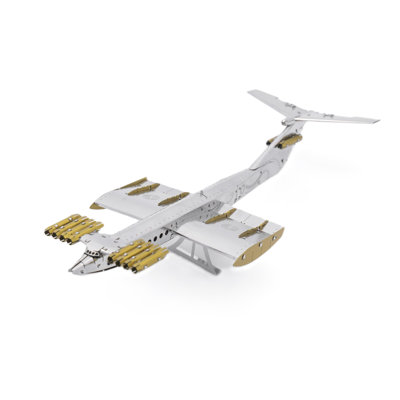
The KM (Korabl Maket, literally ""Model-Ship""), known colloquially as the Caspian Sea Monster, was an experimental ground effect vehicle developed in the 1960s. The KM was the largest and heaviest aircraft in the world from 1966 to 1988, and its surprise discovery by the United States and the subsequent attempts to determine its purpose became a distinctive event of espionage during the Cold War. It was tested on the Caspian Sea for 15 years until 1980, when it was destroyed following a crash caused by pilot error. There were no human casualties, but the KM was damaged and no attempts were made to save it, it being left to float before eventually sinking a week later. The KM was deemed too heavy to recover and has remained underwater at the crash site ever since. The KM remained the largest aircraft in the world during the entirety of its existence and is the second-largest aircraft ever built, behind the Antonov An-225 Mriya that flew for the first time in 1988. The Ekranoplan is a remarkable invention that combines the features of a glider, an airplane, and a boat into a single mechanism. This vehicle can fly over relatively flat surfaces such as deserts, fields, and water, utilizing air cushion effects generated by the airflow ascending off the surface. In 1960s a most powerful and big machine was built. It was a secret soviet project named “KM”, a soviet trial to make a warship from rare biggest ekranoplan on planet. The model known as the "Caspian Sea Monster" underwent several test flights, but after a series of accidents, it was deemed impractical. However, the audacity of the engineering concept laid out in the "Caspian Sea Monster" still captivates enthusiasts of large mechanisms and machines, inspiring designers to achieve new accomplishments. The engineers at "Metal Time" didn't overlook this remarkable object and created a model based on the core concept of the "KM" project. This aircraft had ten jet engines, short wings, and distinctive features in its tail section. It was designed for flights over water surfaces and could glide during takeoff and landing. All these features were incorporated into the self-assembly model of the "Caspian Sea Monster".

By METAL-TIME
Concorde is a tailless aircraft design with a narrow fuselage permitting a 4-abreast seating for 92 to 128 passengers, an ogival delta wing and a droop nose for landing visibility. Thrill of supersonic travel takes center stage with the SUPERSONIC LEGEND steel DIY model kit by Metal Time Models. Dive into the exhilarating world of aviation and celebrate the iconic Concorde, a true marvel of aerospace engineering. Crafted with precision and passion, this DIY model kit captures the essence of the legendary supersonic aircraft. The Concorde, known as the SUPERSONIC LEGEND, is brought to life through meticulously cut steel components that ensure a seamless and satisfying building experience. This tailless aircraft design features a narrow fuselage, allowing for a 4-abreast seating configuration catering to 92 to 128 passengers. The distinctive ogival delta wing and the droop nose, designed for enhanced landing visibility, are intricately represented in this model, paying homage to the unique features that set the Concorde apart.

Enhance your home with this fluid sculptural decorative object, featuring gentle wave-like ridges and a sophisticated matte grey finish. Crafted from durable powder-coated aluminium, its organic biomorphic silhouette adds quiet artistic elegance to coffee tables, mantels, and shelves. An effortless fit for Japandi, minimalist, and contemporary interiors — beautiful on its own or styled within a curated vignette.
By METAL-TIME
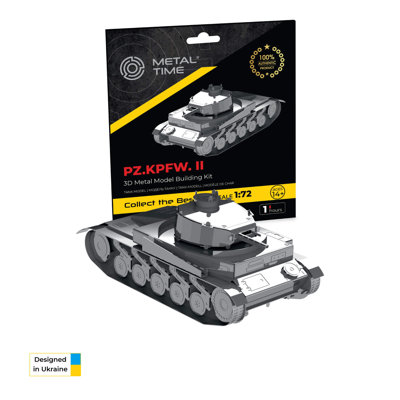
The last modification of the light Pz. II tank. The vehicle featured enhanced armor, the 2 cm KwK 38 gun and improved observation devices. A total of 524 vehicles were built from March 1941 through December 1942. This may sound strange, but the iron mechanical power of the Wehrmacht in World War II began with... a tractor. It was under the name "agricultural tractor LaS 100" that Germany produced the first combat tanks of the largest war of the 20th century. The modification of the basic model Panzer I became the light tank “Panzerkampfwagen II” or “Pz.Kpfw. II”. It was one of the most mass-produced combat vehicles of World War II. By 1942, when they gave way to heavy machines, more than 3,500 of them had been produced. This not-fast tank, weighing about 8 tons, could reach a speed of 40 km/h on the highway and was designed to cover infantry attacks. Its armor was sufficient to protect against small arms and mines, but artillery strikes were fatal to the Panzer II. Moreover, its firepower was hardly impressive. The main weapon of the tank was a 20mm automatic cannon. There were several weapons options - tank modifications with flamethrower systems and heavy machine guns as the main weapon exist. The main protection was the turret design with ricochet angles, which allowed for the softening or reflecting of enemy weapons hits.
By METAL-TIME
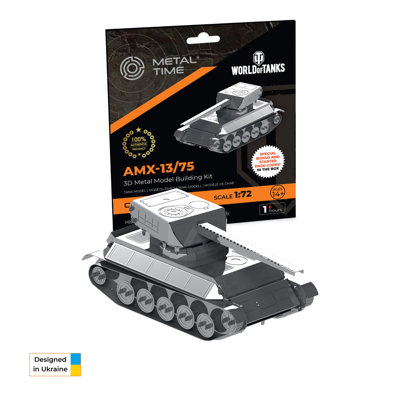
Maneuverable light tank with an oscillating turret and a 75 mm autoloader gun that could fire up to 10 shots per minute. At that time, the gun on this vehicle had superior penetration compared to the guns of most other medium tanks. The tank has a decent top-end gun and good dynamic performance. In the last years of World War II strategists and manufacturers of military equipment began to think about new generations of weapons. And one of the successful embodiments of the new concepts of armored fighting vehicles was the French light tank "AMX-13". Its first prototypes appeared in 1945 and its subsequent modifications were used in military operations until the XXI century. This maneuverable tank with a length of 5 meters and a height of 2.4 m originally possessed several unique design features. The most important of these was the "rocking" turret. The main design principle was that after the gun had fired, returning impulse was delivered to the turret and caused a new shell to move to the breech block of the gun and the loader mechanism to push it inside the barrel. This allowed automatic firing at a rate of up to 12 rounds per minute! Considering that such tanks were equipped with a 75-mm gun, this turned the tank into a vehicle for the continuous destruction of everything in the line of fire. Further modifications of the "AMX-13" were equipped with 100-mm and even 155-mm guns. In such a form it could compete with medium tanks and mobile guns. However, another difference of this tank was its speed. It could reach up to 60km/h on a hard surface (up to 400km), get over obstacles up to 60cm high, ditches up to 1.5m deep, and water obstacles up to 0.8m deep. Along with the brilliant characteristics, "AMX-13" also had disadvantages. It had weak armor, which was typical of light tanks, and the downside of rapid fire - the need to replenish ammunition. When the shells ran out in combat, the tank became unarmed and was often doomed to destruction.
By METAL-TIME
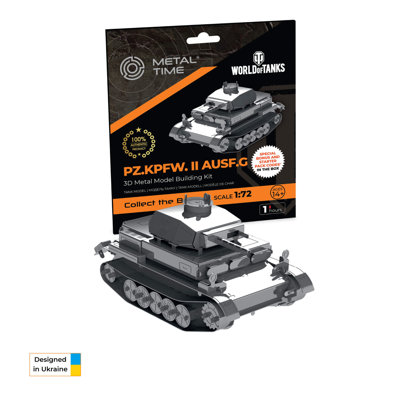
On June 18, 1938, MAN and Daimler-Benz received an order for an initial batch of 75 Pz II Ausf. G tanks. A prototype was manufactured in 1939. The vehicle was produced from April 1941 through February 1942, with a total of only 12 tanks built. World War II brought armored vehicles to the forefront, making them the main striking force. But it all began not with heavy, unstoppable, powerful machines with siege weapons, but with small maneuverable tanks. One of the remarkable examples of engineering creativity of the 1940s is the German "Panzer II Ausf G". A chain of modifications to the basic model, which was one of the most numerous tanks until 1942, led to its appearance. The "Panzer II Ausf G" significantly increased in speed. Unlike its rather slow predecessor, it could reach speeds of up to 50 km/h on the highway, which improves its mobility. Due to its good maneuverability, this light tank could perform tasks of escorting and providing fire cover for infantry even better. Its armor was sufficient to protect against small arms and mines, but artillery strikes became fatal for the Panzer II. The main weapon of the "Panzer II Ausf G" remained the 20mm automatic cannon and the 7.92mm MG-34 machine gun. The main protection was the turret design with ricochet angles, which allowed to soften or deflect enemy shell hits. The “Panzer II Ausf G” crew consisted of three people. Unlike the previous model, the driver and radio operator received viewports in the front and sides of the hull, improving the combat vehicle's maneuverability.
By METAL-TIME
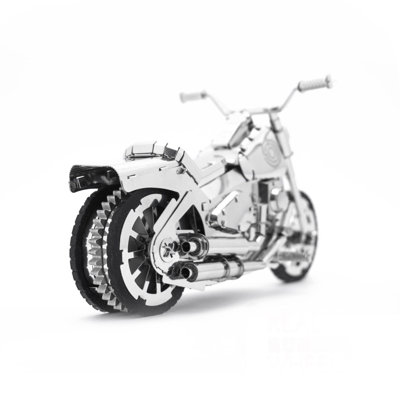
In 1901, William S. Harley drew up plans for a small engine with a displacement of 7.07 cubic inches (116 cc) and four-inch (102 mm) flywheels designed for use in a regular pedal-bicycle frame. Over the next two years, he and his childhood friend Arthur Davidson worked on their motor-bicycle using the northside Milwaukee machine shop at the home of their friend Henry Melk. It was finished in 1903 with the help of Arthur's brother Walter Davidson. The sun is quickly setting in the horizon, making the mountains look like lava flowing down a volcano. The highways lines shoot by like they were tapped on the road; the hot air is blowing in your face. And the sound of the motorcycle’s engine gives you confidence you will get to town before dark. The excitement of the sound of the engine revving through the open road flows through your body. And as you glide down the road on your steel horse, you have never more free. Harley Davidson is an American icon, a symbol of freedom, known by motorcycle enthusiasts around the world. Harley Davidson began its journey on the American roads in the early 20th century. Americans quickly fell in love with Harley Davidson. Word spread so fast that in 1920 the company became the world's largest motorcycle manufacturer. The name "Harley Davidson" is renowned to all motorcycle lovers. The American motorcycle has been the inspiration for countless books and movies. "Metal Time" presents Roadway Fantasy. Our homage to America's legendary motorcycle, Harley Davidson. The Metal Time's designers behind this model were motivated by the legendary Harley Davidson Model-F. To many, this two-wheeled mustang symbolizes motorcycle travel. The motorcycle has appeared in books, films, comics, and even video games. Harley Davidson is loved around the world and has a huge cult following. Harleys are known for their representation of freedom and independence. Regardless of the seeming conciseness of the name, the "Roadway Fantasy" model is very challenging. It has over a hundred parts, and therefore, it requires attention to detail so that you can proudly display your model.
By METAL-TIME
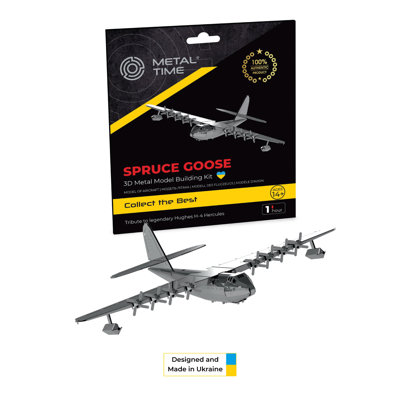
The Hughes H-4 Hercules (commonly known as the Spruce Goose) is a prototype strategic airlift flying boat designed and built by the Hughes Aircraft Company. Intended as a transatlantic flight transport for use during World War II, it was not completed in time to be used in the war. Here history takes flight with the SPRUCE GOOSE steel DIY model kit by Metal Time Models. Step into the golden age of aviation and relive the marvel of the Hughes H-4 Hercules, affectionately known as the Spruce Goose. This steel model kit pays homage to the iconic prototype strategic airlift flying boat designed and built by the legendary Hughes Aircraft Company. Crafted with precision and passion by Metal Time Models, the SPRUCE GOOSE DIY model kit allows enthusiasts of all ages to recreate the awe-inspiring design of this colossal flying machine. The Hughes H-4 Hercules was conceived as a transatlantic flight transport during World War II, but despite its grand aspirations, it was not completed in time for wartime service. Now, you have the chance to build a stunning steel replica of this historic aircraft.
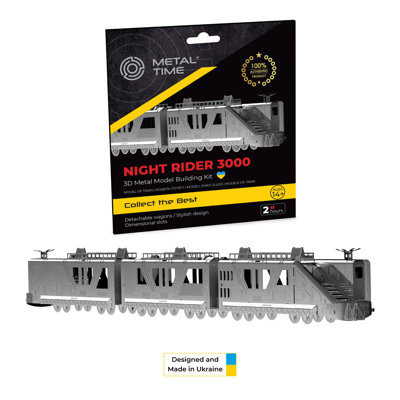
By METAL-TIME
The Night Rider train is an imaginary train set in a fictional post-apocalyptic future. It crosses the desert only at night due to the impossibility of movement during the day due to the high air temperature. The Night Rider is a fully armored train often used to transport valuable passengers and cargo. Explore the thrilling world of the Night Rider 3000 DIY model kit, a captivating representation of an imaginary train set in a fictional post-apocalyptic future. This meticulously crafted steel model captures the essence of an armored train that braves the desert only under the cover of darkness, navigating the unforgiving landscape where daytime temperatures soar to extremes. The Night Rider 3000 is not just a model; it's a journey into a dystopian world where creativity knows no bounds. This DIY kit allows enthusiasts of all ages to bring the mystique of this fully armored train to life with their own hands. Each piece is precision-cut from high-quality steel, ensuring a satisfying building experience and a durable final product that can stand the test of time.
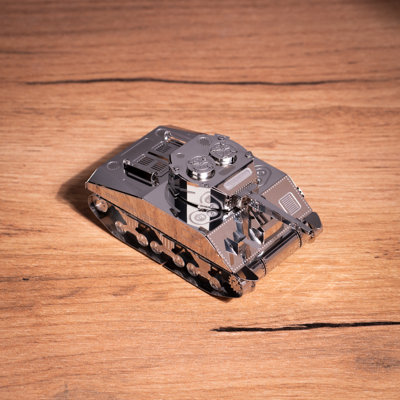
By METAL-TIME
The first production version of the Sherman, the most common American tank, with an amazing total of 49,234 vehicles manufactured. The Sherman first saw combat in North Africa. The medium tank "M4" is one of the most mass-produced tanks of World War II. It stands alongside other legendary "victory tanks" as it successfully fought in many local conflicts even after the war. The "Sherman," named after a hero of the American Civil War, has become the subject of numerous books, films, and comics. Its successful design and the possibility of modifications made this tank almost irreplaceable in battles. The "M4" began serial production in 1942 and was adopted by the United States, Great Britain, and the Soviet Union. Over 50,000 tanks of various modifications were produced, but they all retained the original design. The "Sherman" was operated by two driver mechanics on the main platform, and three crew members in the turret were responsible for its combat power. The main weapon of the "M4" was a 75mm tank gun. In some modifications, it was a mortar or even a flamethrower. Machine guns or automatic cannons were used for close combat. The chassis consisted of three bogies with two rollers each on a spring suspension and leading wheels.
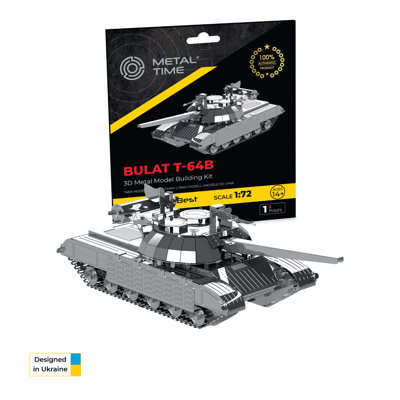
By METAL-TIME
The modernisation programme, transforming T-64 MBTs to BM Bulat MBTs, focused on improvement of its fire power, mobility and protection. The upgraded sights and aiming devices include a Buran-E night vision system for detection, identification and engagement of targets, and a TKN-4S, the sighting system for the tank commander. The modernisation work included installation of a 1G46M sight and a TO1-KO1ER night sighting system or Buran-Catherine thermal imager for the gunner, some 2E42M main armament stabiliser units, a 1V528-1 tank ballistic computer, a TAKO-621 guided weapon system, a 1ETs29M control system for anti-aircraft machine guns and a PNK-5SR observation and sighting system. The “Bulat” T-64 is the main battle tank of the Ukrainian Armed Forces. It is the result of a rethinking and deep modernization of the Soviet T-64 tank. Over decades of painstaking work, designers were able to bring the fire control, protection, and firepower systems up to the level of modern T-80 and T-84 models. Due to its predecessor, “Bulat” has a recognizable design: side protection side screens, a low-profile turret equipped with passive protection plates, and an ammunition bunker. “Bulat” T-64 is one of the main mechanized combat units in the Ukrainian army. Inheriting the simplicity of the base model, it has significantly improved in characteristics. This combat vehicle can reach speeds of up to 60 km/h on the highway and has a combat range of up to 385 km. The turret turning speed is 40 degrees per second, allowing the tank to quickly respond to threats.

By Metro Lane
Free Delivery
Add bold contemporary character to your home with this abstract interlocking metal sculpture, crafted from premium lightweight aluminium with a sophisticated matte black finish. The fluid biomorphic design creates a striking focal point for shelves, mantels, console tables, and sideboards. A standout decorative accent for those who appreciate modern artistic home styling and sculptural statement pieces.
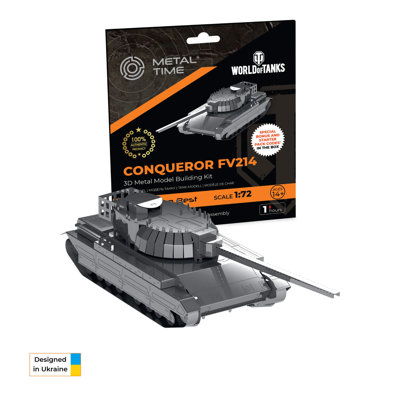
By METAL-TIME
The FV214 Conqueror was conceived in 1946 as a response to two other categories of vehicles: the German panzer tanks that had demonstrated superior firepower during World War II, and the Soviet IS-3 heavy tank that entered service in 1945. The Conqueror’s 120mm gun was considered an advantage, but tank crews generally found the vehicle difficult to maneuver. Once the Centurion was outfitted with a 105mm gun, the Conqueror was withdrawn from use in the 1960s. Large-scale battles did not accompany the Cold War on the battlefield. But fierce battles raged in the design bureaus. New military challenges demanded new technical solutions. British engineers, abandoning the idea of "cruiser" tanks, began to develop heavy ones. One of the promising models was the FV 214 "Conqueror". The project of the over 60 tons tank appeared in 1949, but this tank went into serial production only in 1955. The main weapon of the tank was a 120-mm gun. The length of the fighting vehicle together with the cannon was more than 11 meters. The engine with a power of 810 hp drove this huge thing with a speed of up to 35 km/h on a hard surface. The aiming fire could be made only from a standing position. In combat, the main firepower of the "Conqueror" was two 7.63 mm M1919 machine guns. Distinctive features of the tank's architecture were a turret and hull with ricochet panels and a chassis with four bogies of two rollers and two drive wheels. The crew of the heavy tank consisted of four men. The mechanic driver was in the platform and three other soldiers were in the turret. There was also a commander's turret with all-round visibility. In addition to combat duty in the British Armed Forces, the "Conqueror" was a testing ground for engineering research. Its weak point was considered insufficient protection, but this was corrected in the new modifications. However, the tank could not withstand competition with other models and its production was stopped by the 60s.
By METAL-TIME
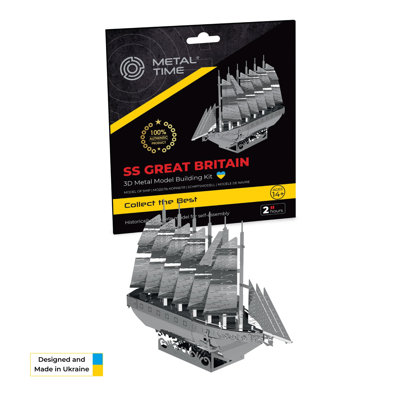
SS Great Britain is a former passenger steamship and it was the largest passenger ship in the world from 1845 to 1854. She was designed by Isambard Kingdom Brunel (1806–1859), for transatlantic service between Bristol and New York City. Great Britain is a former passenger steamship that was advanced for her time. She was the largest passenger ship in the world from 1845 to 1854. She was designed by Isambard Kingdom Brunel (1806–1859), for the Great Western Steamship Company's transatlantic service between Bristol and New York City. While other ships had been built of iron or equipped with a screw propeller, Great Britain was the first to combine these features in a large ocean-going ship. She was the first iron steamer to cross the Atlantic Ocean, which she did in 1845, in 14 days. When launched in 1843, Great Britain was by far the largest vessel afloat. But her protracted construction time of six years (1839–1845) and high cost had left her owners in a difficult financial position, and they were forced out of business in 1846, having spent all their remaining funds refloating the ship after she ran aground at Dundrum Bay in County Down near Newcastle in what is now Northern Ireland, after a navigation error. In 1852 she was sold for salvage and repaired. Great Britain later carried thousands of emigrants to Australia from 1852 until being converted to all-sail in 1881. Three years later, she was retired to the Falkland Islands, where she was used as a warehouse, quarantine ship and coal hulk until she was scuttled in 1937, 98 years after being laid down. After the initial success of its first liner, SS Great Western of 1838, the Great Western Steamship Company collected materials for a sister ship, tentatively named City of New York. The same engineering team that had collaborated so successfully on Great Western—Isambard Brunel, Thomas Guppy, Christopher Claxton and William Patterson—was again assembled. This time however, Brunel, whose reputation was at its height, came to assert overall control over the design of the ship—a state of affairs that would have far-reaching consequences for the company. Construction was carried out in a specially adapted dry dock
By METAL-TIME
Free Delivery
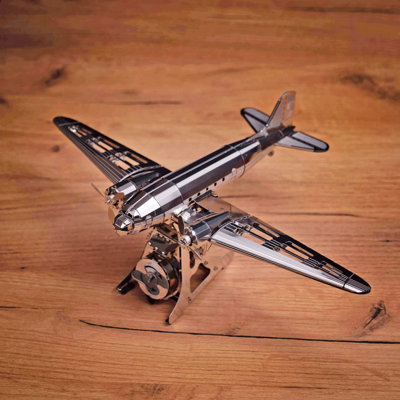
The Douglas "Dakota" DC-3 is the most important commercial aircraft in human history. Since the end of the 30s of the XX century, it continues to fly 80 years later. This aircraft is the result of a brilliant engineering idea embodied by talented designers. Wherever this metal winged "dolphin" appeared: in the Amazon rainforests, and in the snows of Antarctica, and in the mountains of the Himalayas. And everywhere the sound of its engines carried the hope that the cargo would be delivered, people were saved, the lost were found. The DC-3 has many advantages. This is a landing gear design with a rotating wheel in the tail section, which allowed the aircraft to turn around its axis in a small area. It also provided a "nose-up" fuselage arrangement, which gave the impression that the Dakota was taking off, even just standing on the ground. This provided a short takeoff run. Powerful racks and wheels of the front landing gear withstood landing on any more or less flat surface. This allowed the DC-3 to be used on short unpaved runways, making it a versatile aircraft with a wide range of uses, from working farmland to smuggling in the South American jungle. Modifications of the Dakota also showed themselves during military conflicts, where they played the role of ambulance, landing and cargo aircraft, and even bombers. The Dakota DC-3 was not only an inspiration to pilots and engineers who built new aircraft in the image of one of the most reliable designs. He became the hero of many books and adventure films. Many of the modifications of the legendary monoplane continue their work, carrying cargo and people. The simplicity, reliability and legendary image of this aircraft inspired Metal Time designers to create the REMARKABLE DOUGLAS assembly model.
By METAL-TIME
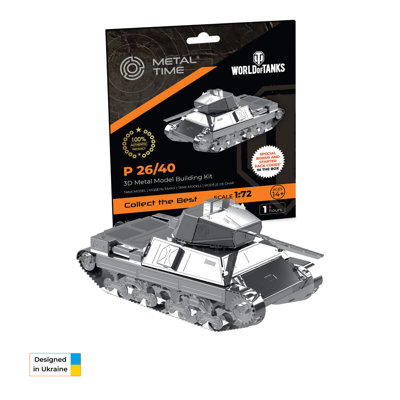
Development of this vehicle started at the end of 1940, but due to difficulties in finding a suitable engine, the first prototype was manufactured only at the beginning of 1942. Mass production was launched in 1943 in Turin. After Italy’s capitulation in the autumn of 1943, the tank entered service under the designation Panzerkampfwagen P40 737(i) and was used by the German reserve divisions as permanent fire positions. A total of 100 vehicles were produced. In the history of World War II, there are tanks that were "unlucky". Some of them were ahead of their time, some were hopelessly behind the times. One of these combat vehicles was the Italian heavy tank "P 26/40". Promising development stalled for years due to technological problems, and as a result, this tank did not become massive and did not have an impact on the battlefields. The "P 26/40" was one of the last riveted hull tanks in its class. In this, it differed from the similar geometry and basic parameters of the Soviet T-34 with its cast and welded parts and assemblies. The second feature was a semi-elliptical spring suspension with rollers assembled in carts. It seemed conditionally vulnerable, unlike more modern form factors. The third problem that was never solved was the engine. Nevertheless, the "P 26/40" was a powerful offensive combat vehicle, which had good armament and driving performance. With a weight of 26 tons, its speed was to 40 km/h on paved roads, and it could autonomously overcome to 280 km. Armor with a thickness of 40-60 mm provided protection against bullets, fragments, mines, and tangential impacts of shells. The main gun of the "P 26/40" was a 75 mm Ansaldo L/34 cannon and two 8 mm Breda machine guns. The crew of "P 26/40" consisted of three people. The commander was in the turret, and served as a gunner.
By Happy Larry
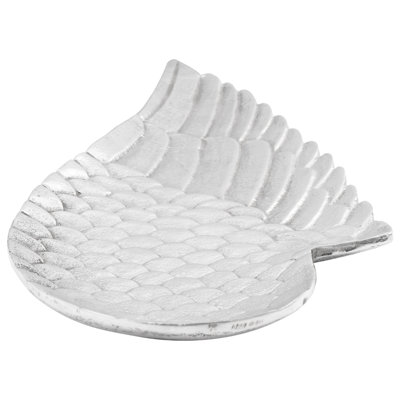
These Silver Aluminium Decorative Fruit Baskets are all about that fancy Art Nouveau vibe, making them a classy choice for any indoor space, especially your lounge. Theyre made of tough aluminium, so not only do they hold fruit, but they look stunning as decorative pieces that really up your room's aesthetics. With a unique design inspired by flowing lines and nature, they fit right in with various interior styles. Each basket measures 40cm long, 18cm wide, and 4cm high, making them just the right size for showcasing fruits or ornaments. Pop these baskets on coffee tables, dining tables, or mantels to give your space that inviting feel. With their durable build and eye-catching features, they're perfect for both function and flair.
By METAL-TIME
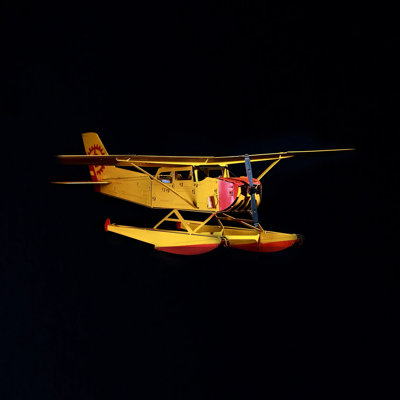
The idea to cross a boat and an airplane came to the minds of people who carefully studied the world around them. Like the idea of aeronautics in general. Of course, their humanity borrowed from birds. The Frenchman Alphonse Pénaud filed the first patent for a flying machine with a boat hull and retractable landing gear in 1876, but Austrian Wilhelm Kress is credited with building the first seaplane, Drachenflieger, in 1898 I consider the beginning of the era of flying boats to be the 10s of the 20th century, although the first hydroplane took off in the air as early as 1909. It was created on the basis of its own engine by the American inventor Curtis. And already in 1913, the Ukrainian designer Grigorovich tested the M-1 hydroplane, which marked the beginning of the era of flying boats. The history of aviation honors the records set by seaplanes: two dead loops on Grigorovich's amphibian, the speed record of the Soviet Be-10 at 912 km / h, the world's largest flying boat, created in China already in the 20s of the new century. he designers of "Metal time" could not ignore this important milestone in the desire of mankind to fly and presented the modular model "Breeze Drifter". This is a prototype that incorporates the characteristics of a typical propeller hydroplane. Of course, it does not float, but it has a spring mechanism that drives the screws of the "engines".
By August Grove
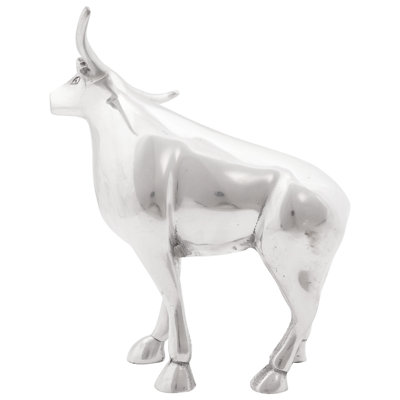
This Art Nouveau Bull-Shaped Sculpture is a striking bit of decorative art that captures the beauty of the Art Nouveau movement. Made from top-quality aluminium, its a classy ornament that stands out in any decor. Perfect for giving some character to your living room or office, this piece transforms any indoor space with its unique design. Measuring 20 x 17 x 23 cm, it fits well with both modern and classic styles. Use it to jazz up your workspace or enhance your home, and it will surely catch the eye of anyone who sees it.