Show Related CategoriesCategory
109 Items

Get it by Wed, 14 Oct
Explore a unique moving sand art picture, where every gaze becomes a journey of the soul. The circular design of this artwork not only exudes a modern touch but also showcases its elegance and grandeur. Through carefully selected combinations of coloured fine sands and coarse sands, each turn creates intricate and lifelike landscapes, ranging from the deep sea to mountain peaks and onto the mysterious starry sky, offering endless visual enjoyment. It is not just an outstanding decorative piece suitable for living rooms, bedrooms, and more, but also an artistic work that inspires thought and imagination, making every day vibrant with lively colours.


By Alpen Home
Excellently handcrafted and polished, the game set is made from Sheesham wood. Featuring ten wooden skittles and two balls, they come in an understated rectangular wooden box to keep them organised after playing.

(Set of 3)
By Fairmont Park
Tarot Cards & Crystal Set by The Seasonal Gift Co.® This full deck of Tarot Cards is presented in a black velvet gift pouch with gold detail, complete with a helpful instruction guide. Tarot promotes intuitive discovery. By engaging in the ritual of reading cards, gives you the opportunity to truly listen to what your heart is telling you. Make your own interpretation of your chosen cards and enjoy the path to personal discovery. Contains: Velvet carry pouch Full deck of 78 Tarot Cards - 56 Minor Arcana and 22 Major Arcana cards. Instruction booklet with reading meanings 7 Tarot Crystals: Green Aventurine - provides strength & confidence Red Jasper - provides endurance, grounding, and nurturing energy Tigers Eye - bringer of good luck Lapis Lazuli - heightens psychic abilities, wisdom, and power Amethyst - represent purification and helps with spiritual connections Black Obsidian - increases self-control and self-awareness Clear Quartz - provides purifying energy

By METAL-TIME
Construction of the tower began on 28 September 1843. Elizabeth Tower, originally referred to as the Clock Tower, but more popularly known as Big Ben, was raised as a part of Charles Barry's design for a new Palace of Westminster, after the old palace was largely destroyed by fire on 16 October 1834. Although Barry was the chief architect of the neo-gothic palace, he turned to Augustus Pugin for the design of the Clock Tower, which resembles earlier Pugin designs, including one for Scarisbrick Hall in Lancashire. The main clock tower in the most influential country of Europe, which ringing of bells the whole world listens to and the entire establishment checks the clock. Worthy of many mentions. Cinema, literature, billions of selfies, tens of billions of references. Undoubtedly, the Elizabeth Tower, the most recognizable part of Westminster Abbey and a symbol of London and the UK in general, has both cultural and technical value. One of the tallest clock towers in the world, with a height of 96 meters, was built in 1859. It has a unique clockwork that still works today and six bells, the main one weighing 13.7 tons and called Big Ben. Often the tower itself is also called that. The Elizabeth Tower is a worthy object for modeling and collecting. The main clock tower in the most influential country of Europe, which ringing of bells the whole world listens to and the entire establishment checks the clock. Worthy of many mentions. Cinema, literature, billions of selfies, tens of billions of references. Undoubtedly, the Elizabeth Tower, the most recognizable part of Westminster Abbey and a symbol of London and the UK in general, has both cultural and technical value. One of the tallest clock towers in the world, with a height of 96 meters, was built in 1859. It has a unique clockwork that still works today and six bells, the main one weighing 13.7 tons and called Big Ben. Often the tower itself is also called that. The Elizabeth Tower is a worthy object for modeling and collecting.

Get it by Wed, 14 Oct
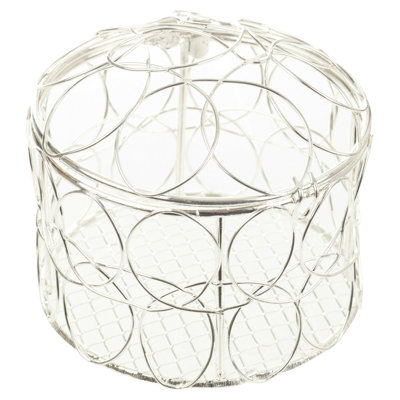
These beautiful decorative cages with hinged lids can be used for a multitude of purposes and will look amazing within your wedding decor. If you are having an outside wedding party, you can embellish the cage with flowers and hang it off a Manzanita tree or you can even use the cage as a post box for guests to throw their letters into, or place some Tealights inside and use as a table decoration. The possibilities are endless, but whatever you use this beautiful cage for, it's guaranteed to add a vintage feel to your event.
Cute. J. Buxton, GB. Mon Feb 14 2022
to:
Figurines & Sculptures
Statue
Decorative Book
Cloches & Water Globes
Vase Filler
Bust
Hourglass
Money Box
Crystal
Beach, Coastal & Nautical
Boho Chic
Cool Colored Industrial
Farmhouse Inspired
Glam Accents
Modern Accents

By METAL-TIME
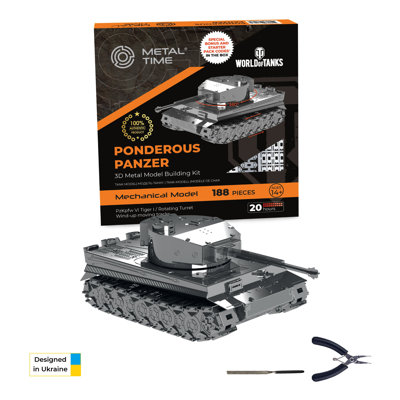
The Tiger was a German heavy tank of the Second World War. Development of a heavy tank design had been initiated in 1937, the initial design contract was awarded to Henschel. Another design contract followed in 1939, and was given to Porsche. Both prototype series used the same turret design from Krupp. The main differences were in the hull, transmission, suspension and automotive features. Summer 1942. Europe is lit. Nearly all countries in the region have found themselves drawn into Germany's scope of influence and are invading from all facades. The anti-Hitler coalition deals tangible blows to the Axis armies. For the first time in Germany, British bombs are exploded. The Americans block the Japanese fleet at Midway and the Solomon Islands. However, the attack on the Wehrmacht's military machine cannot is unstoppable. Because a new player, the Tiger heavy tank, went into the battle arena. This 24-ton vehicle with 88 mm main gun, 10 cm frontal armor, a duo machine gun, a mortar, and a 40 km / h travelling speed, turned out to be Third Reich's irresistible attacking force. "Tiger," the new technologies' embodiment of its time, still has significant interest among military equipment fans. This tank was movable, well-armed, and easily controlled using the steering wheel and pedals, just like a car. These factors worked in favor of the fact that the "Tiger" stayed in service until the end of the Second World War with virtually no deep modernization. "Metal Time" welcomes you to plunge into the legendary combat vehicles' history with the modular "Ponderous Panzer" model. The model retains all the original "Tiger's" features, including the "chess" arrangement of the rollers, the shape of the hull and turret, the command turret, and the gun. The tracks made up of individual tracks supplement realism and make you work hard when assembling them. The tank comprises a spring engine and can overpower small obstacles while driving. Cutting the set precisely does away with the likelihood of cuts in the event of assembling. The parts closely fit into each other and will not lead to joint problems.

By Canora Grey
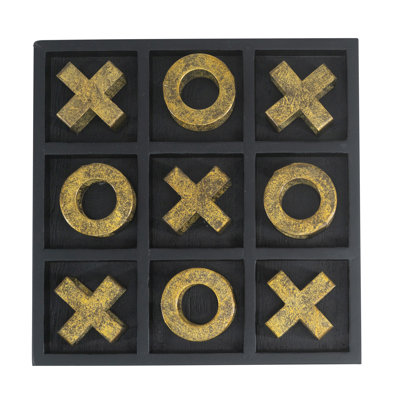
25cm x 25cm x 3cm black and gold tic-tac-toe game set table decoration

By METAL-TIME
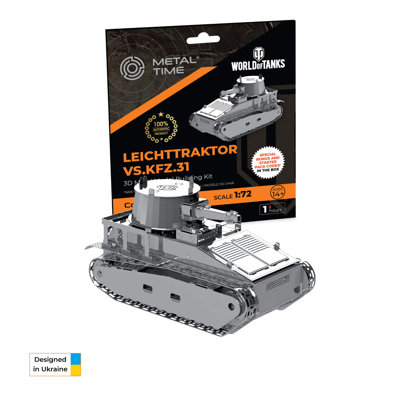
The Vs.Kfz.31 Leichttraktor (Light tractor), also known at the time as the Kleintraktor (Small tractor), was a prototype German light tank, of which four distinct versions were made. It was developed and tested in secret at the Soviet-German Kama facility, during the Weimar Republic. This was part of the Leichttraktor, also known as the Kleintraktor, project. The tank was designed *around* 1929 and used through early WW2 as a training vehicle. In spite of having a 37 mm cannon, it was rejected in favor of the Panzer I, in a competition to make a new light tank for Germany, like the Grosstraktor project at the same time. The German Wehrmacht started World War II... with tractors. That is what the first German tanks were called. This happened because, under the terms of the Treaty of Versailles, which witnessed the defeat of Germany in World War I, the country was not allowed to develop and produce heavily armored fighting vehicles. Therefore, these products had the name of civil technology, and it was not far from the truth. The first samples of German tanks were modernized tractors. An example of this is the Leichttraktor Vs. Kfz.31 light tank. The development of the tank was carried out by two well-known manufacturers of first-class military equipment: “Krupp” and “Rheinmetall”. They presented two models that differ from each other in some detail. But the main ones were the same. The first tank "Leichttraktor Vs. Kfz.31" was created on a tractor chassis with 12 rollers, combined into six carts. The chassis was covered with an armor shield, however, the design of the tracks and suspension was vulnerable even to large-caliber small arms. The “Daimler Benz” engine with 100 hp the designers placed it in front, which was a controversial decision. On the one hand, he covered the crew of 4 people, and on the other hand, he was vulnerable to the enemy and increased the risk of immobilizing the combat vehicle in the battle. The welded-riveted turret was moved back, which made the tank look like a self-propelled gun, however, the armament of the "Leichttraktor Vs. Kfz.31" was not very powerful. The main gun was a 37 mm KwK 36 L/45 cannon, and a 7.92 mm Dreyse machine gun was also mounted on the tank.

By METAL-TIME
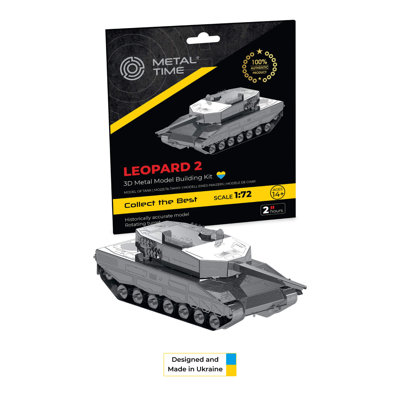
The Leopard 2 is a third generation German main battle tank (MBT). Various iterations of the Leopard 2 continue to be operated by the armed forces of Germany. The Leopard 2 is a third generation German main battle tank (MBT). Developed by Krauss-Maffei in the 1970s, the tank entered service in 1979 and replaced the earlier Leopard 1 as the main battle tank of the West German army. Various iterations of the Leopard 2 continue to be operated by the armed forces of Germany, as well as 13 other European countries, and several non-European countries, including Canada, Chile, Indonesia, and Singapore. Some operating countries have licensed the Leopard 2 design for local production and domestic development. There are two main development tranches of the Leopard 2. The first encompasses tanks produced up to the Leopard 2A4 standard and are characterised by their vertically faced turret armour. The second tranche, from Leopard 2A5 onwards, has an angled, arrow-shaped, turret appliqué armour, together with other improvements. The main armament of all Leopard 2 tanks is a smoothbore 120 mm cannon made by Rheinmetall. This is operated with a digital fire control system, laser rangefinder, and advanced night vision and sighting equipment. The tank is powered by a V12 twin-turbo diesel engine made by MTU Friedrichshafen. Following the end of the Gilded Leopard study in 1967, the West German government decided to focus on the Experimentalentwicklung (experimental development) in a feasibility study and to develop new components for upgrading the Leopard 1 and for use on a future main battle tank programme. At first 25 million DM were invested, but after the industry came to the conclusion that with such a low budget the development of the two projected testbeds was not possible, a total of 30 to 32 million DM was invested. The experimental development was contracted to the company Krauss-Maffei, but with the obligation to cooperate with Porsche for the development of the chassis and with Wegmann for the development of the turret.

Get it by Wed, 14 Oct
These beautiful decorative cages with hinged lids can be used for a multitude of purposes and will look amazing within your wedding decor. If you are having an outside wedding party, you can embellish the cage with flowers and hang it off a Manzanita tree or you can even use the cage as a post box for guests to throw their letters into, or place some Tealights inside and use as a table decoration. The possibilities are endless, but whatever you use this beautiful cage for, it's guaranteed to add a vintage feel to your event.
This is completely my fault. I needed a bird cage for my daughter for a singing exam and thought this was perfect but I didn’t read the sizing so it won’t work for me. It is lovely but very tiny.. Katriina. Newry, GB. Tue Jul 07 2020

By METAL-TIME
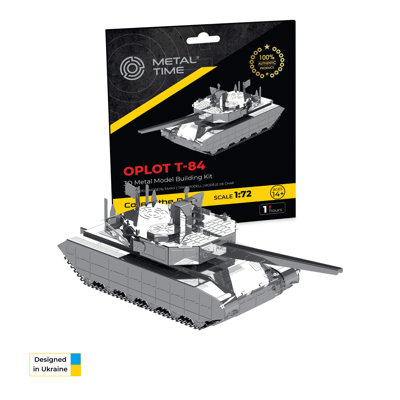
The T-84 is a Ukrainian main battle tank (MBT), based on the Soviet T-80 main battle tank introduced in 1976. The T-84 was first built in 1994 and entered service in the Ukrainian Armed Forces in 1999. The T-84 is based on the diesel-engined T-80 version, the T-80UD. Its high-performance opposed-piston engine makes it a fast tank, comparable to other modern MBTs with a power-to-weight ratio of about 26 horsepower per tonne (19 kW/t). The T-84 Oplot is an advanced version incorporating an armoured ammunition compartment in a new turret bustle. Ten of these entered Ukrainian service in 2001. The T-84-120 Yatagan is a prototype model intended for export, mounting a 120 mm gun capable of firing standard NATO ammunition and guided missiles. Main Battle Tank "Oplot" is the pinnacle of tank development in Ukraine and one of the best tanks designed and produced in series in the post-Soviet space. Based on the Soviet model T-80, "Oplot" underwent almost ten deep modernizations until it met NATO standards and became part of the family of advanced European combat vehicles. "Oplot" T-84 is equipped with a 1200 hp engine 6TD-2E, capable of reaching a speed of up to 70 km/h on the highway and operating at up to 450 km. The tank's armament consists of a main 125 mm gun, a 12.7 mm anti-aircraft machine gun, and paired 7.62 mm machine guns. Digital and analog equipment for the commander's console, targeting systems, and a multi-level protection system, including anti-nuclear protection, make this combat vehicle one of the effective European tanks. Successful tests in real combat conditions during the Russian-Ukrainian war only add to this model's score, as it has demonstrated its ability to actively engage in combat, protect, and effectively destroy enemy vehicles and personnel.

By METAL-TIME
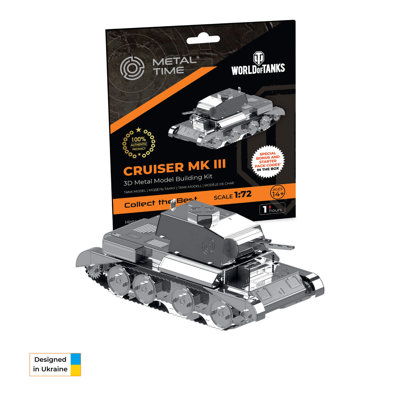
Developed by extensively upgrading two prototype M1931 Christie tanks purchased by the British Army in 1936. The vehicle was designed to be a fast, lightly-armored breakthrough tank. The modified design was deemed successful and became the basis for other cruiser tanks. Sixty-five vehicles of this type were built and saw combat in France and North Africa in 1940 and 1941. The British army began to prepare for the inevitable war at the beginning of the 30s. The industry was moving to a military footing, engineers were looking for advanced solutions for military equipment. American designer D. W. Christie created a chassis of four full-size rubber-coated rollers, planted on spring shock absorbers and two drive gears that move the trucks. This invention was so successful that it gave birth to several generations of tanks. One of the first was the English "cruising" tank "Cruiser Mark III". This light tank had a high speed, up to 50 km/h on a hard road, the ability to overcome obstacles up to 0.6 m high, and a powerful main gun - a 40 mm “QF 2 pounder” anti-tank gun. She was supplemented by a 7.7 mm “Vickers” machine gun. Under the ventilation grilles at the rear of the "Cruiser Mark III" was a 340 hp “Nuffield Liberty” 12-cylinder aircraft engine, superior in power to all similar combat vehicles of the time. The crew consisted of a driver, gunner, loader, and commander. With all these significant advantages, the tank had an important drawback: weak armor protection. Therefore, it was not used as an assault combat vehicle, but provided infantry cover, following more powerful tanks on the battlefield. The British lost dozens of "Cruiser Mark III"s in the fighting in France and brought these vehicles to less hot parts of the front. The era of the American “M4 Sherman” and British medium tanks in 1942 doomed cruiser tanks to oblivion.

By METAL-TIME
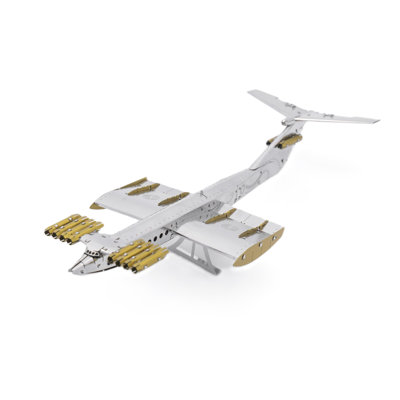
The KM (Korabl Maket, literally ""Model-Ship""), known colloquially as the Caspian Sea Monster, was an experimental ground effect vehicle developed in the 1960s. The KM was the largest and heaviest aircraft in the world from 1966 to 1988, and its surprise discovery by the United States and the subsequent attempts to determine its purpose became a distinctive event of espionage during the Cold War. It was tested on the Caspian Sea for 15 years until 1980, when it was destroyed following a crash caused by pilot error. There were no human casualties, but the KM was damaged and no attempts were made to save it, it being left to float before eventually sinking a week later. The KM was deemed too heavy to recover and has remained underwater at the crash site ever since. The KM remained the largest aircraft in the world during the entirety of its existence and is the second-largest aircraft ever built, behind the Antonov An-225 Mriya that flew for the first time in 1988. The Ekranoplan is a remarkable invention that combines the features of a glider, an airplane, and a boat into a single mechanism. This vehicle can fly over relatively flat surfaces such as deserts, fields, and water, utilizing air cushion effects generated by the airflow ascending off the surface. In 1960s a most powerful and big machine was built. It was a secret soviet project named “KM”, a soviet trial to make a warship from rare biggest ekranoplan on planet. The model known as the "Caspian Sea Monster" underwent several test flights, but after a series of accidents, it was deemed impractical. However, the audacity of the engineering concept laid out in the "Caspian Sea Monster" still captivates enthusiasts of large mechanisms and machines, inspiring designers to achieve new accomplishments. The engineers at "Metal Time" didn't overlook this remarkable object and created a model based on the core concept of the "KM" project. This aircraft had ten jet engines, short wings, and distinctive features in its tail section. It was designed for flights over water surfaces and could glide during takeoff and landing. All these features were incorporated into the self-assembly model of the "Caspian Sea Monster".

By Borough Wharf
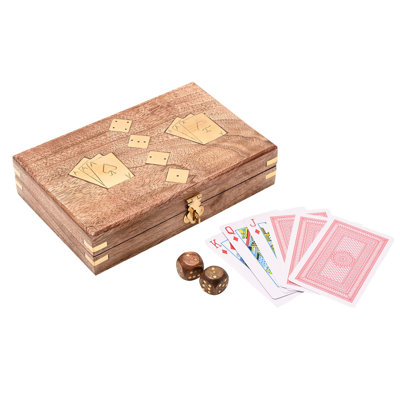
Elevate your games night with this Wooden Cards and Dice Set from Harvey Makin®. The set includes a premium lidded gift box and a sustainable rosewood case featuring an elegant brass inlay design of cards and dice. Inside, you’ll find a standard 52‑card deck along with five rosewood dice, each crafted with inlaid brass dots for a refined finish. This beautifully presented set makes the perfect gift for any discerning gentleman.

Get it by Wed, 14 Oct
These beautiful decorative cages with hinged lids can be used for a multitude of purposes and will look amazing within your wedding décor. If you are having an outside wedding party, you can embellish the cage with flowers and hang it off a Manzanita tree or you can even use the cage as a post box for guests to throw their letters into, or place some Tealights inside and use as a table decoration. The possibilities are endless, but whatever you use this beautiful cage for, it's guaranteed to add a vintage feel to your event.

By METAL-TIME
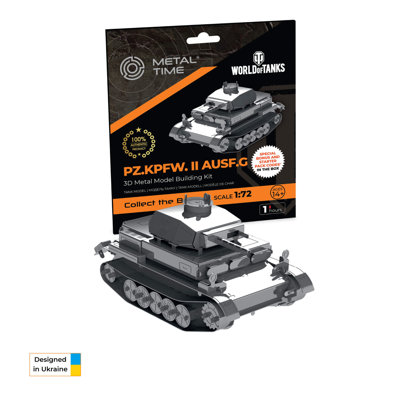
On June 18, 1938, MAN and Daimler-Benz received an order for an initial batch of 75 Pz II Ausf. G tanks. A prototype was manufactured in 1939. The vehicle was produced from April 1941 through February 1942, with a total of only 12 tanks built. World War II brought armored vehicles to the forefront, making them the main striking force. But it all began not with heavy, unstoppable, powerful machines with siege weapons, but with small maneuverable tanks. One of the remarkable examples of engineering creativity of the 1940s is the German "Panzer II Ausf G". A chain of modifications to the basic model, which was one of the most numerous tanks until 1942, led to its appearance. The "Panzer II Ausf G" significantly increased in speed. Unlike its rather slow predecessor, it could reach speeds of up to 50 km/h on the highway, which improves its mobility. Due to its good maneuverability, this light tank could perform tasks of escorting and providing fire cover for infantry even better. Its armor was sufficient to protect against small arms and mines, but artillery strikes became fatal for the Panzer II. The main weapon of the "Panzer II Ausf G" remained the 20mm automatic cannon and the 7.92mm MG-34 machine gun. The main protection was the turret design with ricochet angles, which allowed to soften or deflect enemy shell hits. The “Panzer II Ausf G” crew consisted of three people. Unlike the previous model, the driver and radio operator received viewports in the front and sides of the hull, improving the combat vehicle's maneuverability.

By METAL-TIME
Concorde is a tailless aircraft design with a narrow fuselage permitting a 4-abreast seating for 92 to 128 passengers, an ogival delta wing and a droop nose for landing visibility. Thrill of supersonic travel takes center stage with the SUPERSONIC LEGEND steel DIY model kit by Metal Time Models. Dive into the exhilarating world of aviation and celebrate the iconic Concorde, a true marvel of aerospace engineering. Crafted with precision and passion, this DIY model kit captures the essence of the legendary supersonic aircraft. The Concorde, known as the SUPERSONIC LEGEND, is brought to life through meticulously cut steel components that ensure a seamless and satisfying building experience. This tailless aircraft design features a narrow fuselage, allowing for a 4-abreast seating configuration catering to 92 to 128 passengers. The distinctive ogival delta wing and the droop nose, designed for enhanced landing visibility, are intricately represented in this model, paying homage to the unique features that set the Concorde apart.

By METAL-TIME
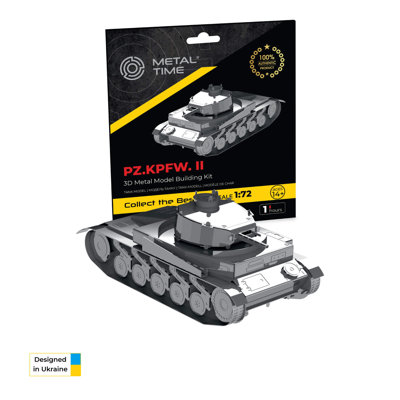
The last modification of the light Pz. II tank. The vehicle featured enhanced armor, the 2 cm KwK 38 gun and improved observation devices. A total of 524 vehicles were built from March 1941 through December 1942. This may sound strange, but the iron mechanical power of the Wehrmacht in World War II began with... a tractor. It was under the name "agricultural tractor LaS 100" that Germany produced the first combat tanks of the largest war of the 20th century. The modification of the basic model Panzer I became the light tank “Panzerkampfwagen II” or “Pz.Kpfw. II”. It was one of the most mass-produced combat vehicles of World War II. By 1942, when they gave way to heavy machines, more than 3,500 of them had been produced. This not-fast tank, weighing about 8 tons, could reach a speed of 40 km/h on the highway and was designed to cover infantry attacks. Its armor was sufficient to protect against small arms and mines, but artillery strikes were fatal to the Panzer II. Moreover, its firepower was hardly impressive. The main weapon of the tank was a 20mm automatic cannon. There were several weapons options - tank modifications with flamethrower systems and heavy machine guns as the main weapon exist. The main protection was the turret design with ricochet angles, which allowed for the softening or reflecting of enemy weapons hits.

By METAL-TIME
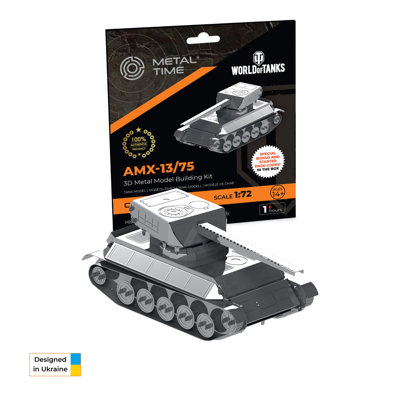
Maneuverable light tank with an oscillating turret and a 75 mm autoloader gun that could fire up to 10 shots per minute. At that time, the gun on this vehicle had superior penetration compared to the guns of most other medium tanks. The tank has a decent top-end gun and good dynamic performance. In the last years of World War II strategists and manufacturers of military equipment began to think about new generations of weapons. And one of the successful embodiments of the new concepts of armored fighting vehicles was the French light tank "AMX-13". Its first prototypes appeared in 1945 and its subsequent modifications were used in military operations until the XXI century. This maneuverable tank with a length of 5 meters and a height of 2.4 m originally possessed several unique design features. The most important of these was the "rocking" turret. The main design principle was that after the gun had fired, returning impulse was delivered to the turret and caused a new shell to move to the breech block of the gun and the loader mechanism to push it inside the barrel. This allowed automatic firing at a rate of up to 12 rounds per minute! Considering that such tanks were equipped with a 75-mm gun, this turned the tank into a vehicle for the continuous destruction of everything in the line of fire. Further modifications of the "AMX-13" were equipped with 100-mm and even 155-mm guns. In such a form it could compete with medium tanks and mobile guns. However, another difference of this tank was its speed. It could reach up to 60km/h on a hard surface (up to 400km), get over obstacles up to 60cm high, ditches up to 1.5m deep, and water obstacles up to 0.8m deep. Along with the brilliant characteristics, "AMX-13" also had disadvantages. It had weak armor, which was typical of light tanks, and the downside of rapid fire - the need to replenish ammunition. When the shells ran out in combat, the tank became unarmed and was often doomed to destruction.

By METAL-TIME
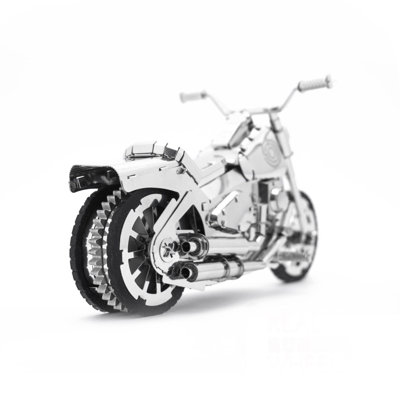
In 1901, William S. Harley drew up plans for a small engine with a displacement of 7.07 cubic inches (116 cc) and four-inch (102 mm) flywheels designed for use in a regular pedal-bicycle frame. Over the next two years, he and his childhood friend Arthur Davidson worked on their motor-bicycle using the northside Milwaukee machine shop at the home of their friend Henry Melk. It was finished in 1903 with the help of Arthur's brother Walter Davidson. The sun is quickly setting in the horizon, making the mountains look like lava flowing down a volcano. The highways lines shoot by like they were tapped on the road; the hot air is blowing in your face. And the sound of the motorcycle’s engine gives you confidence you will get to town before dark. The excitement of the sound of the engine revving through the open road flows through your body. And as you glide down the road on your steel horse, you have never more free. Harley Davidson is an American icon, a symbol of freedom, known by motorcycle enthusiasts around the world. Harley Davidson began its journey on the American roads in the early 20th century. Americans quickly fell in love with Harley Davidson. Word spread so fast that in 1920 the company became the world's largest motorcycle manufacturer. The name "Harley Davidson" is renowned to all motorcycle lovers. The American motorcycle has been the inspiration for countless books and movies. "Metal Time" presents Roadway Fantasy. Our homage to America's legendary motorcycle, Harley Davidson. The Metal Time's designers behind this model were motivated by the legendary Harley Davidson Model-F. To many, this two-wheeled mustang symbolizes motorcycle travel. The motorcycle has appeared in books, films, comics, and even video games. Harley Davidson is loved around the world and has a huge cult following. Harleys are known for their representation of freedom and independence. Regardless of the seeming conciseness of the name, the "Roadway Fantasy" model is very challenging. It has over a hundred parts, and therefore, it requires attention to detail so that you can proudly display your model.

By METAL-TIME
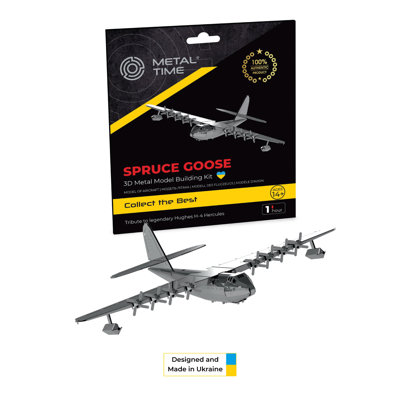
The Hughes H-4 Hercules (commonly known as the Spruce Goose) is a prototype strategic airlift flying boat designed and built by the Hughes Aircraft Company. Intended as a transatlantic flight transport for use during World War II, it was not completed in time to be used in the war. Here history takes flight with the SPRUCE GOOSE steel DIY model kit by Metal Time Models. Step into the golden age of aviation and relive the marvel of the Hughes H-4 Hercules, affectionately known as the Spruce Goose. This steel model kit pays homage to the iconic prototype strategic airlift flying boat designed and built by the legendary Hughes Aircraft Company. Crafted with precision and passion by Metal Time Models, the SPRUCE GOOSE DIY model kit allows enthusiasts of all ages to recreate the awe-inspiring design of this colossal flying machine. The Hughes H-4 Hercules was conceived as a transatlantic flight transport during World War II, but despite its grand aspirations, it was not completed in time for wartime service. Now, you have the chance to build a stunning steel replica of this historic aircraft.

(Set of 6)
By Marlow Home Co.
Get it by Wed, 14 Oct
These beautiful decorative cages with hinged lids can be used for a multitude of purposes and will look amazing within your wedding décor. If you are having an outside wedding party, you can embellish the cage with flowers and hang it off a Manzanita tree or you can even use the cage as a post box for guests to throw their letters into, or place some Tealights inside and use as a table decoration. The possibilities are endless, but whatever you use this beautiful cage for, it's guaranteed to add a vintage feel to your event.

By METAL-TIME
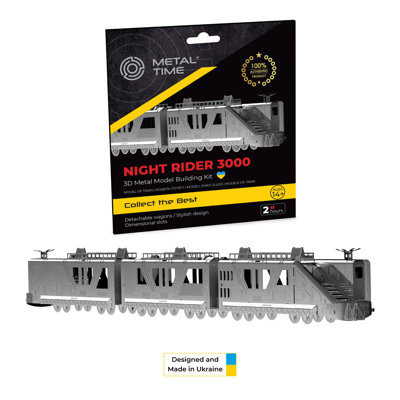
The Night Rider train is an imaginary train set in a fictional post-apocalyptic future. It crosses the desert only at night due to the impossibility of movement during the day due to the high air temperature. The Night Rider is a fully armored train often used to transport valuable passengers and cargo. Explore the thrilling world of the Night Rider 3000 DIY model kit, a captivating representation of an imaginary train set in a fictional post-apocalyptic future. This meticulously crafted steel model captures the essence of an armored train that braves the desert only under the cover of darkness, navigating the unforgiving landscape where daytime temperatures soar to extremes. The Night Rider 3000 is not just a model; it's a journey into a dystopian world where creativity knows no bounds. This DIY kit allows enthusiasts of all ages to bring the mystique of this fully armored train to life with their own hands. Each piece is precision-cut from high-quality steel, ensuring a satisfying building experience and a durable final product that can stand the test of time.

By METAL-TIME
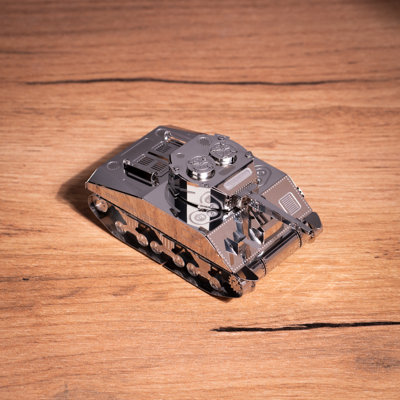
The first production version of the Sherman, the most common American tank, with an amazing total of 49,234 vehicles manufactured. The Sherman first saw combat in North Africa. The medium tank "M4" is one of the most mass-produced tanks of World War II. It stands alongside other legendary "victory tanks" as it successfully fought in many local conflicts even after the war. The "Sherman," named after a hero of the American Civil War, has become the subject of numerous books, films, and comics. Its successful design and the possibility of modifications made this tank almost irreplaceable in battles. The "M4" began serial production in 1942 and was adopted by the United States, Great Britain, and the Soviet Union. Over 50,000 tanks of various modifications were produced, but they all retained the original design. The "Sherman" was operated by two driver mechanics on the main platform, and three crew members in the turret were responsible for its combat power. The main weapon of the "M4" was a 75mm tank gun. In some modifications, it was a mortar or even a flamethrower. Machine guns or automatic cannons were used for close combat. The chassis consisted of three bogies with two rollers each on a spring suspension and leading wheels.

By Ebern Designs
This rectangular domino box is made from premium quality MDF and given resin coating for optimum protection. Each playing piece in the black and white finish is exceptionally crafted and creates a decorative statement on the coffee or side table.

By METAL-TIME
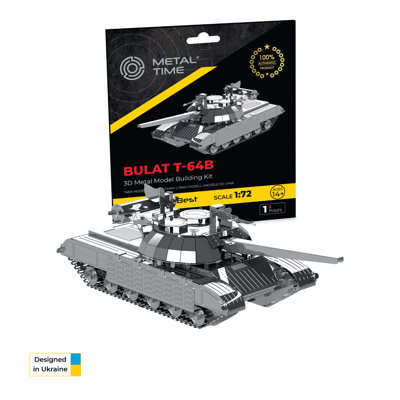
The modernisation programme, transforming T-64 MBTs to BM Bulat MBTs, focused on improvement of its fire power, mobility and protection. The upgraded sights and aiming devices include a Buran-E night vision system for detection, identification and engagement of targets, and a TKN-4S, the sighting system for the tank commander. The modernisation work included installation of a 1G46M sight and a TO1-KO1ER night sighting system or Buran-Catherine thermal imager for the gunner, some 2E42M main armament stabiliser units, a 1V528-1 tank ballistic computer, a TAKO-621 guided weapon system, a 1ETs29M control system for anti-aircraft machine guns and a PNK-5SR observation and sighting system. The “Bulat” T-64 is the main battle tank of the Ukrainian Armed Forces. It is the result of a rethinking and deep modernization of the Soviet T-64 tank. Over decades of painstaking work, designers were able to bring the fire control, protection, and firepower systems up to the level of modern T-80 and T-84 models. Due to its predecessor, “Bulat” has a recognizable design: side protection side screens, a low-profile turret equipped with passive protection plates, and an ammunition bunker. “Bulat” T-64 is one of the main mechanized combat units in the Ukrainian army. Inheriting the simplicity of the base model, it has significantly improved in characteristics. This combat vehicle can reach speeds of up to 60 km/h on the highway and has a combat range of up to 385 km. The turret turning speed is 40 degrees per second, allowing the tank to quickly respond to threats.

By METAL-TIME
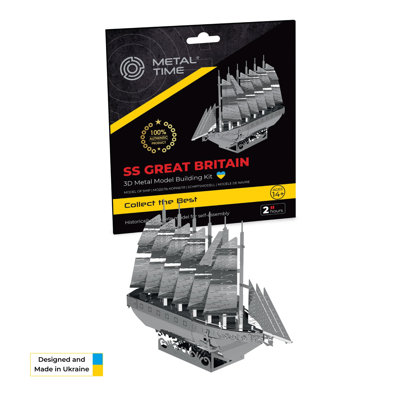
SS Great Britain is a former passenger steamship and it was the largest passenger ship in the world from 1845 to 1854. She was designed by Isambard Kingdom Brunel (1806–1859), for transatlantic service between Bristol and New York City. Great Britain is a former passenger steamship that was advanced for her time. She was the largest passenger ship in the world from 1845 to 1854. She was designed by Isambard Kingdom Brunel (1806–1859), for the Great Western Steamship Company's transatlantic service between Bristol and New York City. While other ships had been built of iron or equipped with a screw propeller, Great Britain was the first to combine these features in a large ocean-going ship. She was the first iron steamer to cross the Atlantic Ocean, which she did in 1845, in 14 days. When launched in 1843, Great Britain was by far the largest vessel afloat. But her protracted construction time of six years (1839–1845) and high cost had left her owners in a difficult financial position, and they were forced out of business in 1846, having spent all their remaining funds refloating the ship after she ran aground at Dundrum Bay in County Down near Newcastle in what is now Northern Ireland, after a navigation error. In 1852 she was sold for salvage and repaired. Great Britain later carried thousands of emigrants to Australia from 1852 until being converted to all-sail in 1881. Three years later, she was retired to the Falkland Islands, where she was used as a warehouse, quarantine ship and coal hulk until she was scuttled in 1937, 98 years after being laid down. After the initial success of its first liner, SS Great Western of 1838, the Great Western Steamship Company collected materials for a sister ship, tentatively named City of New York. The same engineering team that had collaborated so successfully on Great Western—Isambard Brunel, Thomas Guppy, Christopher Claxton and William Patterson—was again assembled. This time however, Brunel, whose reputation was at its height, came to assert overall control over the design of the ship—a state of affairs that would have far-reaching consequences for the company. Construction was carried out in a specially adapted dry dock

By Latitude Run
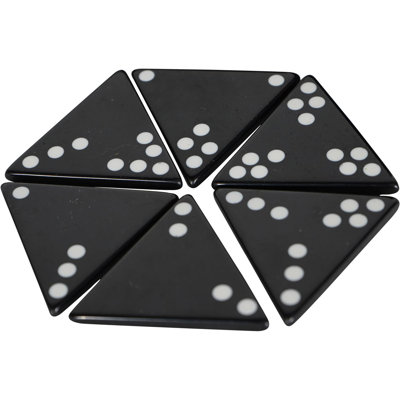
Contemporary in style and a perfect addition for domino enthusiasts, this uniquely shaped triangular lidded box is designed to hold a set of 38 triangular dominoes. Crafted from durable resin, both the box and the dominoes are not only visually striking but also practical, offering easy cleaning and long-lasting use.

By Alpen Home
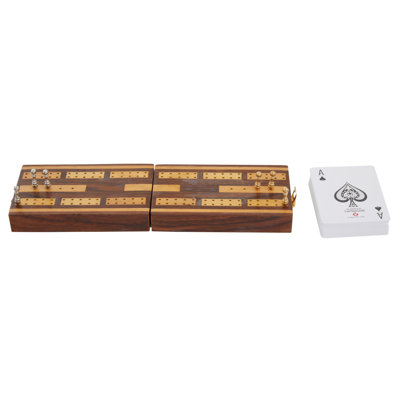
Expertly handcrafted from pure Sheesham wood, this cribbage board in a rectangular shape opens up on a piano hinge and ornate latch. Ideal for improving cognitive skills, this cribbage set includes a deck of playing cards as well.

By Ebern Designs
This rectangular domino box is made from premium quality MDF and given resin coating for optimum protection. Each playing piece in the black and white finish is exceptionally crafted which creates a decorative statement on the coffee or side table if not playing.

By METAL-TIME
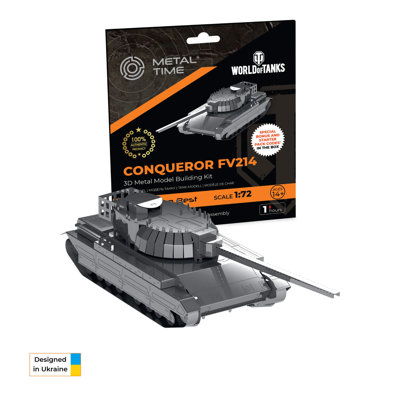
The FV214 Conqueror was conceived in 1946 as a response to two other categories of vehicles: the German panzer tanks that had demonstrated superior firepower during World War II, and the Soviet IS-3 heavy tank that entered service in 1945. The Conqueror’s 120mm gun was considered an advantage, but tank crews generally found the vehicle difficult to maneuver. Once the Centurion was outfitted with a 105mm gun, the Conqueror was withdrawn from use in the 1960s. Large-scale battles did not accompany the Cold War on the battlefield. But fierce battles raged in the design bureaus. New military challenges demanded new technical solutions. British engineers, abandoning the idea of "cruiser" tanks, began to develop heavy ones. One of the promising models was the FV 214 "Conqueror". The project of the over 60 tons tank appeared in 1949, but this tank went into serial production only in 1955. The main weapon of the tank was a 120-mm gun. The length of the fighting vehicle together with the cannon was more than 11 meters. The engine with a power of 810 hp drove this huge thing with a speed of up to 35 km/h on a hard surface. The aiming fire could be made only from a standing position. In combat, the main firepower of the "Conqueror" was two 7.63 mm M1919 machine guns. Distinctive features of the tank's architecture were a turret and hull with ricochet panels and a chassis with four bogies of two rollers and two drive wheels. The crew of the heavy tank consisted of four men. The mechanic driver was in the platform and three other soldiers were in the turret. There was also a commander's turret with all-round visibility. In addition to combat duty in the British Armed Forces, the "Conqueror" was a testing ground for engineering research. Its weak point was considered insufficient protection, but this was corrected in the new modifications. However, the tank could not withstand competition with other models and its production was stopped by the 60s.

(Set of 6)
By Metro Lane
Get it by Wed, 14 Oct
These beautiful decorative cages with hinged lids can be used for a multitude of purposes and will look amazing within your wedding décor. If you are having an outside wedding party, you can embellish the cage with flowers and hang it off a Manzanita tree or you can even use the cage as a post box for guests to throw their letters into, or place some Tealights inside and use as a table decoration. The possibilities are endless, but whatever you use this beautiful cage for, it's guaranteed to add a vintage feel to your event.

By METAL-TIME
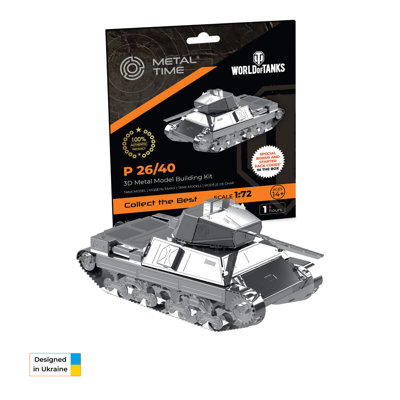
Development of this vehicle started at the end of 1940, but due to difficulties in finding a suitable engine, the first prototype was manufactured only at the beginning of 1942. Mass production was launched in 1943 in Turin. After Italy’s capitulation in the autumn of 1943, the tank entered service under the designation Panzerkampfwagen P40 737(i) and was used by the German reserve divisions as permanent fire positions. A total of 100 vehicles were produced. In the history of World War II, there are tanks that were "unlucky". Some of them were ahead of their time, some were hopelessly behind the times. One of these combat vehicles was the Italian heavy tank "P 26/40". Promising development stalled for years due to technological problems, and as a result, this tank did not become massive and did not have an impact on the battlefields. The "P 26/40" was one of the last riveted hull tanks in its class. In this, it differed from the similar geometry and basic parameters of the Soviet T-34 with its cast and welded parts and assemblies. The second feature was a semi-elliptical spring suspension with rollers assembled in carts. It seemed conditionally vulnerable, unlike more modern form factors. The third problem that was never solved was the engine. Nevertheless, the "P 26/40" was a powerful offensive combat vehicle, which had good armament and driving performance. With a weight of 26 tons, its speed was to 40 km/h on paved roads, and it could autonomously overcome to 280 km. Armor with a thickness of 40-60 mm provided protection against bullets, fragments, mines, and tangential impacts of shells. The main gun of the "P 26/40" was a 75 mm Ansaldo L/34 cannon and two 8 mm Breda machine guns. The crew of "P 26/40" consisted of three people. The commander was in the turret, and served as a gunner.

By METAL-TIME
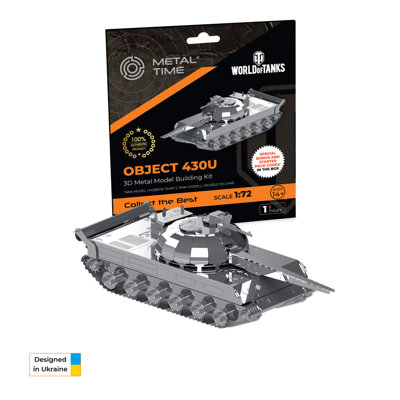
A prototype of this medium tank was developed from 1953 through 1957 to replace the T-54. Several prototypes were manufactured. Later, Soviet authorities wanted a tank with greater nuclear survivability and firepower. As a result, the project was discontinued in 1961, and the decision was made to develop the Object 432. After summing up the results of World War II and analyzing the effectiveness of all types of armaments, the Soviet government thought about the need to modernize its fleet of armored vehicles. First, there was a need to replace the T-54 medium tank, which would correspond to modern realities. Hence, in 1953, a new tank project was initiated, generically named “Object 430”. Several modifications of the fighting vehicle were developed under this name, which later became a basis for the development of “T-64”. In “Object 430” the changes concerned the location and configuration of the engine and the whole engine-transmission compartment. The engine was located across the driving direction in the aft compartment, allowing to expand of inner space for the 4-person crew and ammunition. A characteristic shape of the tank was a hemispherical turret with 248 mm armor at the front and a slot for the main gun - 100 mm D-54TS gun. There was also provision for a 14.5-mm anti-aircraft machine gun KPVT. "Object 430" in later modifications was successfully tested, however, it did not show a significant advantage over the obsolete “T-54”. In 1961 the project was stopped. Successful engineering solutions were taken over by the "Object 432", which eventually evolved into the mass-produced “T-64”.

By METAL-TIME
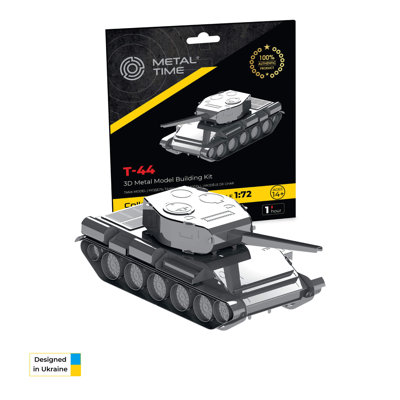
After the cancellation of the T-43, a replacement for the T-34 was still desired and work began on the T-44 in late 1943. Three prototypes were produced, with a 122 mm armed design being rejected. The 85 mm variant was accepted for production, which commenced in 1944 and the tank remained in service until the 1970s. The medium tank “T-44” could have become the best tank of World War II, but it never fired a shot on the battlefield. This combat vehicle was created in 1943 but never came into the front lines. In the last years of the war, the Soviet command realized that despite their quantity and decent mobility and reliability, the “T-34” tanks, even with the 85mm gun modification, were inferior to the best German armored vehicles - the “Tiger II” and “Panther” tanks. In head-to-head battles, the Soviet tanks had no chance due to their weak armor protection. Therefore, it was decided to create a tank with similar mobility and long-range capabilities as the “T-34”, but with significantly reinforced frontal armor. Thus, the “T-44” was born. It underwent significant modifications. The decision was made to abandon the Christie suspension, and increase the power of the gun while maintaining the advantages of a medium "cruiser" tank. The result was a powerful, fast, and well-protected combat vehicle capable of combining the armor protection of a heavy tank with the mobility of a medium one. Modifications were released with 100 mm and even 122 mm caliber guns, but due to the vehicle's weight increase, they had to be abandoned in favor of the 85 mm gun created based on the rapid-fire D5-T gun. Despite its worthy characteristics, the “T-44” was not put into mass production until the end of World War II, so as not to disrupt the production cycle of the “T-34-85”, which had similar parameters. However, after the war, the tank was produced in large batches and remained in service with the Soviet army until the 1970s.

By Ebern Designs
This domino box is made from premium quality MDF and given resin coating for optimum protection. Each playing piece in the black and white finish is exceptionally crafted and creates a decorative statement on the coffee or side table.

By August Grove
This grey domino box is made from premium quality MDF and given resin coating for durability. Each playing piece in the black finish is exceptionally crafted with a bone inset for the number of dots and central dividing line.

By METAL-TIME
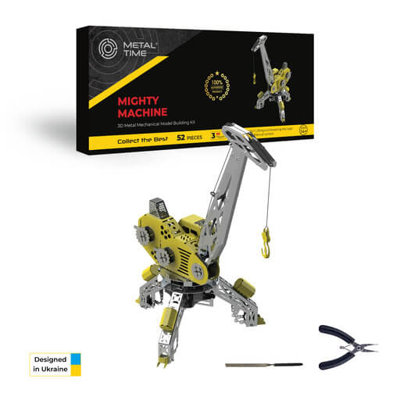
The first known crane machine was the shadouf, a water-lifting device that was invented in ancient Mesopotamia (modern Iraq) and then appeared in ancient Egyptian technology. Construction cranes later appeared in ancient Greece, where they were powered by men or animals (such as donkeys), and used for the construction of buildings. Larger cranes were later developed in the Roman Empire, employing the use of human treadwheels, permitting the lifting of heavier weights People began to invent devices designed to increase human strength from the moment of building activity of mankind. Therefore, it is impossible to say who invented the lifting crane. However, we can observe samples of large-scale work created using lifting machines. And the most impressive of them are the Egyptian and Latin American pyramids. And the installation of the idols of Easter Island maybe was not without the simplest cranes. Through centuries of technological progress, the lifting machines had a long line of reincarnations and turned into engineering masterpieces, but the basic principle of their operation remained the same: a heavy platform, a long jib, and a block system. This design allows you to solve several main tasks of the crane: to increase the mass of the raised cargo, the height to which it needs to be lifted, and the force attached to this process. Modern cranes have no limit in all these parameters. Therefore, this symbol of construction is an interesting model for technical creativity.The designers of “Metal Time” analyzed many types of lifting machines and as the basis for their new self-assembling model chose a prototype of the port crane. The model demonstrates a large-scale mechanism for working with big loads. Therefore, it was called “Mighty Machine”.

By METAL-TIME
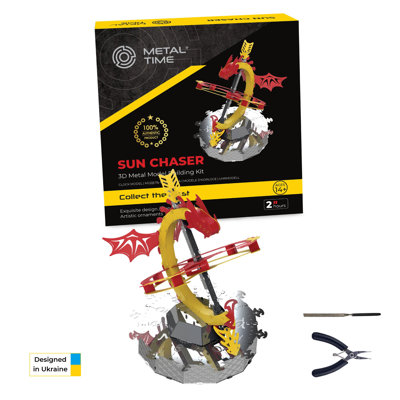
The earliest sundials known from the archaeological record are shadow clocks from ancient Egyptian astronomy and Babylonian astronomy. Presumably, humans were telling time from shadow-lengths at an even earlier date, but this is hard to verify. Once upon a time, a mighty Red Dragon, the Lord of the ocean, fell in love with the Sun, which made its waters sparkle like billions of diamonds. But the vast thickness of the sky separated them. The dragon asked his brother, the Lord of the air, to lift the waves of the ocean higher and higher. But he has never reached the beautiful face of the Sun. Then he decided to present all the treasures, stored at the bottom to the Luminary. But the rays of the Sun have not been able to break through the water column. In desperation, they turned to the Heavenly Emperor. And the Almighty answered them: a million years will pass when the world will change and the mountains will sink, and the bottom of the ocean will rise, and the sun will fall on the Earth, and only at this last moment will you be destined to meet. Since then, the Red Dragon has been watching his Love and counts down the years. No, this is not an ancient Asian legend. We just came up with it looking how the "Sun Chaser" prefabricated sundial works. You can come up with many of your versions. In Asian mythology, dragons are the foundation of everything. These creatures have many forms, but they represent the four elements: fire, water, air and earth. With their unlimited power over the Earth and the creatures inhabiting it, even the most powerful dragons are powerless against the invincible Time. Therefore, to create a model of a sundial in the shape of a dragon was an ingenious idea. As a result of a bold design idea, a beautiful composition was born that tells of a Red Dragon that wants to reunite with the Sun, but only by following it with the gaze of its jade eyes, counting down the hours of eternity. A beautiful legend has found its embodiment in metal, thanks to the efforts of the engineers of "Metal Time". The Metal Time team, while creating the Sun Chaser, was inspired by the history of human observation over time and Asian mythology. Of course, the basis of the sundial was a fixed piece that casts a shadow on the timeline, but our engineers and designers decided to improve this design. The result is an art object that will bring a lot of pleasure to both lovers of technical creativity and connoisseurs of beauty.

By METAL-TIME
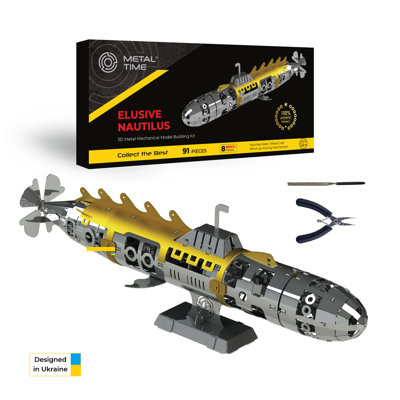
Sea and ocean depths contain lots of secrets. So, underwater travel dreams have always been in the hands of inventors and engineers. Jules Verne's book 20 Thousand Leagues under the Sea was the first diesel punk novel dedicated to the underwater journey. She was a motivation to designers and engineers to come up with the submarine prototypes. Deep-sea vehicle prototypes appeared in the early Middle Ages, but it was until 1620 that the first successful submarine tests happened in England. Presently, underwater vehicles are the most intricate mechanical-electronic systems that can manage several months of underwater trips and explore the deepest depths of oceans in the world.

This gold effect domino box is made from premium quality MDF and given resin coating for durability. Each playing piece in the black finish is exceptionally crafted and creates a decorative statement on the coffee or side table if not playing.
By METAL-TIME
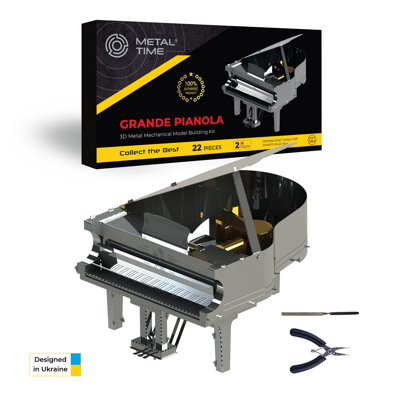
Throughout mankind's existence, music has been the primary means for expressing emotions, building a psycho-emotional state both at individual and group levels. Initially, music creation was based on vibrating natural materials. While stationary objects were used for extracting rhythmic sounds, tonal sounds were extracted from string-like vibrations. The development took the human, technical thought millenniums before we could hear music in all its splendour. IT was up to until when Bartolomeo Cristoforo invented the piano in the 18th century in Italy that musical instruments attained their true beauty and complexity. This complicated keyboard-string mechanism has produced the finest musical masterpieces in mankind's history. "Royal" in translation implies "royal". This is the actual king with regards to musical instruments, the peak of mankind's technical genius.
By METAL-TIME
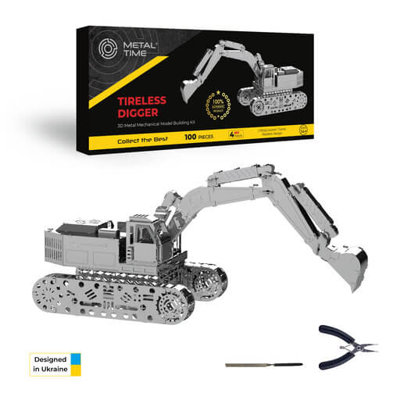
Excavators are heavy construction equipment consisting of a boom, dipper (or stick), bucket and cab on a rotating platform known as the "house".The house sits atop an undercarriage with tracks or wheels. All movement and functions of a hydraulic excavator are accomplished through the use of hydraulic fluid, with hydraulic cylinders and hydraulic motors. The invention of mechanisms has always been aimed to facilitate human labor. Therefore, in the era of large-scale construction in the 15-16 centuries, an earth-moving machine could not but appear. It was invented by Leonardo da Vinci. But the first excavator appeared only after 500 years. The conventional boom and the bucket machine was invented by William Otis. Since then, technology has come a long way, but the form and functionality of excavators have not changed conceptually. This is all the same combination of a crane and a bucket (shovel) for moving soil. Now earthen machines have many varieties and purposes. They perform their tasks on the surface of the earth, underground, and even underwater. Excavators have become one of the main helpers of people on the planet. The “Tireless Digger” self-assembly model has become a continuation of the collection of heavy special equipment in the “Metal Time” DIY kits. The excavator is a complex and spectacular machine that deserves its place among the collection of models in your home. Therefore, our engineers made it very realistic and functional. After assembly, which is a challenging and interesting process, the excavator model is even capable of digging soft soil such as sand. True, this can only be done by manually operating the boom and bucket. And the “Tireless Digger” moves on a caterpillar track independently with the help of a winding mechanism. The reliability of the details of the model, the presence of a spring winding mechanism, and a lot of components make the assembly of this model an interesting task with a consistently wonderful result.

By METAL-TIME
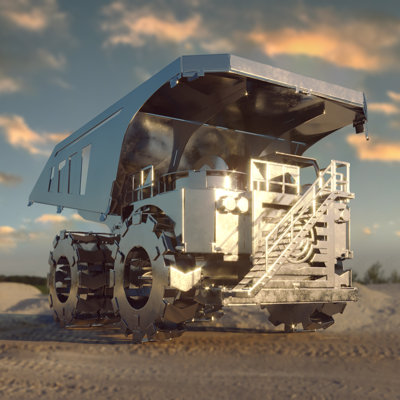
Climb aboard legendary mining truck which is a real monster for off-highway. It is specifically engineered for use in high-production mining and heavy-duty construction environments, including transporting construction equipment or mined ores and minerals. If you compare the world of cars to the animal world the dump truck should be represented by the elephant. If we make the comparison between the cars and animals, heavy special equipment will represent earths largest animals. A dump truck can be likened to an Elephant. It’s equally massive, solid, and operational. These super-vehicles are mercilessly crushing surfaces around 250 tons in a single trip. Think about 10 Tesla Model S and 10 Mercedes S600 cars in the same body! The engines in Dump Trucks have 2,700 horsepower, allowing it to pull a heavy load uphill on a hard rocky road at any time. The dump trucks’ wheel diameter is over 15 feet. If three tall enough people are to position themselves on each other’s shoulders, they will barely attain the wheel’s height. The drivers must climb 18-24 steps to enter the cab. When designing the Quarry Transporter, the Metal Time team used the common features of heavy mining trucks, the world's largest trucks. Their simple design, functionality, and load capacity motivated the designers of the Metal Time to develop roughness in constructing of the design. The Quarry Transporter is a rare vehicle, for sure. And it will take its rightful place in your collection.

By 17 Stories
This decorative game set will add a visual display on a coffee or side table with the sculptural playing pieces. The square box comes with a lid and is crafted from bone and premium-quality MDF. This box includes 4 X's and 5 Os in black finish.

By METAL-TIME
Free Delivery
Obstacles do not block the path, they are the path! All-terrain vehicles designed for rough and soggy terrain. The key feature of this ATV is the large wheels with an onboard system to inflate or deflate them, which allows vehicles to travel through water, cross brushwood, scramble and climb up thin ice. This technology helps customers to overcome obstacles, to solve their pains, to value trust and collaboration. Many secrets of the planet would not have been discovered if people had not invented cars that could drive along the most difficult route. There are no obstacles for all-terrain vehicles since obstacles are their usual road. Powerful engine, large low-pressure wheels, independent suspension, sealed windows and doors - and you are ready to search for treasures where no man has gone before. ATVs have gone through many transformations, and now engineers are inventing more and more new configurations - from amphibians to rovers. Therefore, all-terrain vehicles are an eternal source of inspiration for technical creativity. The designers of ‘’Metal Time’’ took the Ukrainian ‘’SHERP’’ all-terrain vehicle with ultra-low-pressure wheels as the basis for the ‘’Trophy Hunter’’ self-assembly model. Such machines have long been working in remote areas of the planet. But the creators could not resist the temptation to give the model futuristic features, thanks to which it became like a character in a science fiction film about the conquest of other planets. Space opera lovers will love it.

By Brambly Cottage
Free Delivery
This decorative bird house can be quickly and easily hung or placed in any garden, to provide a safe and comfortable shelter for a variety of birds.