Understanding all the Different Cookware Materials
Every type of cookware set explained.
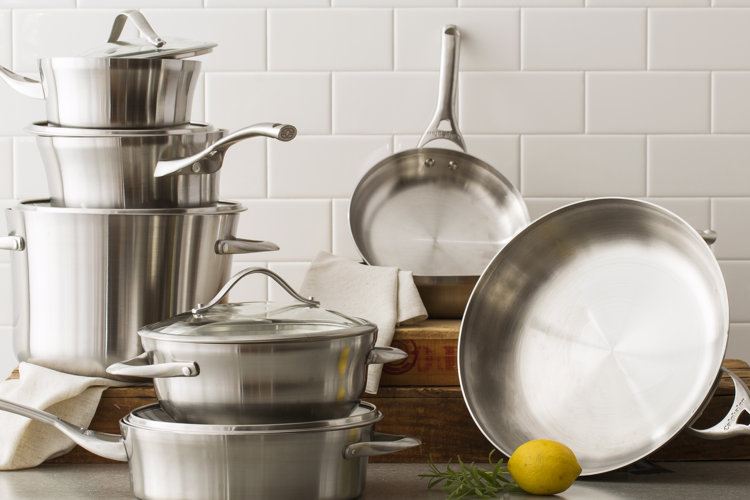
This guide will help you find the perfect cookware for your culinary and stovetop needs. From affordable, lightweight choices like aluminum cookware to classic cast iron. Read our cookware materials guide to find out more.
Cookware Materials
Stainless Steel Cookware
- Sturdy, non-reactive material
- Dishwasher safe
- Requires cooking spray or oil
This versatile material keeps its shine and won't dent easily. Stainless steel does however have poor heat transfer and distribution on its own, so look for a set that has an inner core made of copper or aluminum to help with conducting heat.
Aluminium Cookware
- Lightweight and affordable
- Highly reactive to alkaline or acidic foods
- Great option for sautéing and frying
This material is known for its heat conducting qualities. Look for a set that has an aluminium core or anodised aluminium, which has been treated to prevent the material from reacting with food.
Copper Cookware
- Requires more upkeep and polishing
- High-quality heat conductor
- More expensive
Copper is the most efficient heat conductor, making it the gold-standard when it comes to gourmet cooking. Most copper cookware is lined with tin or stainless steel to prevent reactions with acidic food.
Cast Iron Cookware
- Oven-safe for versatile cooking
- Conserves and retains heat
- Not dishwasher safe
Cast iron heats slowly but then retains and distributes the heat evenly. Traditionally, cast iron cookware requires seasoning before using for the first time, but you can also purchase pre-seasoned skillets. Look for cast iron with an enamel or porcelain coating for easier cleaning and maintenance.
Cookware Features
Enamelled Cookware
Cookware that is enamelled helps to conserve heat for better cooking results.
Induction-safe Cookware
If you have an induction stovetop, look for this feature to ensure your cookware is compatible.
Hard-Anodised Cookware
- Optimal heat conduction
- Stick-resistant
- Not dishwasher safe
This type of cookware has been given a special treatment to protect from corrosion as a result of cooking acidic and alkaline foods. This coating is most commonly used for aluminium cookware.
Non Stick Cookware
- Ideal for everyday cooking tasks
- Requires less cooking oil
- Non stick coating is easily scratched; use a non-abrasive sponge when cleaning
This cookware has been treated with a coating that prevents food from sticking and makes for easier clean up. Non stick cookware can be constructed with a variety of metals.
Enjoyed reading this article? Then take a look at these pots and pan types for every purpose and our wok buying guide.
