How Do You Know You're Choosing the Right Light Bulb?
Eureka moment.
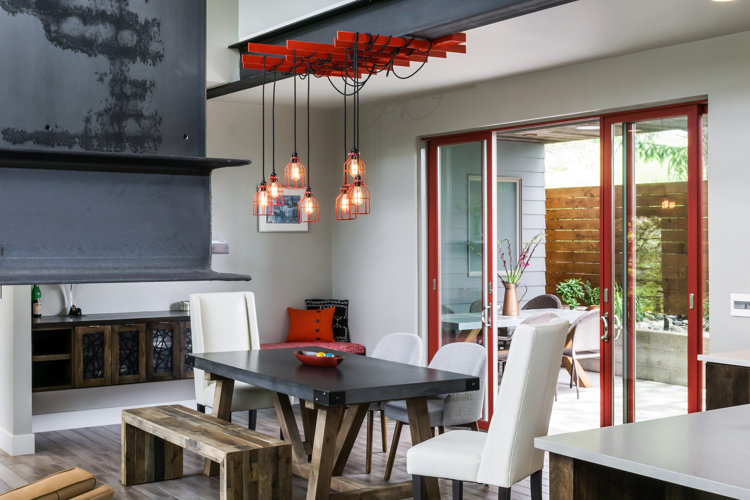
Along with the right lamp, chandelier or pendant, the type of light bulb you choose can transform the ambience and style of a room. Learn about the different types of light bulbs, the colour options and base types to ensure you pick the right one for your home.
Types of Light Bulbs
There are four popular types of light bulbs: incandescent, compact fluorescent (CFL), halogen and light-emitting diode (LED).
Light-Emitting Diode (LED)
One of the most energy-efficient light bulb types - LED bulbs give off no heat, contain no mercury and emit a bright light. They provide directional light so they're great for task lighting. Some light fixtures come with LED lights built-in and are referred to as integrated LED. They're long lasting (up to 50,000 hours) and are great for hard-to-reach places.
Incandescent
Incandescent are the most commonly used type of bulb and are usually the least expensive. They emit a warm light, can be used with dimmers and usually last up to one year – longer than halogen light bulbs, but not as long as CFL or LED light bulbs. They're also not as energy-efficient as most other light bulb types.
Compact Fluorescent (CFL)
These energy-efficient bulbs can emit a wide range of colours depending on the model you choose. They often take some time to warm up and get brighter. Use these to illuminate large spaces such as basements, guest rooms and kitchens. They're less expensive than LED lights and can last longer than incandescent lights. These light bulbs contain mercury, so you want to handle them carefully. Once they burn out, they're recyclable.
Halogen
These bulbs emit a white light that simulates high-noon daylight. Energy-efficient and dimmable, they're great for recessed lighting, pendant lights and under cabinet lighting. This light bulb has the shortest lifespan of the four. However, it's important to note that they warm quickly, so they should be kept away from fire-hazardous materials. We also recommend using gloves to change the bulb as oil from your hands can make the bulb explode if it gets too hot.
Tip: For a fully customisable ambience, choose a smart light bulb. They connect to an app or remote and allow you to change color with the touch of a button.
Watts refer to how much energy the light bulb uses. The more wattage a light requires the more power it will consume to produce light. To emit a brighter light, the bulb will also need a higher wattage. For example, a 200 watt bulb will use more power than a 100 watt bulb but it will also give off more light. However, LED light bulbs are compatible with any fixture no matter what the wattage requirement is.
How Many Lumens Do I Need?
Lumens refer to the amount of light that is radiated, or the light bulb brightness. Similar to watts, the higher the lumen, the brighter the light. To understand how many lumens you need, you must first find the square footage of the room or area you are trying to light. To find the square footage, multiply the room's length by the width. We recommend 20 lumens per square foot for most rooms, but check out the table below to see how many lumens you need for every room in your home.
However, if you have extra-dark rooms or dark wall paneling, we recommend adding an additional 10 lumens per square foot. Remember that the total number of lumens can be spread across a few different light fixtures throughout the room. One light fixture doesn't have to handle all the lumens required to light your space.
Tip: If you're shopping for light bulbs that will be used outside, make sure they are damp or wet-rated, so they can handle either brief moisture or direct water exposure.
Colour Temperature Chart
Light bulbs also come available in different colours: candlelight, warm white, neutral white and daylight. The colours are measured on the Kelvins (K) temperature scale. Check out the colour temperature chart to see which Kelvin number is best for your home.
Candlelight (1000K – 2600K): Light bulbs with less than 2,000K give off a dim glow, similar to candlelight. They are not typically used for illuminating large work areas and are better used to provide a soft glow and ambience to the room. Light bulbs with more than 2,000K give off a soft glow and can be used anywhere you would like ambient lighting, such as table lamps and floor lamps.
Warm White (2600K – 3000K): This is the standard colour of an incandescent bulb and ideal for bedrooms, dining rooms and living rooms. They are typically used as ceiling and wall lights.
Neutral White (3000K – 5000K): This cool white-coloured option provides a bright light. It's great for task lighting, especially in your kitchen, home office and bathroom.
Daylight (5000K+): This provides a crisp light that is similar to daylight. This colour temperature is perfect for areas with specific tasks, such as studying or reading and for outdoor and security lighting.
As well as colour ,light bulbs are also available in various shapes. The right shape can complement your home's style. Have a traditional chandelier? Opt for a candle or candle-angular-shaped light bulb. Own a modern pendant light? Choose a globe-shaped light bulb.
Light Bulb Bases
It's crucial to ensure that the light bulb's base size fits your light fixture. The most popular bases are 'Edisons', which have a screwed-in design and are available in many sizes. Others include screw bases, twist and lock bases, BI pin bases and fluorescent pin bases. Each of these bulb bases are marked with a specific code. For example, E26, E12 or E39. Check your light fixture to see what light bulb base size and type it should be paired with. Most light fixtures also have the code marked on a label that sits on the socket (where the light bulb screws into the fixture). On Wayfair, you can also find this information in a light fixture's product description under 'Specifications'.
Tip: Found this article handy? Then why not also read:
- Choosing the Best Light Bulb Just Got Simpler
- Your Guide to IP Rating and Lighting Classifications
- What to Consider When Buying LED Lighting
