Everything You Need to Consider When Measuring for Curtains
Your go-to guide.
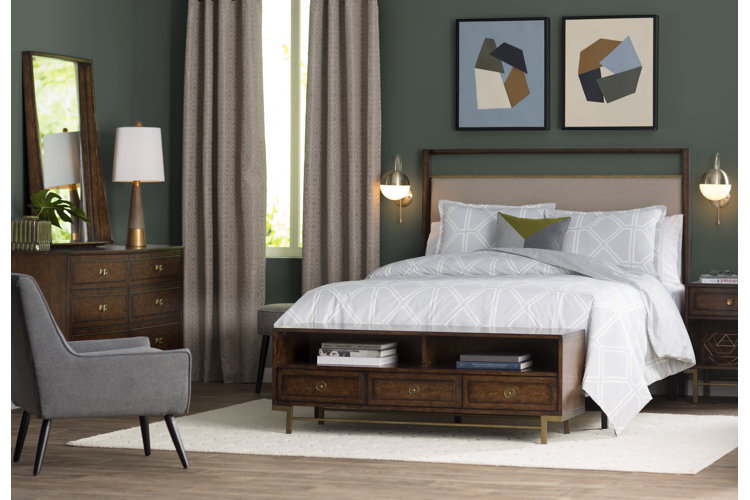
Curtains are essentially the final element that ties a room together. Not only do they block light, create privacy and muffle noise, they also add a sophisticated aesthetic appeal to any space. Knowing how to measure for curtains however is not always an easy task. There's a lot more to determining curtain sizes than most people realise. Use this guide for step-by-step curtain measuring tips so you can choose the best curtains and drapes for your home.
Jump to:
How to Measure for Curtains
Curtain Poles
Curtain Panels
Curtain Styles
How to Measure for Curtains
There are two types of curtains available: ready-made and custom. Ready-made curtains are most common and most budget friendly, however these curtain sizes require close attention to ensure they fit correctly. Custom curtains are ideal for unusually shaped or sized windows but require precise measurements to be the perfect fit. Note that when you are measuring for curtains, all sizes refer to each individual panel.
Tip: Be sure not to mix up your width and height measurements. Stick to the width by length (or height format: W x L) to avoid confusion.
How to measure curtain width
The standard curtain width is measured from left to right and it's measured by using the horizontal part of the curtain. More often than not, most curtains and drapes need to measure at least two to three times more than the window width in order to give a full appearance when hanging.
To measure the width of a window:
- Mark from one side of the window casing to the other.
- To this measurement, add 15cm per side or 30cm in total.
- Then take this total number and divide it by the number of panels you wish to order (this is usually two).
- Each panel should have at least a minimum width of your final number.
- The total width should be no less than 1.5 the width of your window.
For example - If your window measures 120cm, add 30cm to equal 150cm. If you want to have two panels, divide this amount by two which will equal 75cm, meaning the curtain size for each panel should have a minimum width of 75cm.
How to measure curtain drop
The drop, a standard term for the height of the curtain, of a curtain is measured by the span of the space that you wish for the drape to cover – whether this is just over a window or all the way to the floor. These curtain sizes vary depending on your style preferences. Curtain drop can also be adjusted by moving the curtain pole itself, though this isn't always ideal. When in doubt, it's better to err on the side of drop – you would rather have a curtain that is too long than too short. Ready-made curtain sizes usually are 160cm, 210cm, 240cm, 275cm and 300cm.
To measure the drop of the curtain:
- You must first mount your drapery pole and determine the style of curtain you are going for (valance, floor-length, etc).
- Measure down to where you wish for the curtain to hang – usually the bottom of the sill or to the floor – and this drop is what you should order.
Tip: In the event that you're measuring more than one window, be sure to get individual measurements rather than assume they're all the same.
Curtain Poles
Once you have learned how to measure for curtains, read our guide: This is How to Hang Curtains Properly for more info on purchasing and installing curtain poles.
Curtain Panels
All curtains are sold in panels, one panel being one piece of fabric. This also directly translates to the individual curtain size. Curtain panels are most frequently purchased in pairs to frame each side of the window, though there are instances where an individual or an uneven number of panels are needed. Before you purchase your curtains, be sure to measure your window so that you know exactly how many panels you will need. Your personal preferences will also affect the style of these panels.
Tip: Most often, the total width of all your curtain panels should be double that of your window in order to completely cover the window when the curtains are closed.
Single Panel: Single panels are good for corner windows. They are often used to cover the entire span of a window, or as a decorative stationary curtain that is pulled to the side for a styled effect.
Panel Pair: Panel pairs, the most common curtain purchase, hang on either side of the window and meet in the middle. Panel pairs can be styled in a myriad of ways including a layered style with a single sheer panel at the back and the panel pair in the front.
Each room in your home can benefit from curtains in a different way. Sill- or Floor-drop curtains may work well in your bedroom, while pooled curtains may look stylish in your living room. Rooms with smaller windows, like the kitchen or bathroom, do well with top window treatments. Each of these curtain styles needs to be measured in a different way, so read on to know what you should plan for.
Upper Window Treatments
Pelmets, Pleated & Tier Curtains
Pelmets, pleated and tier curtains are also known as upper window treatments as they hang over the top quarter or 25cm – 75cm of a window. They're most frequently installed over a sink, though people do also hang them over top of full curtains to create a luxurious aesthetic and add visual height to a window. Pelmets are best suited for curtain poles that are mounted on the outside of the window frame as opposed to the inside. They also work well for bay windows.
Standard Curtains & Drapes
To correctly hang curtains and drapes, it's a good idea to use a curtain measuring guide to more accurately determine the correct curtain sizes.
Sill-drop: Sill-drop curtains are the shortest of the standard-drop curtain sizes, giving a more informal style. They should fall about 1.5cm above the window sill itself. Sill-drop curtains work well for small windows, windows above counters or in areas where a longer drop would be hidden by furniture. Before you make your purchase, be sure to measure both sides of the window and ensure the sill is straight. If it isn't, this will be made noticeable by the sill-drop curtains, in which case you would do better with a longer curtain size.
Floor-drop: The most common curtain size, floor-drop curtains should fall no more than 1.5cm above the floor. They look good in most rooms and are best suited as curtains that will be opened and closed daily. Since they don't touch the floor, these curtains hang straight and create an elongated look that makes your room feel taller. The standard curtain width for floor-drop curtains should be about double the width of your window, or the width multiplied by 1.5 for a more tailored look.
Pooled/Puddled Curtains: 'Pooled' or 'puddled' curtains collect on the floor in a sort of puddle, giving a romantic look. Add an extra 15cm – 30cm to your floor-length curtains so the excess fabric can pool on the floor. These curtain sizes are best used for aesthetic purposes rather than for curtains that will be opened and closed. They can also be used to disguise an uneven floor. Pooled curtains look best on tall windows where you wish to make a statement.
Tip: Learn even more about curtains with:
- Curtains or Drapes? Which is Right for You?
- Choosing Your Next Set of Curtains Just Got Easier
- Update Your Current Window Situation With These 14 Curtain Ideas
