The Complete Guide to Different Bathtub Dimensions & Sizes
Choose the perfect fit.
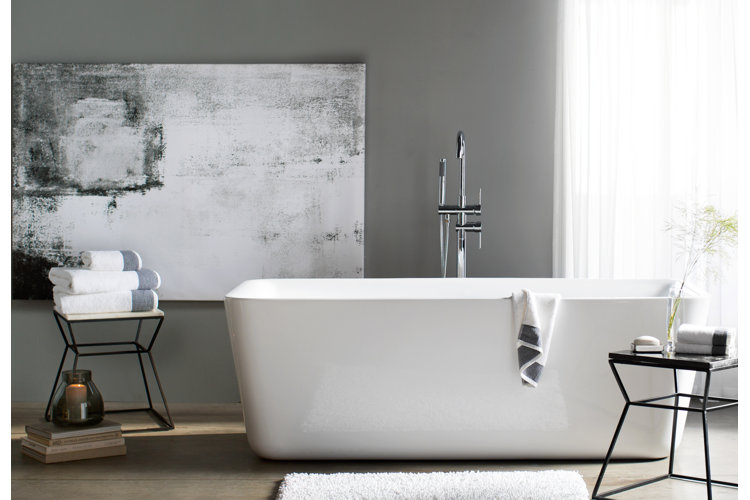
Although bathrooms are one of the most used areas in the house, they're often also the smallest. That said, you'll want the layout to utilise the space as efficiently as possible while still maintaining an attractive appearance. Whether you're planning renovations or designing a new bathroom, adding a new, appropriately sized bathtub is not always an easy task. Use this guide to discover the different bathtub dimensions available so you can create the streamlined bathroom of your dreams.
How to Choose the Right Bathtub Size
Your bathroom design needs to be right for both you and your family, which is why it is important to select the best bathtub size for the space. The bathtub takes up the largest area in any bathroom which is why it's a good idea to measure and plan the layout before you make any decisions or purchases. Knowing standard bathtub sizes will give you an idea of what bathtub dimensions will work and allow you to turn your bathroom into your own personal retreat.
Style
Your bathroom style and home decor will greatly influence the type of bathtub you choose. If you're going for a more modern aesthetic, a drop-in tub will look great, but for a more vintage look, a clawfoot tub will work best. Your personal preferences will give you a great starting point for picking the right tub for your bathroom.
Use
Will you be installing it in a bathroom with limited space or in a master bathroom that could do with a grand bathtub? Will the family be using it daily or do you plan to use it for long relaxing baths? Are there any family members with mobility issues who will be using it? All of these factors will help you better figure out the best tub dimensions for suit your intended usage.
Size
There are many different bathtub sizes to choose from, which is why you need to carefully measure and research to find the one that is going to fit in your space. A standard sized bathtub takes up over 13 sq. ft. which works well in most small to medium bathrooms. If you're replacing a small tub, you need to ensure that the new model you select is the correct size to fit into that old space, even if you plan to go a little larger. You also want your bathtub dimensions to match the room – a small bathtub won't look good in a grand master bathroom, but it makes no sense to get a large luxury tub when a standard one will work just fine.
Measurements
With the sink, toilet, and often the shower too, there is very little room left for the bath. Along with the bathtub size, you also need to carefully measure the layout of your bathroom to ensure you have the correct amount of clearance around the tub. Many designers suggest the free space in front of the bath be a minimum of 60" x 30" to ensure you can safely enter and exit the tub. The most common water depth for standard tubs is around 14" – 20".
Bathtub Types & Their Measurements
Alcove
Alcove tubs, also known as recessed bathtubs are one of the most standard sized bathtubs available. They're designed to fit into a recessed three-wall nook with only one finished side. Alcove bathtubs work well in smaller bathrooms, with the average bathtub dimensions for an alcove tub being 60" x 30" x 16".
Corner
Corner bathtubs are usually triangular in shape. They have two unfinished sides that go up against two walls, and one finished side facing out. Due to their larger size, corner tubs are best installed in a primary bathroom where they can be used for soaking and relaxing. The most common corner bathtub dimensions are 60" x 60" x 22".
Drop-In
As the name suggests, a drop-in bathtub is lowered into a hollow cavity. It has no factory-finished sides itself but is designed to be fitted into a constructed deck. The cutout in the deck must have at least 6" of flat space on all sides, meaning the deck needs to be at least one foot longer and wider than the bath itself. Drop-in tubs can be installed in either an alcove or an open area, which would allow for a larger bathtub size. The average drop-in bathtub dimensions are 60" x 30" x 16".
Under-Mount
Under-mount bathtubs are similar to drop-in tubs apart from the fact that the tub’s rim is covered by a small stone or tile deck top. This serves to hide the bathtub rim and give a more aesthetically pleasing appearance, though it does come with a higher price-point. Most under-mount bathtub dimensions come in at 60" x 30" x 16".
Walk-In
Walk-in bathtubs are taller than most standard sized bathtubs and come with a watertight door that opens at floor level. These tubs are ideal for seniors or people with mobility issues. These bathtub dimensions are usually about 60" x 30" x 30".
Freestanding
Freestanding bathtubs stand independently in the bathroom, unconnected to any walls or surfaces. With freestanding tubs, it is common to provide an extra 3" of space around the ends of the bathtub and 4" between the wall and the side of the tub. Standard freestanding bathtub dimensions are approximately 60" x 30" x 19".
Clawfoot
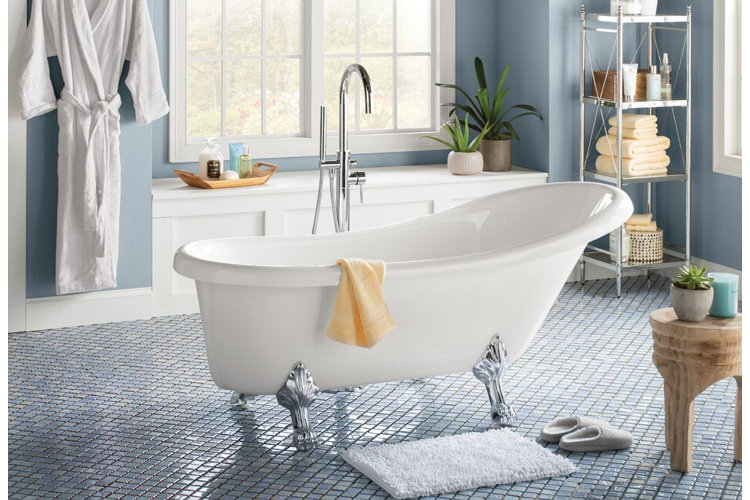
One of the most iconic styles of bathtub is the clawfoot tub. Dating all the way back to the 19th century, these freestanding tubs stand on four short metal legs.They are quite deep, making them less ideal for people with mobility issues. Clawfoot bathtub dimensions range between 60" and 66" long, 30" and 40" wide and 24" and 30" deep.
Pedestal
Pedestal bathtubs can be considered the modern take on the clawfoot tub. Though rather than claw feet, they have a minimalist plinth or pedestal to raise the tub from the floor. The most popular pedestal bathtub dimensions are around 60" x 41" x 24"
To learn more about the different types of bathtubs, their materials, and selling features, read our guide: These Are The Best Bathtubs to Soak & Unwind In.
Tip: Get a better understanding of bathroom fixtures and remodeling with:
- Planning a Bathroom Renovation
- How to Upgrade Your Bathroom on a Budget
- Buying a New Bathroom Sink? Here's Exactly What to Measure
