Ask the Experts: Pergola or Gazebo
Decisions, decisions.
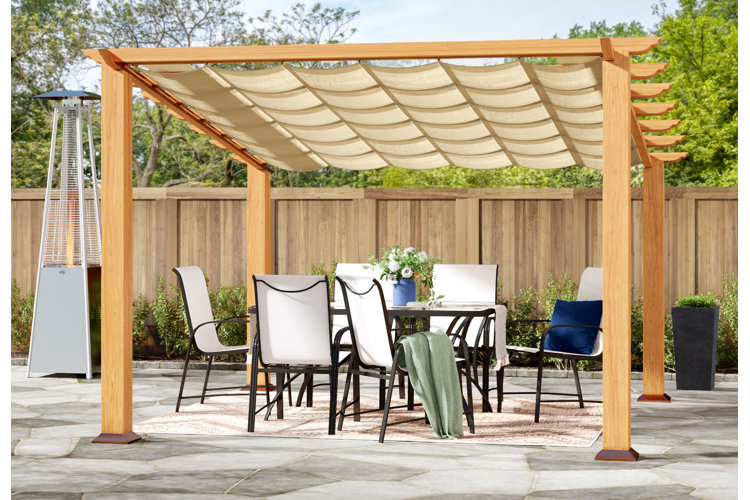
Looking to enhance your back garden but not sure where to start? Why not invest in a gazebo or pergola. Our expert guide includes everything you need to know about pergolas and gazebos, from installation to aesthetics and special features, helping you to find the right model for your home.
Jump to:
- Definitions: Pergola vs. Gazebo
- How to Choose a Gazebo
- Gazebo Installation Tips
- How to Choose a Pergola
- Pergola Installation Tips
- Pergola and Gazebo Material
Pergola vs. Gazebo
The main difference between a pergola and a gazebo is the function of the roof. A gazebo provides full coverage from the sun, while a pergola allows for sunlight to shine through its roof slats. Typically, a pergola provides partial shelter and shade over a garden, pathway or patio. The criss-crossed wooden roof is an optimal space for plants and vines to climb. Meanwhile, a gazebo is a covered, designated seating area in the yard that offers more protection from the elements.
How to Choose a Gazebo
Design
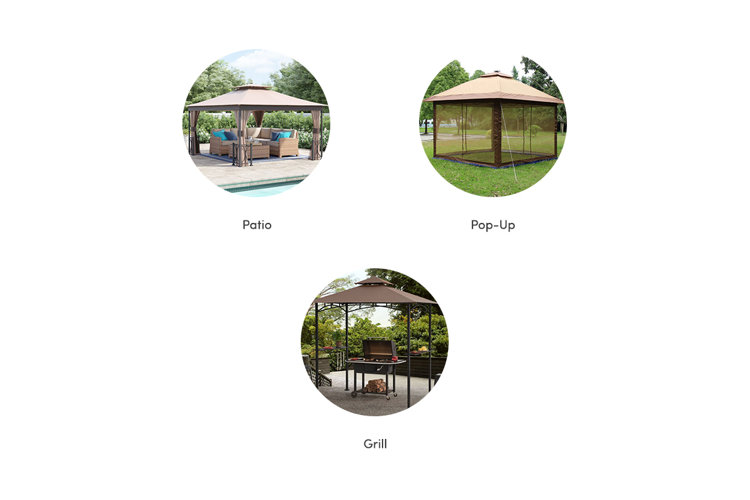
Patio: The most popular type of gazebo, these are a permanent fixture on your patio or garden. They can be made from metal, wood, plastic or vinyl.
Pop-Up: As the name states, this portable gazebo can be easily moved and propped up or taken down. It is great for a tailgate party, summer barbeque or sports game.
Grill: This is placed over your grill to shield it from snow and rain. It also provides cover for you if you're grilling in bad weather or need some shade from the sun.
Installation Type
Permanent: These often include a floor or are anchored to the ground so they can withstand extreme weather. Permanent gazebos should be built on a flat surface, such as an existing patio, pavers or a concrete pad. To avoid standing water which can lead to rot, you'll need to make sure it's placed in an area that has adequate drainage.
Portable: These typically do not include a floor - just four legs and a roof, so that they can be taken on the go or moved easily.
Wall-Mounted: Designed to be installed against your home’s exterior wall, these gazebos usually cover a patio and are perfect for creating a shady or bug-free place to relax outside.
Features
Weather Resistant: These gazebos are designed to resist the elements and keep you drier in rain or snow.
No Foundation Needed: Concrete pads, pavers or foundation are not required for set up, making for an easier installation process. However, it's recommended you use stakes or weights to secure the legs to the ground.
Screens Included: Mesh screens are provided to keep insects out.
Enclosed: Built for more privacy and protection from the elements, these come with mesh screen windows, curtains and/or walls.
Double-Roof: As the name states, these have a tiered roof that can be used as decoration or as a vent for grills or fire pits.
Gazebo Installation Tips
Check with your local building codes to see if the size of the structure you're looking at is okay to place in your garden. In most cases, if the gazebo is less than 100 square feet you will not need special permissions, however it's always best to double check. Some towns require a certain distance between the structure and the road or utility poles for example. If you're digging to install your foundation, call your local utility company to ensure that you can dig without hitting a water, sewer or electrical cables.
Any permanent gazebo structure must have a foundation that has proper water drainage and it must be anchored to concrete footers. When bolting it to your deck, use metal strapping to secure it to the beams of the deck. Since gazebos vary so much in size, design and assembly, it's best to follow manufacturer's directions regarding assembly and installation requirements. Professional installation may be required as digging, pouring concrete, laying paving stones or building a lumber foundation is typically necessary.
How to Choose a Pergola
Installation Type
No matter the installation type, it's best to secure all gazebos and pergolas for extra stability.
Anchored: This type of pergola must be anchored into the ground with stakes or cement.
Freestanding: These are not mounted to a wall or anchored into the ground, so you can place them on any level patio area or ground. We recommend placing them in a spot that is sheltered from high winds.
Wall-Mounted: One side of the pergola is mounted to your home’s exterior wall, the slats extend over the patio, while the remaining legs rest on the patio.
Features
Weather Resistant: A weather resistant material is used to avoid rust and rot.
Canopy Included: A piece of weather resistant fabric is included to provide shade. It's typically hung over the top slats however some canopies extend down the sides as well.
Arched Roof: Instead of a flat roof, these pergolas have arched roofs for a less-traditional aesthetic.
Pergola Installation Tips
Before choosing a pergola, make sure to measure the area you plan on placing it to ensure it fits. The location you choose should be level, an area where rain will not pool, and not where your gutter downspouts empty. Before you dig post holes, contact your local town authorities to make sure you won't hit water, sewer or utility lines.
Since pergolas vary so much in size, design and assembly, it's best to follow the manufacturer's directions regarding assembly and installation requirements. Two people are often required for assembly and installation. Generally, pergolas can be anchored to your deck with 90 degree strap brackets. It's best to screw into the deck's beams not the floor boards. If you can't place it over a beam, place a 2" x 6" board perpendicularly under the deck boards and screw the brackets into that. They should be anchored into the ground by digging 6" deep post holes, filling it with concrete and then using hammer set fasteners to keep in in place and connect it to the concrete. If you don't feel comfortable pouring concrete, it's best to contact a professional.
Pergola and Gazebo Materials
Wood: As the most traditional material choice, wood offers a rustic and classic look. Cedar wood, which is commonly used, is a natural, weather-resistant and insect-resistant option. Make sure to reseal or stain the structure every year to avoid rot or insect damage.
Metal: Metal frames are durable and offer an easy-to-assemble structure with their click-together frames. However, they may rust over time if not properly taken care of.
Vinyl: Easily cleaned off with a hose, vinyl gazebos are a low-maintenance option as they won’t rot or warp. If your home has vinyl siding, the gazebo can easily match.
Plastic: Resin plastic will not rust, rot or splinter. Consider plastic for a durable and more affordable option compared to manufactured wood.
